

What Is Indoor Air Pollution?
Indoor air pollution refers to the presence of harmful substances within indoor environments, often resulting from various sources like cooking, heating, cleaning products, and building materials. Prolonged exposure to these pollutants can lead to a range of health issues, including physical and cognitive issues, contributing to the phenomenon known as “Sick Building Syndrome” (SBS). Symptoms include headaches, dizziness, fatigue, irritation of the eyes, nose, and throat, and difficulty concentrating.
High levels of carbon dioxide (CO₂) in enclosed spaces are associated with drowsiness, reduced cognitive performance, and disrupted sleep cycles. Radon, a naturally occurring radioactive gas, is another indoor hazard and is considered the second leading cause of lung cancer after smoking. Additionally, pollutants like volatile organic compounds (VOCs), particulate matter (PM), and nitrogen dioxide (NO₂) can exacerbate respiratory conditions, allergies, and cardiovascular problems.
Understanding and monitoring indoor air quality is therefore crucial for maintaining health, productivity, and overall well-being.
Indoor Air Pollution vs Outdoor Air: Why Inside Is Often Worse
Most people assume the air inside a home or office is cleaner than the street outside. It usually is not. The US Environmental Protection Agency reports that indoor levels of several common pollutants are often two to five times higher than outdoor levels, and occasionally far more right after activities like cooking, cleaning or using a fireplace. Because modern buildings are sealed for energy efficiency, pollutants that get in, or are generated inside, have fewer ways to escape.
This matters because people in developed countries spend roughly 90% of their time indoors. Outdoor air also leaks inward: on a day with high urban PM2.5, a large share of those fine particles ends up in the rooms where you sleep and work. Indoor air quality is therefore not a separate problem from outdoor air quality, it is the place where outdoor pollution actually reaches your lungs, combined with everything you add indoors.

Pollutants and Their Effects
The most common indoor pollutants include:
- Carbon Dioxide (CO₂): High concentrations cause fatigue, impaired decision-making, headaches, and sleep disturbances.
- Radon: Radioactive gas that increases the risk of lung cancer over long-term exposure.
- Particulate Matter (PM1, PM2.5, PM10): Fine particles from cooking, dust, or smoking can penetrate deep into the lungs, aggravating asthma and cardiovascular disease.
- Volatile Organic Compounds (VOCs): Emitted from paints, cleaning products, furniture, and building materials; can trigger irritation, headaches, and long-term organ damage.
- Carbon Monoxide (CO): A toxic gas produced by combustion appliances; exposure can cause nausea, confusion, and, in severe cases, death.
- Nitrogen Dioxide (NO₂) and Ozone (O₃): Respiratory irritants that exacerbate asthma and decrease lung function.
Indoor air pollution is complex because multiple pollutants often co-exist, and their effects are cumulative over time. Continuous monitoring is the key to prevention.
Common Sources of Indoor Air Pollution
Understanding where indoor pollution comes from is the first step to controlling it. The main sources fall into four groups:
- Combustion: gas stoves, boilers, wood stoves, fireplaces, candles and tobacco smoke release particulate matter, carbon monoxide and nitrogen dioxide directly into living spaces.
- Building materials and furnishings: paints, varnishes, adhesives, pressed-wood furniture, flooring and some insulation off-gas volatile organic compounds (VOCs) and formaldehyde, sometimes for years after installation.
- Ground and structure: radon seeps in from the soil through foundations and basements, accumulating in enclosed lower floors.
- Human activity and biology: cooking, cleaning products, aerosols, pets, dampness, mould and even exhaled CO₂ in crowded or poorly ventilated rooms.
The difficulty is that these sources overlap and vary through the day. A bedroom can be fine at night but spike in PM2.5 during morning cooking, then build up CO₂ again once windows are closed. Only continuous measurement reveals these patterns, a single reading says almost nothing.
How to Measure Indoor Air Quality
You cannot manage what you do not measure. Assessing indoor air quality means tracking a few key indicators continuously with an air quality sensor, rather than relying on how the air feels or smells, since the most dangerous pollutants (CO, radon, fine PM) are invisible and odourless.
- Particulate matter (PM1, PM2.5, PM10): the single most important health indicator indoors. The WHO guideline is not to exceed 15 µg/m³ of PM2.5 over a 24-hour mean.
- CO₂: a proxy for ventilation. Levels above roughly 1000 ppm indicate stale air and correlate with reduced concentration.
- VOCs and toxic gases (CO, NO₂, O₃): markers of combustion, chemicals and off-gassing.
- Radon: requires a dedicated long-term measurement, as it fluctuates by season and ventilation.
Choosing the right device depends on which of these you need and whether the space is a home, a classroom or an industrial site. Our guide on how to choose an air quality monitor walks through the seven questions that matter, and our school air quality case study in Dumbrăvița shows what continuous indoor monitoring looks like in practice. The sensors below are built specifically to cover these indicators in real time.
How uRADMonitor Sensors target Indoor Pollution
uRADMonitor offers a wide range of products that cover almost all possible harmful factors in almost all usage scenarios. Some of these are designed for both residential and commercial indoor environments. The products can help detect, quantify and mitigate indoor pollution risks as follows:

uRADMonitor MODEL A3
- Sensors included: PM1, PM2.5, PM10, CO, NO₂, O₃, VOCs, temperature, humidity, air pressure and noise.
- Application: Monitors fine particulate matter and toxic gases simultaneously. Ideal for workplaces, classrooms, and homes where multiple pollutants are present and have to be monitored.
- Use for symptoms: Helps identify high PM and CO₂ levels to reduce respiratory issues, headaches, and SBS symptoms.
The uRADMonitor MODEL A3 is certified by AQSPEC-AQMD US, INCD-ECOIND Romania, AIRLAB 2021, AIRLAB 2023 and now pending AIRLAB 2025 certification.

uRADMonitor MODEL SMOGGIE-PM
- Sensors included: PM1, PM2.5, PM10, temperature, humidity, air pressure
- Application: Focused on particulate matter detection for environments with dust, smoke, or other airborne particles. Will detect smoke from cooking and particulate matter with great accuracy.
- Use for symptoms: Reduces respiratory and cardiovascular risks linked to airborne particles.
The uRADMonitor MODEL SMOGGIE is certified by AQSPEC-AQMD US, AIRLAB 2021, AIRLAB 2023 and now pending AIRLAB 2025 certification. It was one of the Winners of AIRLAB 2021 and 2023.
uRADMonitor MODEL SMOGGIE-CO2
- Sensors included: CO₂, temperature, humidity
- Application: Monitors carbon dioxide levels, ventilation efficiency, and indoor air freshness.
- Use for symptoms: Mitigates drowsiness, cognitive impairment, and sleep disturbances caused by CO₂ buildup.
SMOGGIE-CO2 was used in multiple studies targeting schools and students, as CO2 can affect cognitive abilities, a topic we cover in detail in CO₂ in classrooms. It is certified by AIRLAB 2021 and AIRLAB 2023.

uRADMonitor MODEL A4
- Sensors included: PM, CO, NO₂, O₃, VOCs, CO₂, temperature, humidity
- Application: High-end, multi-parameter indoor air quality monitoring with comprehensive detection of chemical and particulate pollutants.
- Use for symptoms: Detects VOCs, particulate matter, and toxic gases to prevent long-term health risks, including respiratory, cardiovascular, and cancer-related issues.
By combining the appropriate uRADMonitor sensors, one can monitor almost all major indoor air quality threats: particulate pollution, toxic gases, CO₂ accumulation, and VOC exposure. It is one of our newer products and now pending AIRLAB 2025 certification.
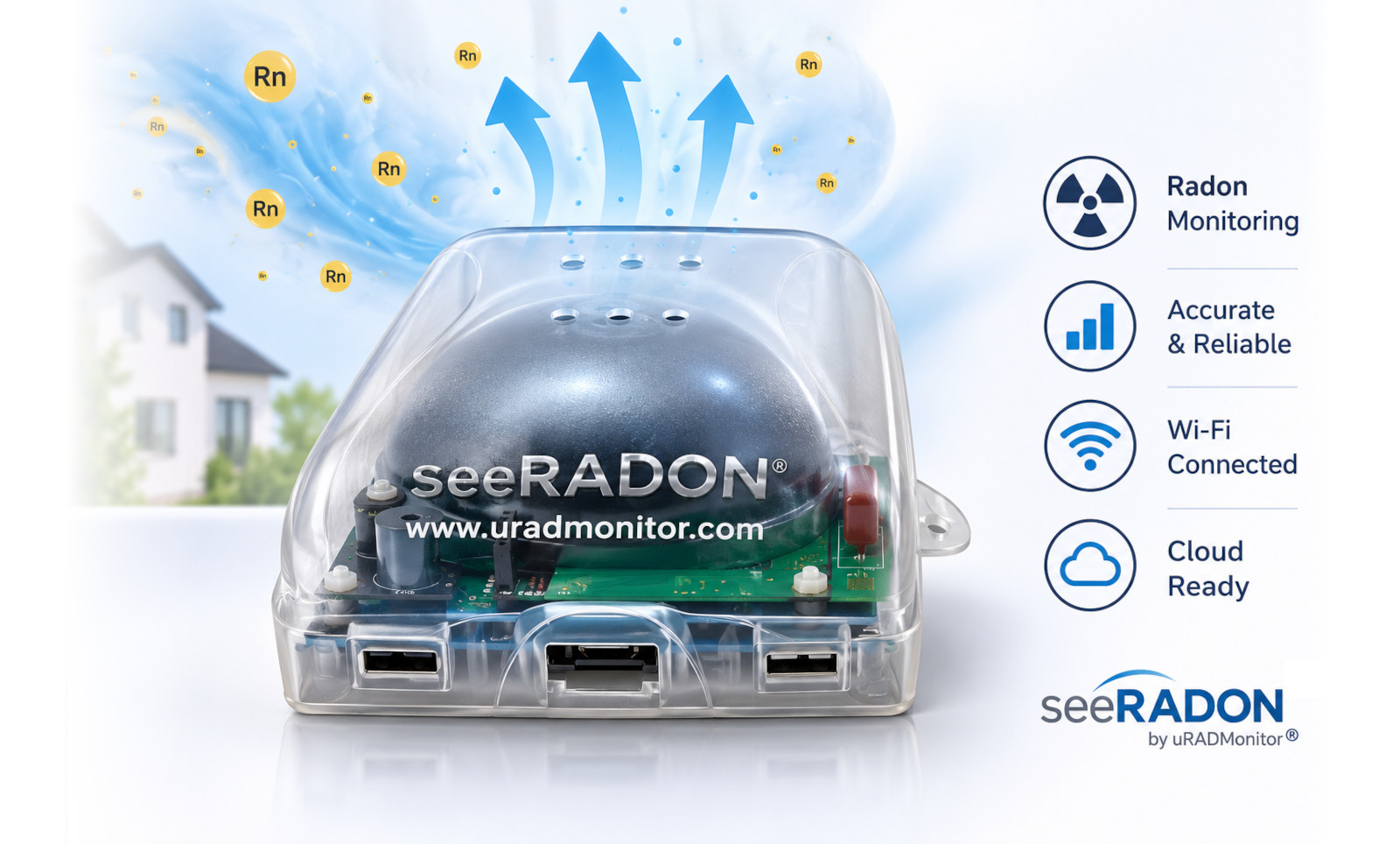
uRADMonitor MODEL seeRADON
- Sensors included: Radon,temperature, humidity, barometric pressure
- Application: Advanced indoor Radon monitoring with real time data output
- Use for symptoms: Detect radon to prevent long-term health risks such as pulmonary cancer-related issues.
Radon is a form of natural background radiation that concentrates indoors; for safe reference levels and testing advice see radon levels: what is safe at home.
How to Reduce Indoor Air Pollution
Once you can see the data, three types of action lower indoor pollution, in order of effectiveness:
- Source control: the most effective step. Switch to an extractor hood while cooking, avoid indoor smoking, choose low-VOC paints and furniture, fix damp and mould, and seal radon entry points in basements.
- Ventilation: bring in outdoor air to flush out accumulated pollutants and CO₂. Timing matters, a sensor tells you when outdoor air is cleaner than indoor air, so you do not ventilate during an outdoor pollution peak.
- Filtration: HEPA air purifiers sized for the room capture fine particulate matter when ventilation alone is not enough, for example during wildfire smoke or high urban PM2.5.
Every one of these actions works better when it is driven by measurement. Ventilating blindly can make things worse; filtering without knowing your PM levels wastes energy. Continuous monitoring turns guesswork into evidence.
Indoor Air Pollution: Frequently Asked Questions
Is indoor air pollution worse than outdoor air pollution?
Often yes. Indoor concentrations of common pollutants are typically two to five times higher than outdoors, because sealed buildings trap both infiltrated outdoor pollution and pollutants generated inside by cooking, heating and furnishings.
What is the most dangerous indoor air pollutant?
There is no single answer, but fine particulate matter (PM2.5) has the largest overall health impact, carbon monoxide is the most acutely lethal, and radon is the second leading cause of lung cancer after smoking. All three are invisible and need instruments to detect.
How do I know if my indoor air is unhealthy?
You cannot reliably tell by smell or feel. A continuous monitor tracking PM2.5, CO₂ and toxic gases shows when levels rise and what triggers them, for example a PM2.5 spike during cooking or CO₂ build-up in a closed bedroom.
What CO₂ level is too high indoors?
Outdoor air is around 420 ppm. Indoors, levels above roughly 1000 ppm signal poor ventilation and begin to affect concentration and sleep. See our detailed look at CO₂ in classrooms.
Can one device monitor all indoor pollutants?
Multi-parameter monitors like the uRADMonitor MODEL A3 and A4 cover particulate matter and the main toxic gases together. Radon needs a dedicated sensor such as seeRADON, because it is measured differently.
Conclusions: Technology for a Healthier Modern Lifestyle
Indoor air quality monitoring is no longer a luxury , it is a cornerstone of a healthy, informed lifestyle. uRADMonitor is here to help you with:
- Real-time awareness of indoor pollutants and air quality trends. You learn very quickly what are the major risks in your home and thanks to constant monitoring, you understand their sources and evolution.
- Evidence-based actions for ventilation, filtration, and space usage. You see the data and can act on it to protect your health.
- Prevention of Sick Building Syndrome symptoms and chronic exposure risks. Are you sure your building is safe? How can you know without measuring it?
- Empowerment of building occupants and managers to make data-driven decisions
With affordable, precise, and reliable sensor technology, households, offices, schools, and public institutions can now ensure cleaner air, better sleep, enhanced cognitive performance, and long-term well-being. uRADMonitor products offer a practical solution for modern indoor living, combining scientific rigor with actionable insights for healthier spaces. We have multiple lab-certified products that can answer all your questions, in real time.
Moreover, we are committed to advancing scientific understanding by leveraging the extensive data collected by our global network of sensors, in collaboration with leading universities worldwide, to study indoor air pollution and its impact on human health, and to develop effective mitigation strategies. See some of the uRADMonitor research papers here.
Liked this? Get monthly air quality findings.
One email a month from the uRADMonitor network. Unsubscribe anytime.

codemore code
~~~~