
A classroom with 25 pupils produces a lot of carbon dioxide. If the room is not ventilated, the concentration rises steadily through the lesson. CO2 itself is not toxic at these levels, but it is the best simple indicator of how much fresh air the room receives. When CO2 is high, other pollutants exhaled or released indoors are high too.
Reference values
Outdoor air contains about 420 ppm (parts per million) of CO2. Indoor values are judged against that baseline.
| Indoor CO2 | What it means |
|---|---|
| Below 800 ppm | Very good ventilation. |
| 800 to 1,000 ppm | Good. A common design target for classrooms. |
| 1,000 to 1,500 ppm | Ventilation is insufficient. Airing is needed. |
| Above 1,500 ppm | Poor air. Concentration and comfort suffer. |
The European standard EN 16798-1 classifies indoor air by how much CO2 exceeds the outdoor level: up to 550 ppm above outdoor for the highest category, 800 ppm for the normal category and 1,350 ppm for the moderate one.
Why it matters for learning
Several studies link poor classroom ventilation with lower attention, more fatigue and more absences. CO2 is the measurable signal of that poor ventilation. The good news is that the fix is often cheap: opening windows at the right time.
What real school data looks like
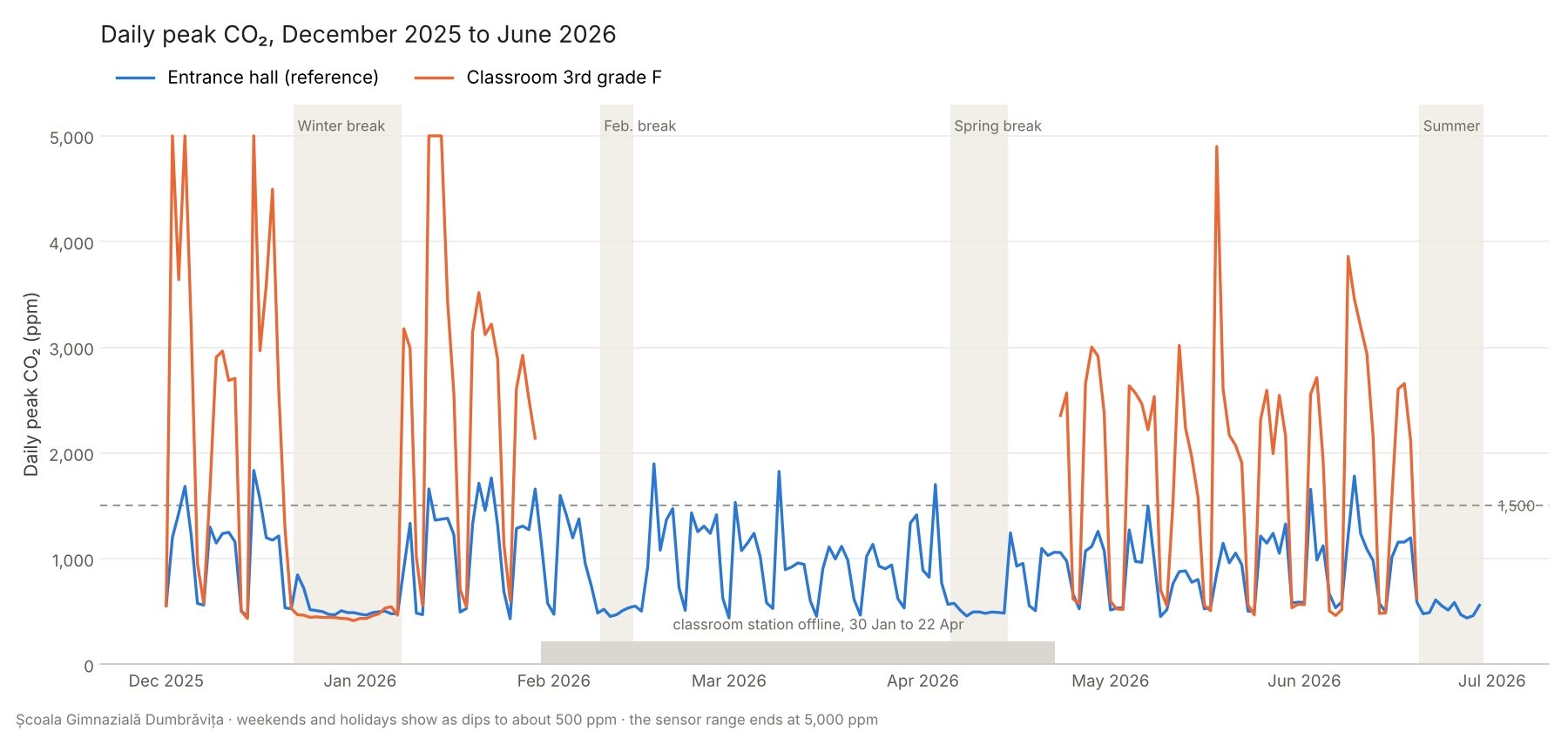
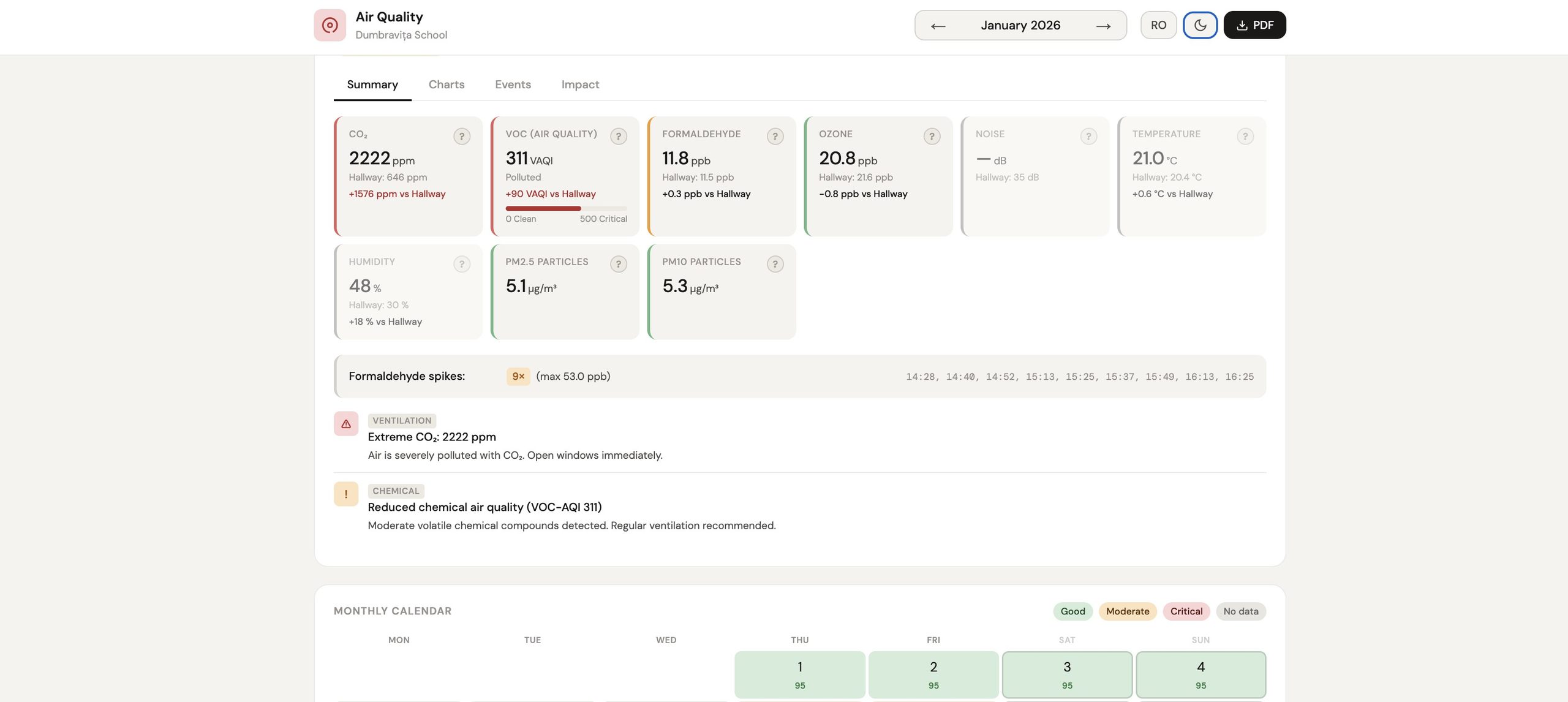
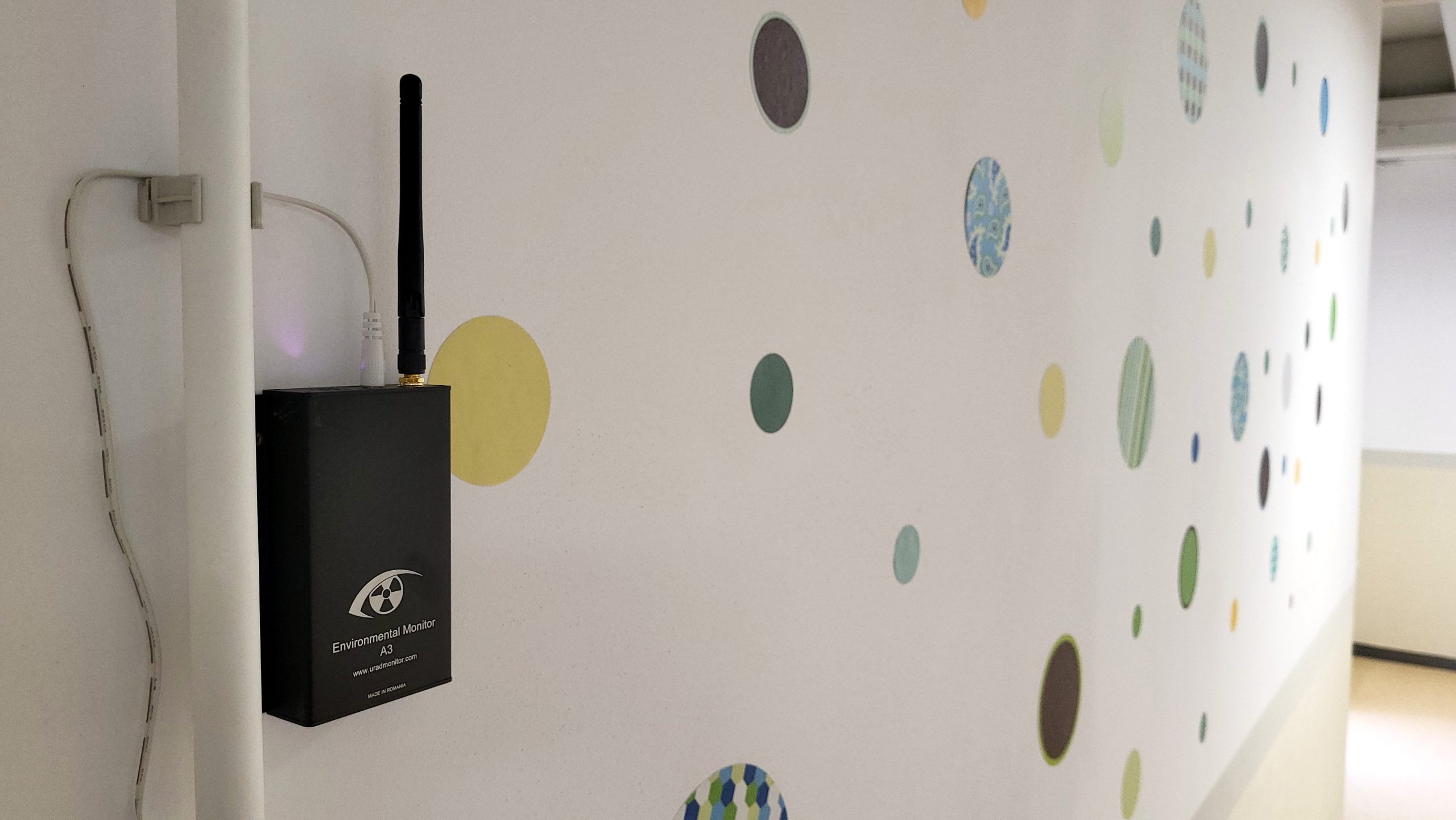
At Școala Gimnazială Dumbrăvița, in Timiș County, two uRADMonitor MODEL A3 stations measured the air in a classroom and in the entrance hall through the 2025 to 2026 school year.
- In winter, the median CO2 during lessons was 2,290 ppm. During 83% of lesson time it stayed above 1,500 ppm.
- In spring, with windows opened more often, the median fell to 1,610 ppm.
- The air exchange rate of the closed room was about 0.1 to 0.3 air changes per hour. A full class needs roughly ten times more.
Read the full study: Air Quality Monitoring in Schools, A Case Study in Dumbrăvița
How to measure CO2 correctly
- Use an NDIR sensor. Non-dispersive infrared sensors measure CO2 directly. Many cheap monitors only estimate “eCO2” from a VOC sensor. Those estimates do not follow real CO2 and are not suitable for decisions.
- Place it at breathing height, about 1 to 1.5 metres, away from windows, doors and the teacher’s desk, and not directly next to pupils.
- Record continuously. A reading every few minutes shows how CO2 rises during a lesson and falls during breaks. A single spot reading tells very little.
- Make it visible. When teachers can see the value or receive an alert, they air the room at the right time.
How to keep CO2 low
- Open windows fully during every break. Cross ventilation, with windows and door open, works fastest.
- In cold weather, short and complete airing is better than a window left slightly open all lesson.
- Set an alert at 1,000 or 1,500 ppm so nobody has to watch the screen.
- In renovated, airtight buildings, mechanical ventilation with heat recovery is the long-term solution.
Regulations
The EU Energy Performance of Buildings Directive (EU) 2024/1275 asks member states to promote the monitoring of indoor environmental quality in non-residential buildings. In Romania, the order for green schools (OME 4147/2022) includes indoor and outdoor air quality monitoring. Romanian readers can find the legal details and technical sheets on scoliverzi.uradmonitor.com.
Monitoring options
- SMOGGIE-CO2: a compact NDIR CO2 monitor for one room, with temperature and humidity.
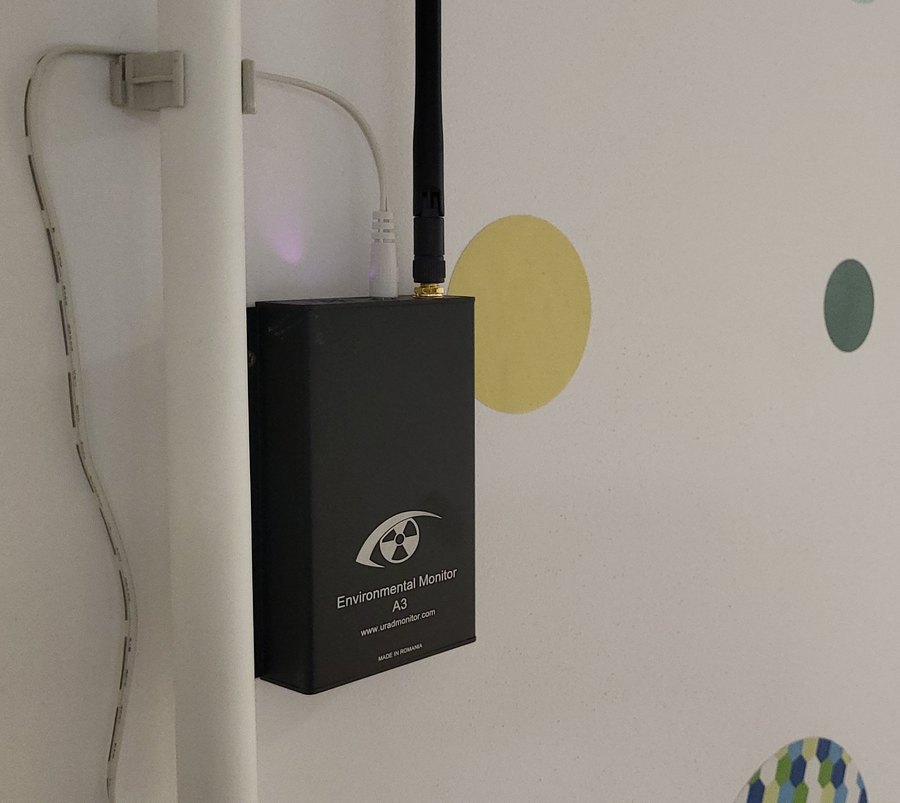
- MODEL A3: a complete station with CO2, particulate matter, VOC, formaldehyde, ozone, noise and climate. The Dumbrăvița study used two of them.
Both send data online, keep the history in the dashboard and support threshold alerts.
Liked this? Get monthly air quality findings.
One email a month from the uRADMonitor network. Unsubscribe anytime.
codemore code
~~~~