

Air quality monitors range from small plastic boxes to professional stations. The right choice depends less on the brand and more on what you want to find out. Seven questions help you decide.
1. What do you need to measure?
| Concern | Parameter |
|---|---|
| Stuffy rooms, ventilation, classrooms, offices | CO2 |
| Smoke, traffic, wood heating, outdoor pollution | PM1, PM2.5, PM10 |
| New furniture, paints, cleaning products | VOC, formaldehyde |
| Summer smog, traffic gases | Ozone, NO2, CO |
| Basements, ground floors, granite regions | Radon |
| Nuclear safety, background radiation | Gamma radiation |
| Busy roads, schools, workplaces | Noise |
A single-parameter device is cheaper and enough for a clear question. A multi-sensor station gives the full picture and shows how parameters relate, for example CO2 and VOC rising together when a room is occupied.
2. Indoor or outdoor?
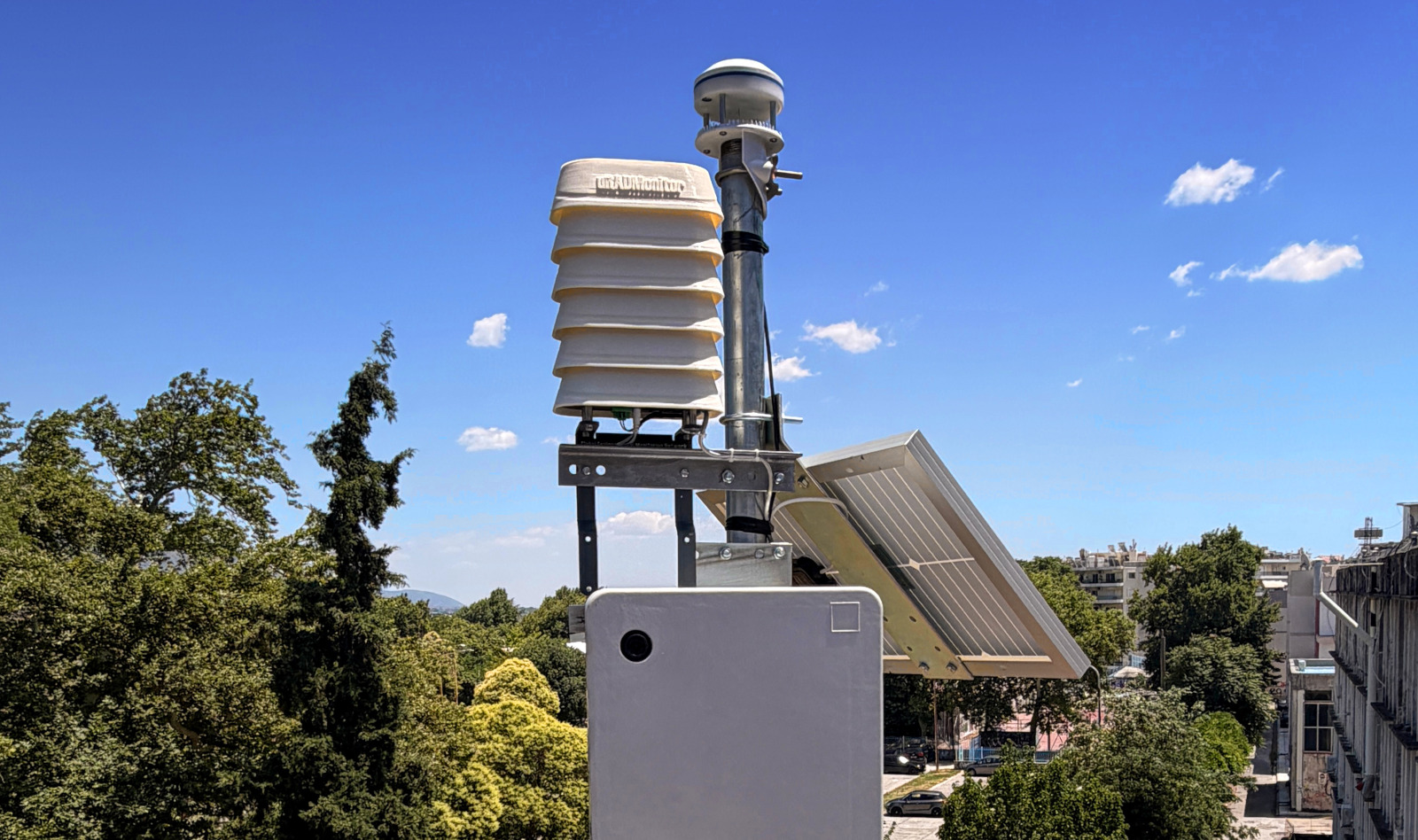
Outdoor monitors need a radiation shield, often called a Stevenson shield, that protects the sensors from rain and direct sun while letting air flow through. Without it, temperature, humidity and particle readings are distorted. Indoor monitors need a good position: away from windows, heaters and direct sources, at breathing height.
3. What sensor technology does it use?
- CO2: choose an NDIR sensor. Monitors that show “eCO2” estimate CO2 from a VOC sensor and do not follow the real value.
- Particulate matter: laser scattering sensors are standard in compact monitors. Look for PM1, PM2.5 and PM10 together.
- Gases: electrochemical cells are specific to one gas. Metal-oxide (MOX) sensors react to many gases and are better for trends than for exact values.
- Radiation: Geiger tubes are robust and reliable for background monitoring.
4. How will it connect?
WiFi is simple at home. Ethernet is more reliable in offices and schools. GSM works where there is no local network. LoRaWAN covers long distances with very low power. For remote places, check whether a solar power option exists.
5. What happens with the data?
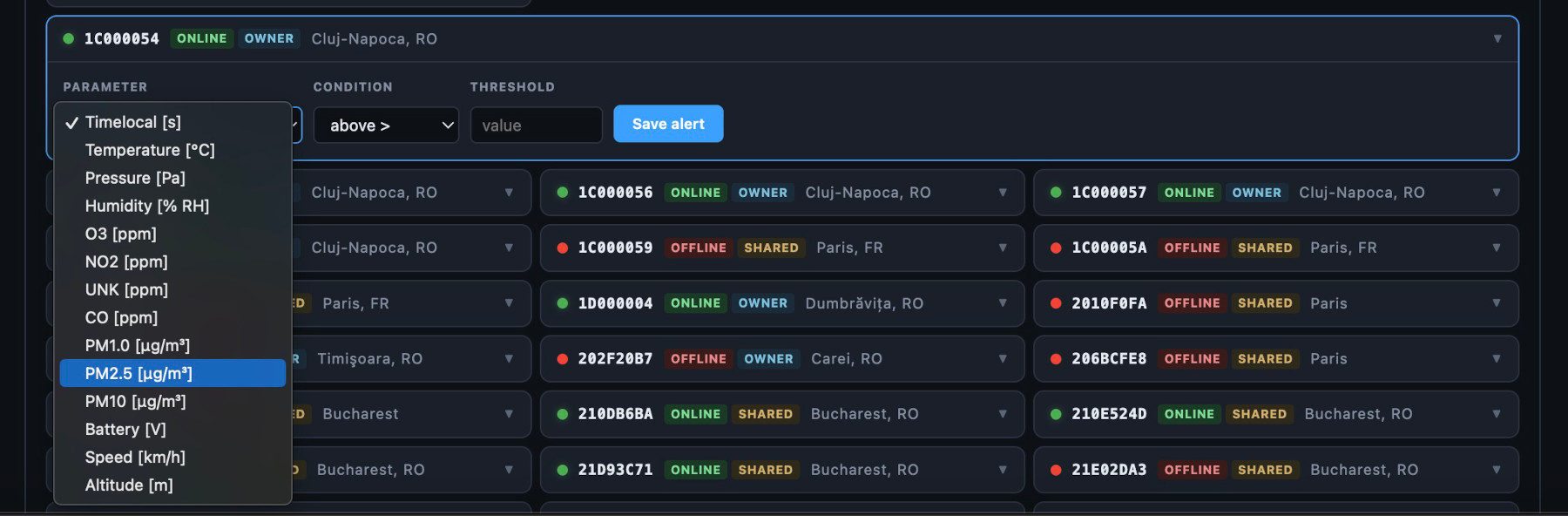
A screen on the device is useful in the room. For decisions you need history, charts, export and alerts. Check whether the monitor offers a dashboard, CSV export, an API for your own software, and alerts when a value crosses a threshold. Check also who owns the data and whether you can make it public.
6. How accurate does it need to be?
Low-cost monitors are excellent at showing changes, patterns and differences between places. They are not reference instruments for legal compliance. For a home, a school or a dense city network, they give far more useful information than one distant official station. Ask whether the manufacturer tests the devices and compensates for temperature and humidity.
7. What does it cost to keep running?
Some sensors age. Electrochemical cells and particle sensors are replaced after a few years. Ask about replacement parts, recalibration and support, not only about the purchase price.
Which uRADMonitor device fits which use
| Use | Device |
|---|---|
| CO2 in one room | SMOGGIE-CO2 |
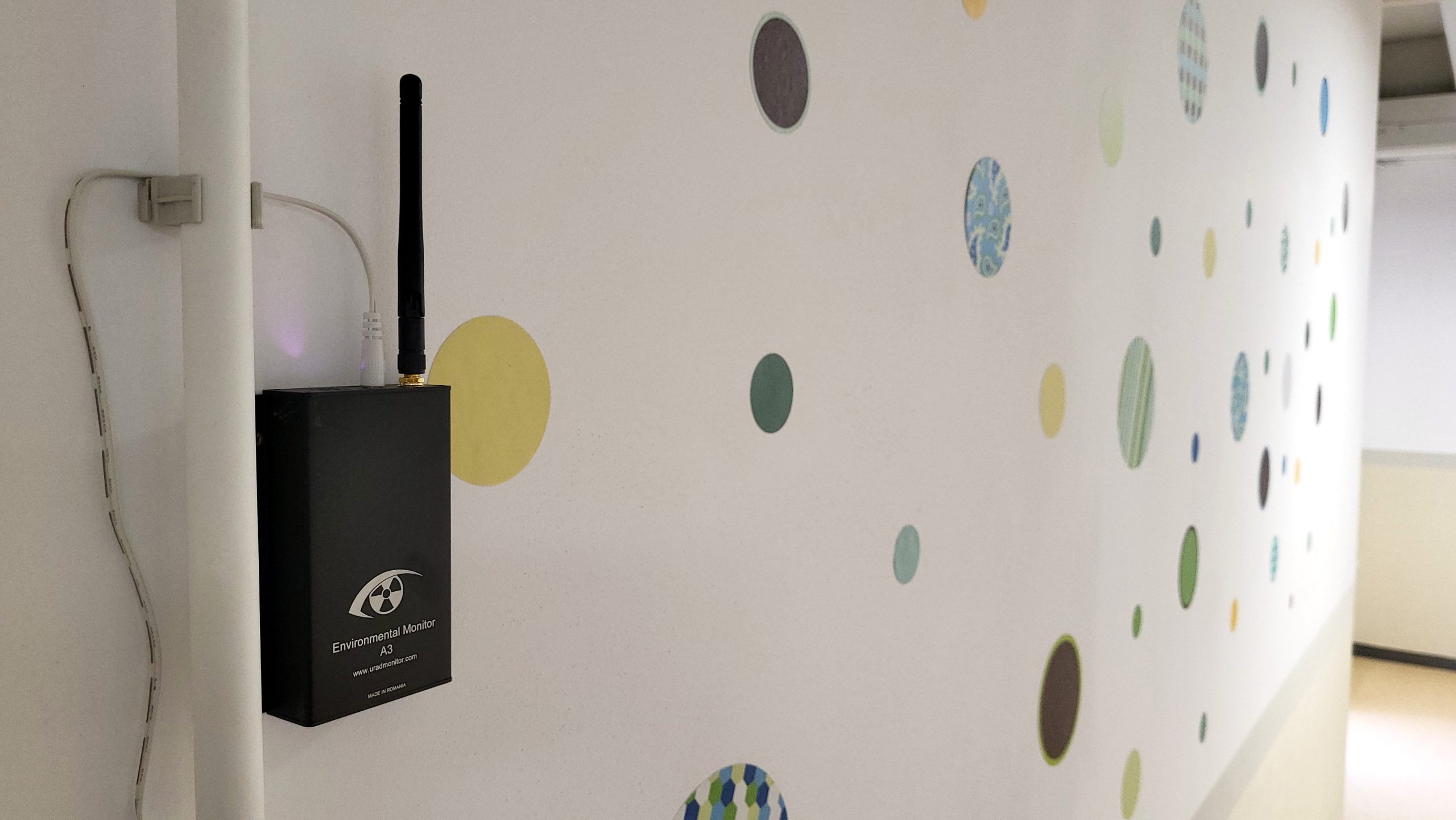
| Complete indoor air quality: home, office, classroom | MODEL A3 or MODEL A4 |
| Outdoor PM2.5 in your neighbourhood | SMOGGIE-PM |
| Complete outdoor station | MODEL A3 with the outdoor shield |
| City networks, traffic and industrial gases | MODEL CITY, MODEL INDUSTRIAL |
| One specific toxic gas | SMOGGIE-GAS, SENSIGAS |
| Radon | seeRADON |
| Background radiation | MODEL A |
| Noise | BUZZ |
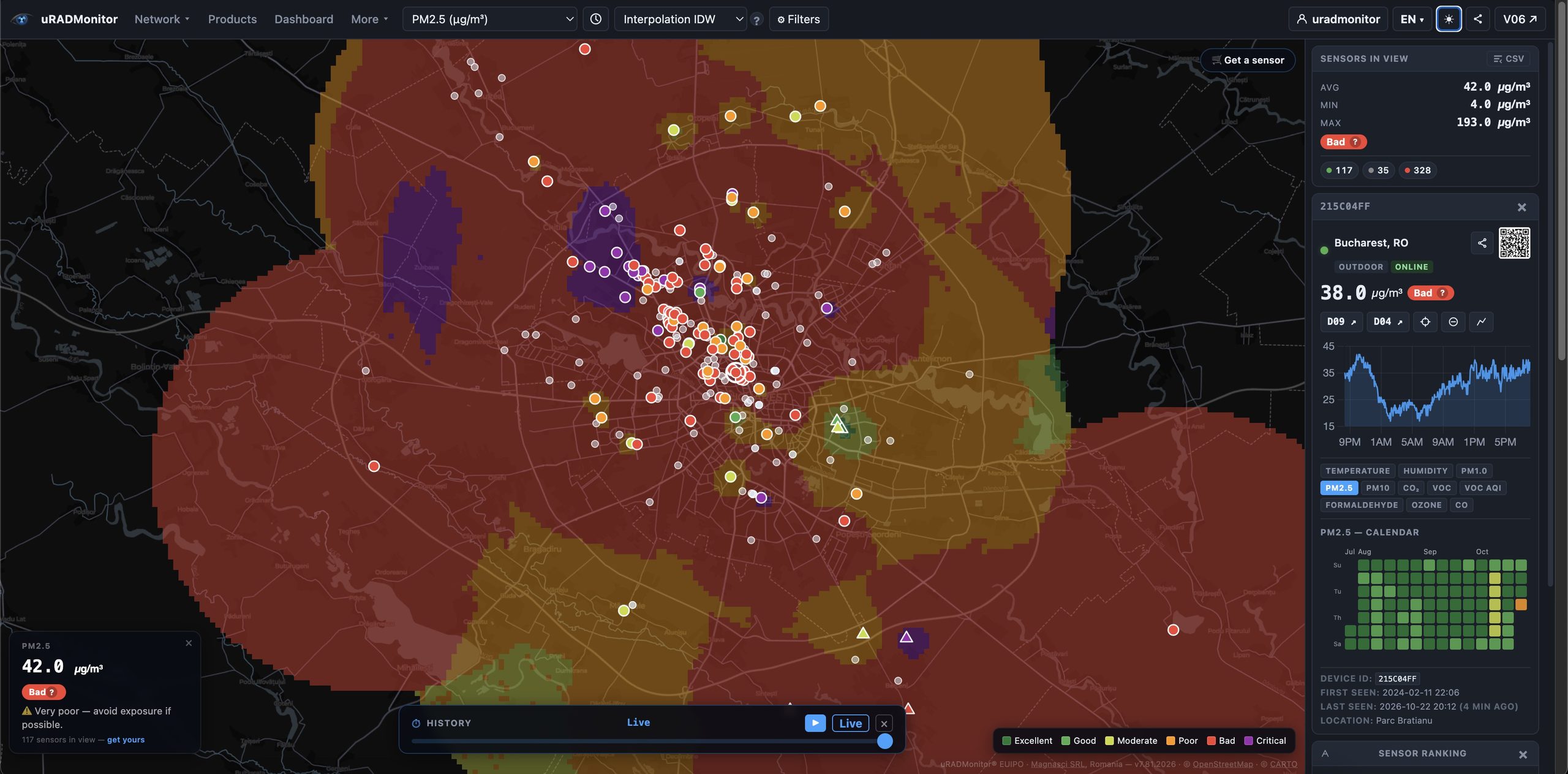
Every uRADMonitor device sends its data to the dashboard and can appear on the public map, where it adds one more point to the picture of your city. If you are not sure which device fits your case, contact us.
Liked this? Get monthly air quality findings.
One email a month from the uRADMonitor network. Unsubscribe anytime.
codemore code
~~~~