
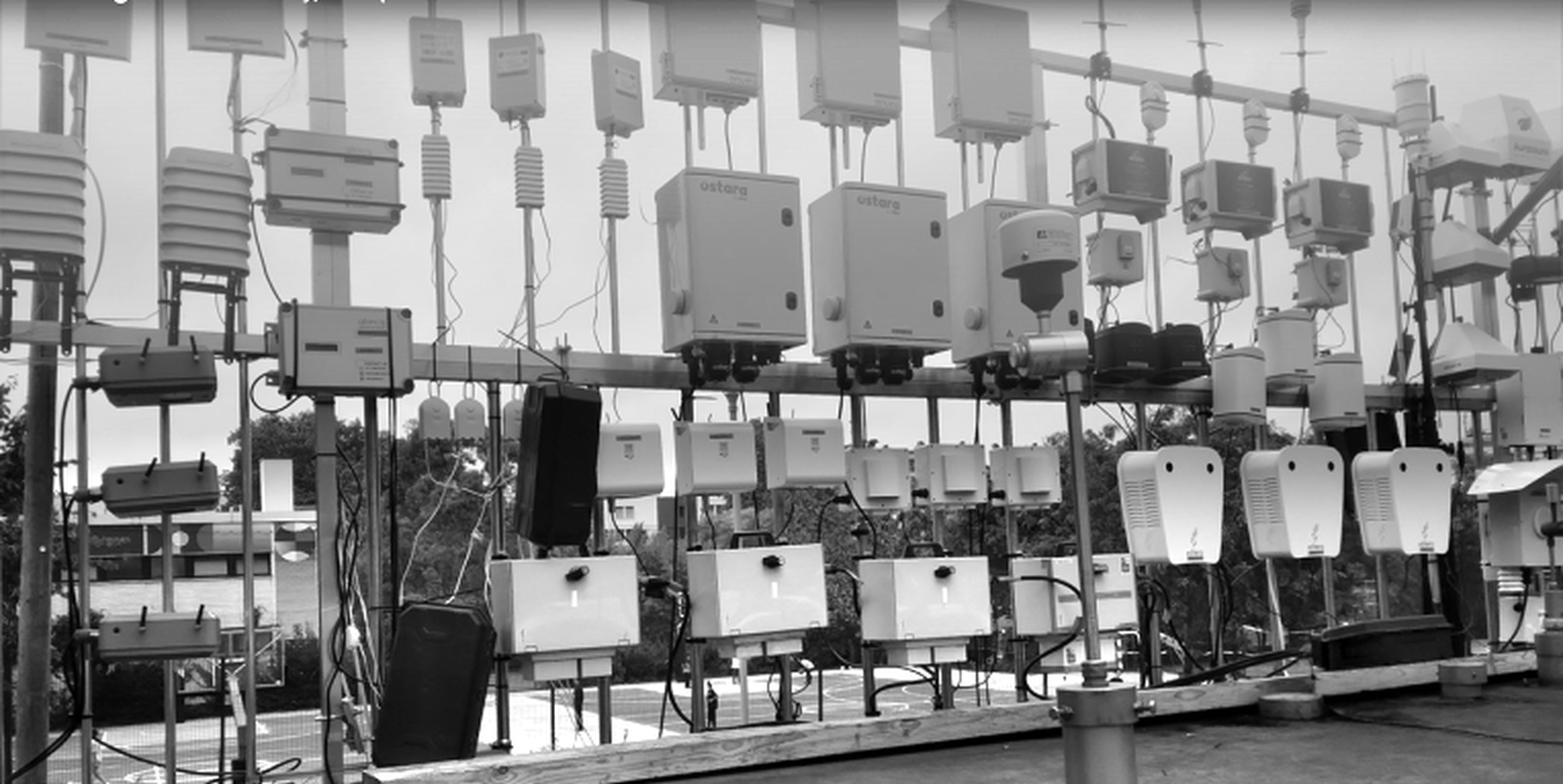
Indicative air quality measurements give municipalities a practical way to investigate pollution patterns beyond the locations of existing reference stations. Under Directive (EU) 2024/2881, their value depends on documented measurement performance, representative sampling and continuous quality assurance. This guide explains how to evaluate sensor systems and turn distributed measurements into reliable information for environmental planning and public procurement.
What are indicative air quality measurements?
Indicative measurements are an air quality assessment method with specific data quality objectives, distinct from fixed measurements. Classification depends on demonstrated performance and the measurement programme, not simply on sensor technology or purchase price. Distributed networks complement reference infrastructure by providing additional spatial and temporal information, particularly near roads, schools, residential areas and potential pollution hotspots.
Annex V: measurement uncertainty and data quality objectives
Annex V defines uncertainty requirements by pollutant and averaging period. For annual indicative measurements, Table 1 specifies PM2.5: 4 µg/m³ or 40%, PM10: 6 µg/m³ or 30%, and NO₂: 8 µg/m³ or 40%. The applicable absolute and relative criteria, table notes and transitional provisions must be considered together. Short-term averages have separate requirements. Data capture and temporal coverage are also essential; frequent reporting alone does not demonstrate compliance.
Visualisation: uRADMonitor.
Air quality sensor validation: beyond correlation
A high coefficient of determination (R²) shows how well a statistical relationship explains variability, but does not establish low measurement uncertainty. A credible evaluation examines bias, slope, residual errors, data capture and uncertainty across relevant concentrations and environmental conditions. Representative co-location with reference instruments and independent testing are essential tools for evaluating performance.
CEN/TS 17660-1 addresses sensor systems for gaseous pollutants and CEN/TS 17660-2 addresses particulate matter. Procurement specifications should identify the applicable edition, pollutants, intended use and evaluation conditions, and accept equivalent evidence of performance.
Independent evaluation and field performance of uRADMonitor
uRADMonitor instruments have been assessed in independent programmes including AIRLAB, AQ-SPEC and INCD-ECOIND. Evaluations cover several product families, including MODEL A3, MODEL A4, MODEL CITY, MODEL INDUSTRIAL and SMOGGIE. Relevant published evidence includes:
MODEL A3: A decade of continuous engineering and independent validation
Introduced in 2016, uRADMonitor MODEL A3 reached its 12th hardware revision and 100th firmware version in 2026. A decade of research, engineering, field deployments and user feedback has shaped a mature multiparameter environmental monitoring platform. Successive revisions incorporate improvements in sensor integration, measurement algorithms, electronics, environmental protection and maintainability.
The documented evolution of MODEL A3 demonstrates long-term technological continuity. Independent evaluations by INCD-ECOIND, AQ-SPEC and AIRLAB complement this engineering history with published evidence of measurement performance.

The original A3 platform alongside earlier uRADMonitor instruments.
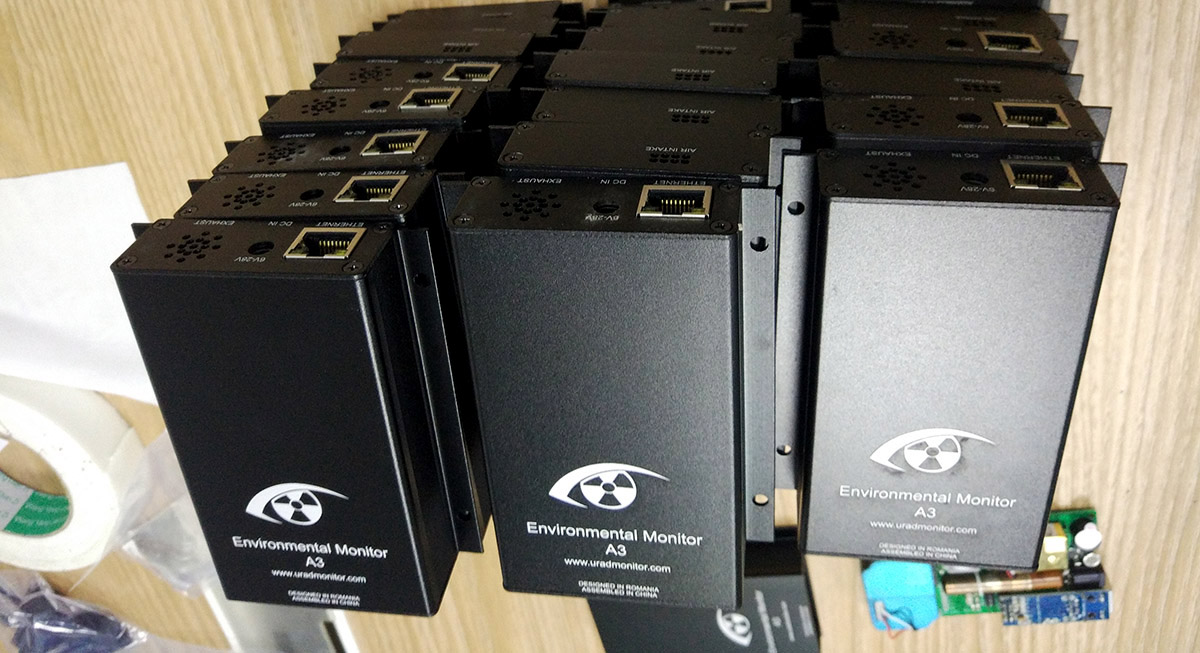
Series production, automated testing and calibration.

Redesigned electronics and Sensirion environmental sensor.
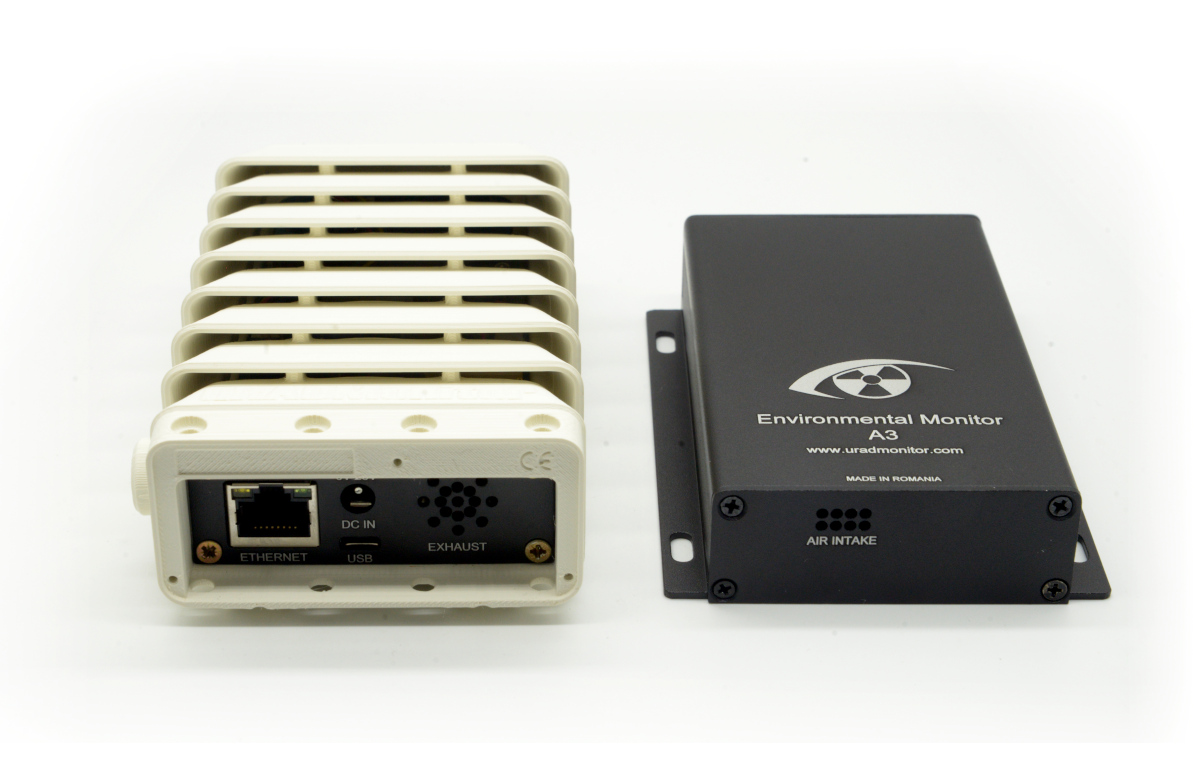
Reinforced outdoor enclosure and improved mounting.
In 2019, revision HW108 introduced a common motherboard and interchangeable connectivity modules. Hardware version 10 and later allow replacement of ageing sensors without soldering, reducing servicing time and lifecycle costs for indicative monitoring networks.
- INCD-ECOIND: MODEL A3 evaluation, including particulate matter comparison
- AQ-SPEC: independent MODEL A3 field evaluation
- AIRLAB 2023: MODEL A3 evaluation
MODEL CITY: AIRLAB independent evaluations, 2021–2025
MODEL CITY follows the same continuous improvement philosophy. Its evolution from HW1 to HW3 and HW4 was accompanied by renewed independent evaluation in three consecutive AIRLAB Microsensors Challenge editions. This sequence makes scientific evaluation an integral part of the engineering lifecycle, rather than a one-off product qualification.
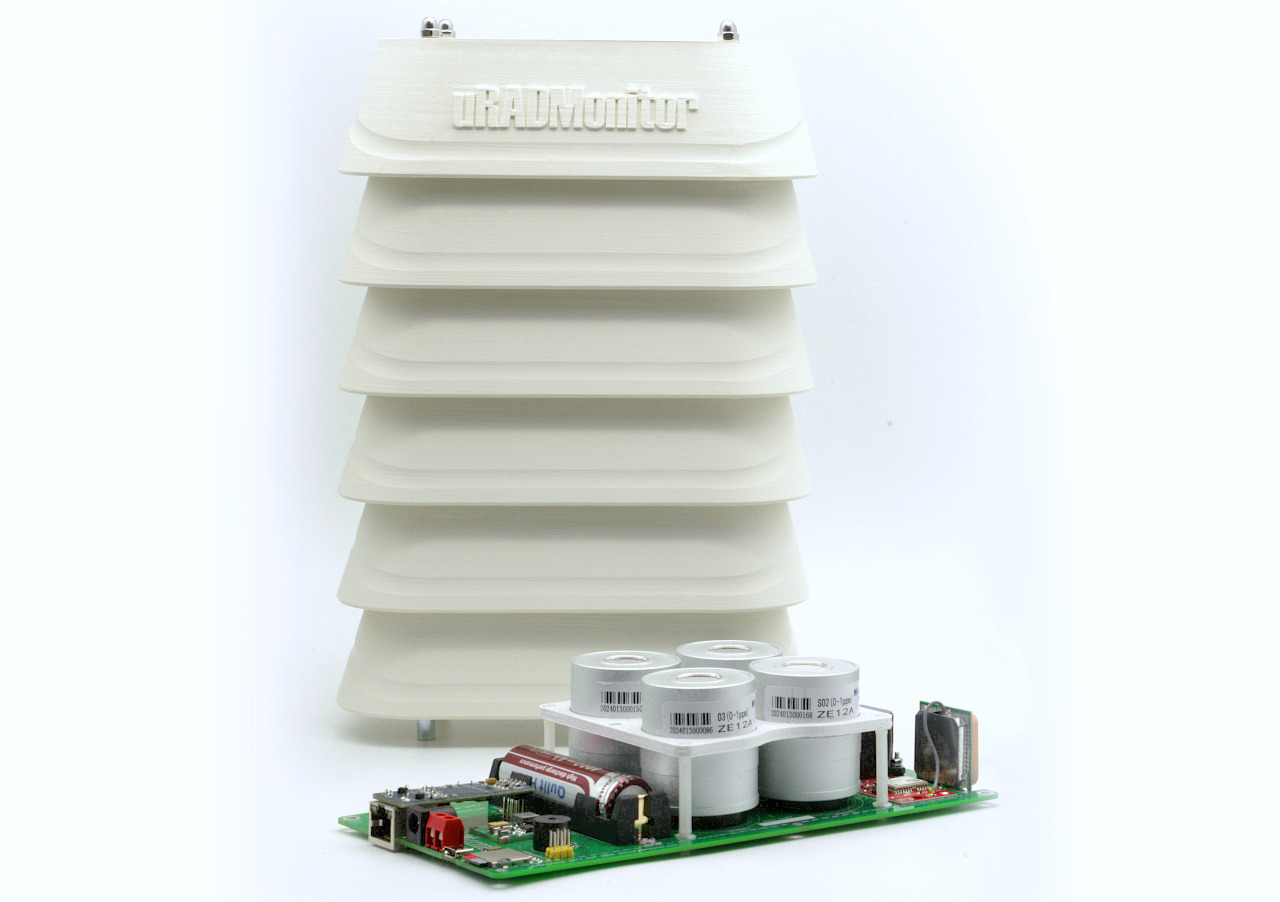
- AIRLAB 2021: MODEL CITY HW1 evaluation
- AIRLAB 2023: MODEL CITY HW3 evaluation
- AIRLAB 2025: MODEL CITY HW4 evaluation
The 2025 assessment reports excellent accuracy for PM1, very good accuracy for PM2.5 and good accuracy for PM10. Utility and environmental performance were both rated very good.
Together, these reports document a sustained cycle of hardware development, laboratory and field evaluation, and further engineering refinement. For municipalities and environmental authorities, this history provides tangible evidence of technological maturity, maintainability and a supplier committed to continuous development: important considerations when investing in long-lived monitoring infrastructure.
In Cluj-Napoca, a seven-day PM10 comparison between a MODEL CITY instrument and an RNMCA reference station yielded an estimated uncertainty of 13%, with 167 paired hourly observations. The analysis demonstrates the practical value of reference integration and statistical evaluation. This short, non-colocated comparison is not itself a formal assessment of daily or annual regulatory uncertainty. See the full field analysis and municipal procurement requirements.
Continuous quality assurance and reference-based calibration
An independent evaluation establishes evidence of instrument performance; operational quality assurance addresses performance throughout the network lifecycle. Municipal projects should specify the following capabilities:
- Preservation of raw observations and traceable corrected values.
- Reference-data integration, statistical comparison and validation of corrections on independent data.
- Versioned calibration coefficients and documented maintenance interventions.
- Parameter-level fault detection, quality flags and valid-data availability reports.
- Machine-readable exports, historical archives and documented data access.
The uRADMonitor platform provides reference intercomparison tools, historical archive access and direct local data access where supported. These capabilities form a foundation for extending quality assurance across municipal networks. Automated calibration and recurring managed services should be specified according to the agreed project scope and available implementation.
Spatial representativeness under Implementing Decision (EU) 2026/1208
Commission Implementing Decision (EU) 2026/1208 establishes technical rules for modelling and spatial representativeness of sampling points. Article 6 provides for fixed and indicative measurements in representativeness assessments. Indicative sampling must represent the relevant assessment period; when used alone, its spatial distribution and number of locations should capture expected concentration variability.
This creates practical project opportunities for distributed monitoring beyond permanent installations:
- Temporary and seasonal measurement campaigns.
- Assessment of the spatial representativeness of existing reference stations.
- Identification of pollution hotspots and monitoring gaps.
- Evaluation and validation of atmospheric dispersion models.
- Optimisation of future monitoring station locations.
- High-resolution urban pollution mapping, combining observations with appropriate spatial analysis.
Campaign duration, station placement, pollutants and validation methods must match the intended assessment. Article 9 of the implementing decision addresses the use of measurement results in air quality assessment. Official use remains subject to applicable assessment requirements; Article 9 of the directive permits reductions in fixed sampling points only under specified conditions.
Technical requirements for municipal procurement
Authorities should request pollutant-specific independent evaluation reports, define data quality and availability targets, require documented calibration and data access, and establish acceptance tests and maintenance responsibilities. Requirements should be functional, proportionate and open to equivalent evidence. Our technical procurement guide and tender template provide a starting point for project-specific specifications.
Resources for planning municipal air quality networks
- EU Directive 2024/2881: guide for municipalities
- Five-year lifecycle costs of municipal monitoring networks
- Cluj-Napoca: URBREATH deployment
- Air quality monitoring in schools: Dumbrăvița case study
Air quality monitoring solutions and assessment projects
Drawing on deployments in Bucharest, Cluj-Napoca, Timișoara, Brașov and Bistrița, uRADMonitor offers independently evaluated instruments and technical consultancy for network design, instrument selection and data integration. Municipalities, environmental authorities, research institutions and consultancies can also discuss targeted measurement campaigns and spatial assessment projects, with deliverables and operating services defined for each project.
Request a technical proposalLiked this? Get monthly air quality findings.
One email a month from the uRADMonitor network. Unsubscribe anytime.

codemore code
~~~~