
The Project
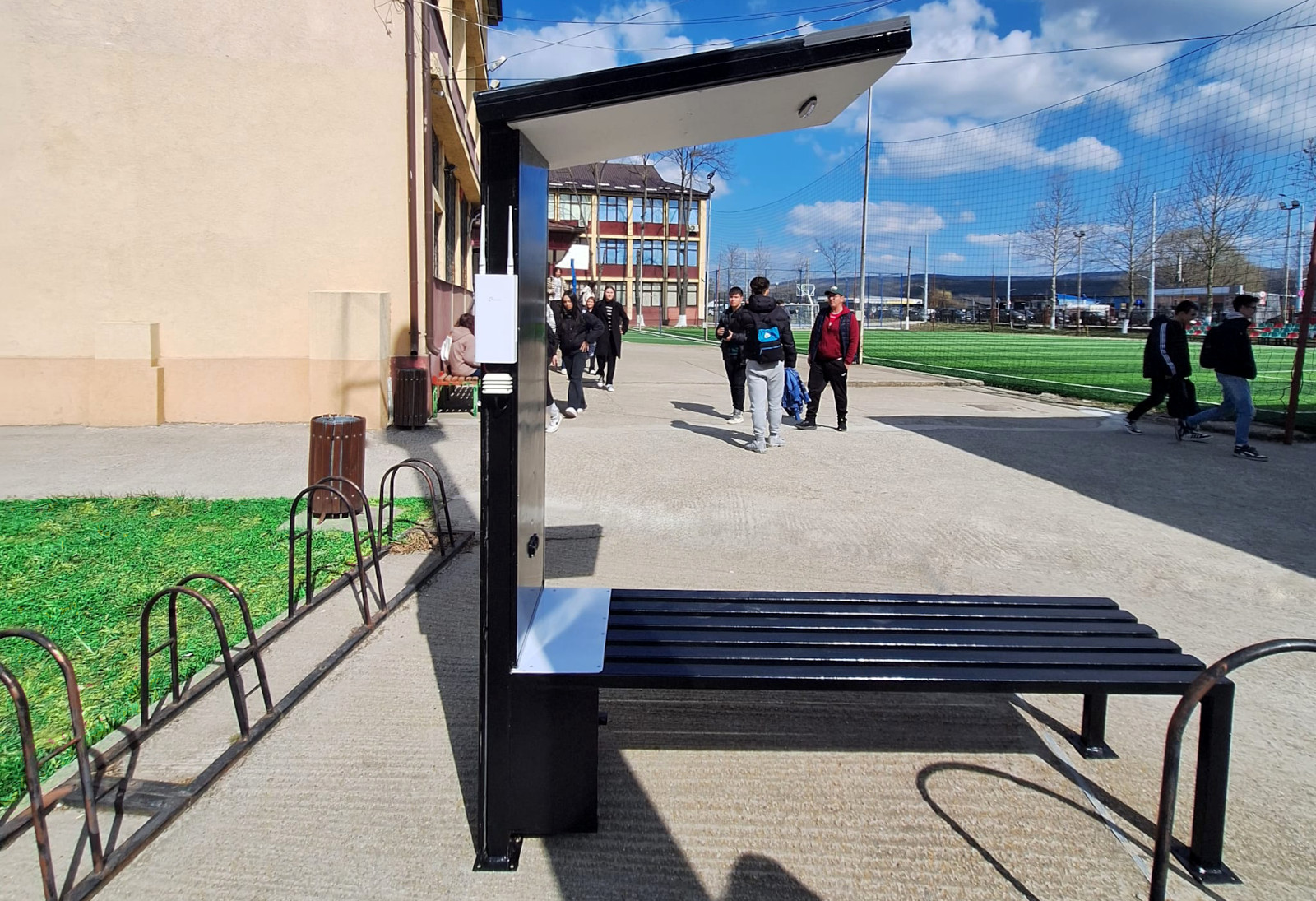
Students at the Emil Racoviță Theoretical High School in Vaslui set out to do something most schools wouldn’t attempt: design and build a smart solar bench from scratch. They built it, wired it, and equipped it with electronics and the result is a functional piece of outdoor furniture that doubles as an environmental monitoring station, powered entirely by the sun.
The bench was unveiled during an Erasmus+ mobility event hosted by the school, with students and teachers visiting from Germany, France, and the Czech Republic. The air quality monitoring component drew particular attention from the Czech delegation , representatives of one of Prague’s top high schools, who requested full technical documentation on the sensor and the API platform behind it. The school shared everything freely, which reflects the spirit of the project from the start.
The Sensor: uRADMonitor SMOGGIE-PM
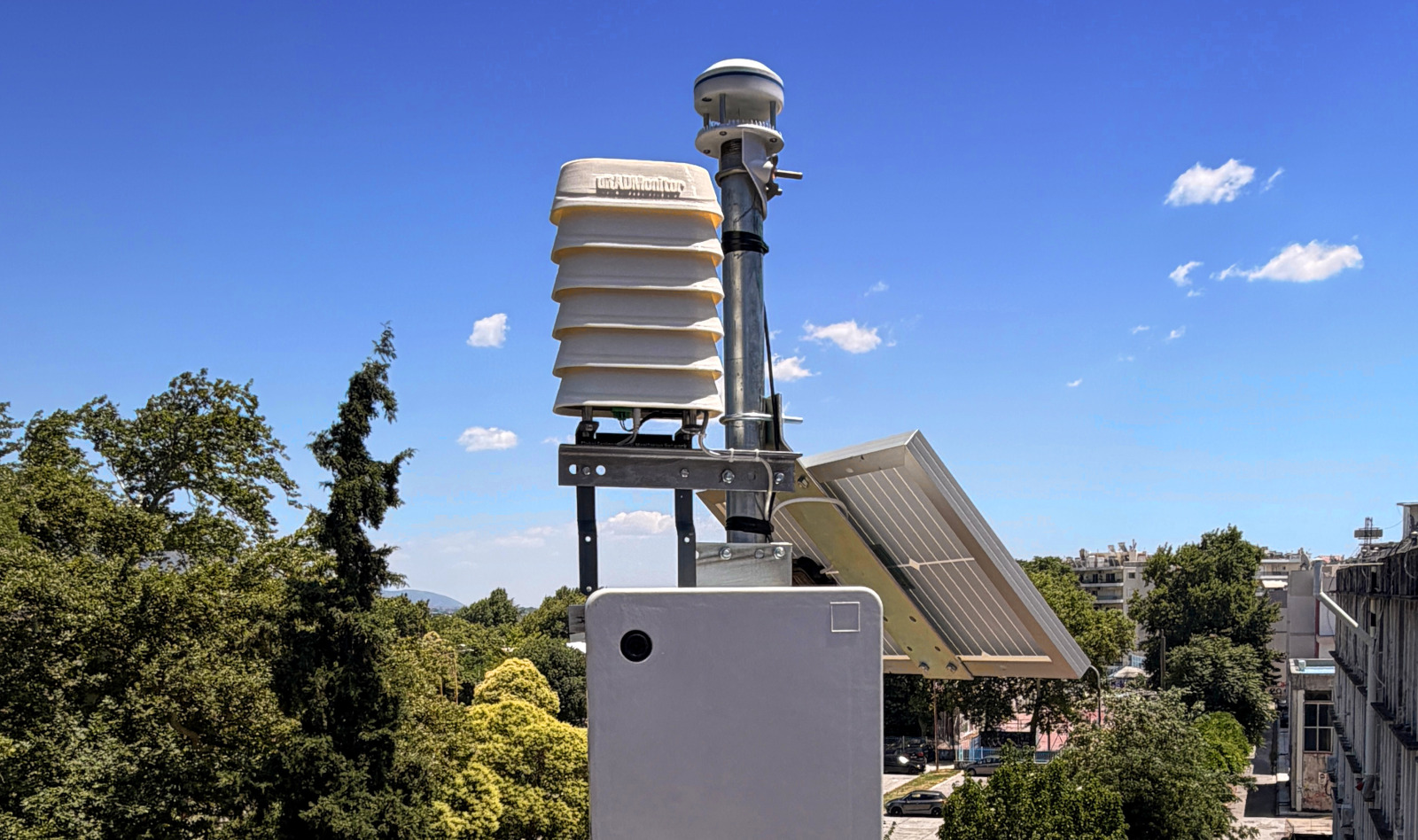
The air quality station on the bench is built around the uRADMonitor SMOGGIE-PM, a compact automated monitor that uses a high-quality laser scattering sensor to detect fine particulate matter (PM1, PM2.5, and PM10) along with temperature and humidity. It connects via WiFi and pushes data continuously to the uRADMonitor cloud, where readings are accessible in real time through the public API or the uRADMonitor dashboard. Its accuracy has been independently validated: the SMOGGIE took two prizes at the AIRLAB Microsensors Challenge 2021 in Paris, then won again at AIRLAB 2023 this time across two categories, Outdoor Air Monitoring and Outdoor Air Awareness, competing against sensors from around the world.
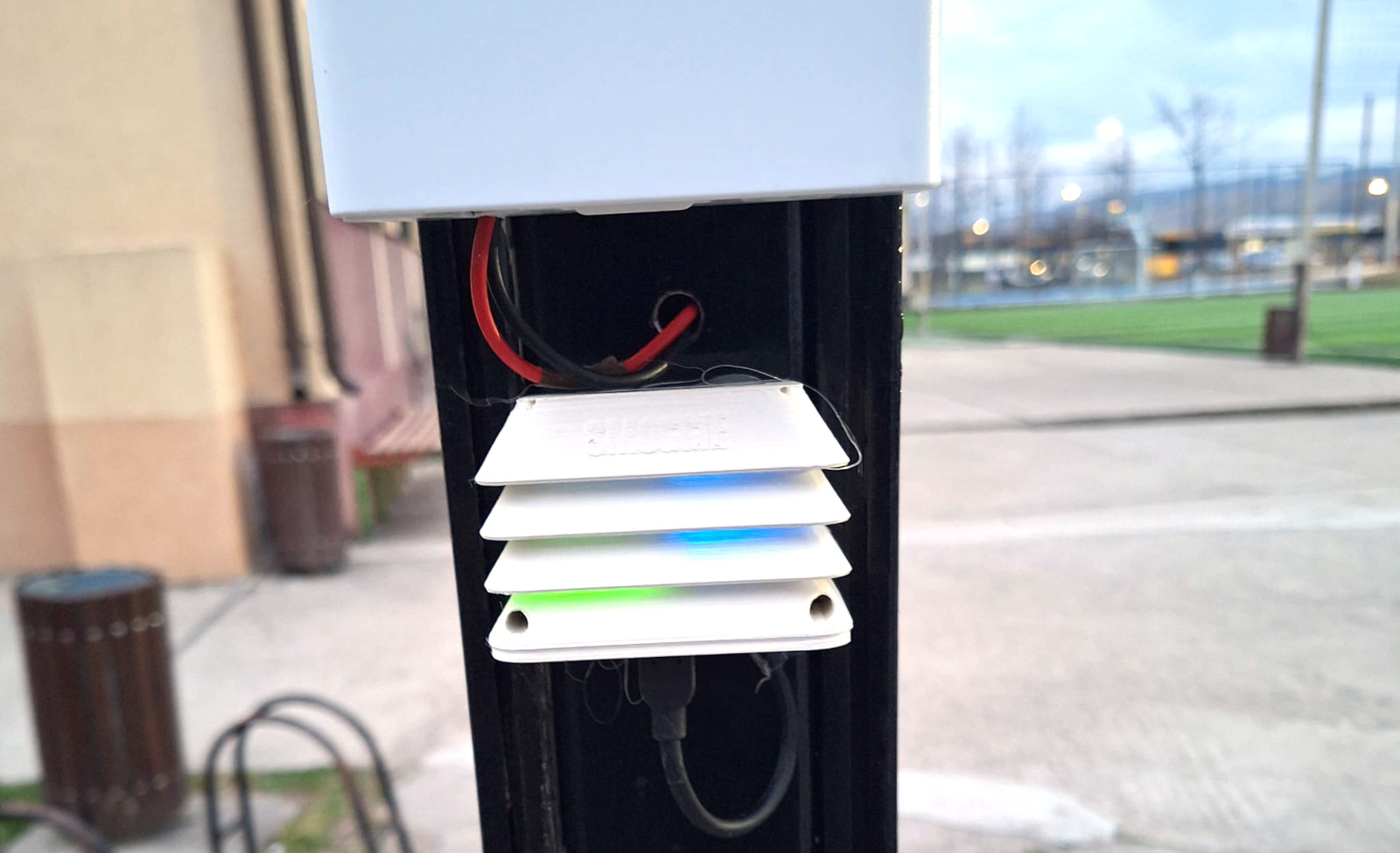
What makes the SMOGGIE particularly well-suited for a student project is that it is fully open source: hardware schematics, firmware, and enclosure files are all available on GitHub. Anyone can study it, build it, or adapt it. The bench in Vaslui uses a ready-made unit, but the sensor was designed to be understood and reproduced, not just consumed.
Students Building Sensors: A Growing Trend
Vaslui is not the only school to have taken this path. In September 2022, the University of Craiova’s Physics Department ran an Erasmus+ summer school “Application of Advanced Technologies in Teaching and Research in the Field of Air Pollution” where 21 students from Bulgaria, Turkey, Slovakia, and Romania built their own SMOGGIE sensors by hand. They soldered the components, programmed the boards with Arduino, and 3D-printed the enclosures in the university’s fab lab. The sensors they built were subsequently installed in all four countries, adding new data points to the global uRADMonitor network. uRADMonitor founder Radu Motișan held a workshop at that event on IoT fundamentals and hardware entrepreneurship.
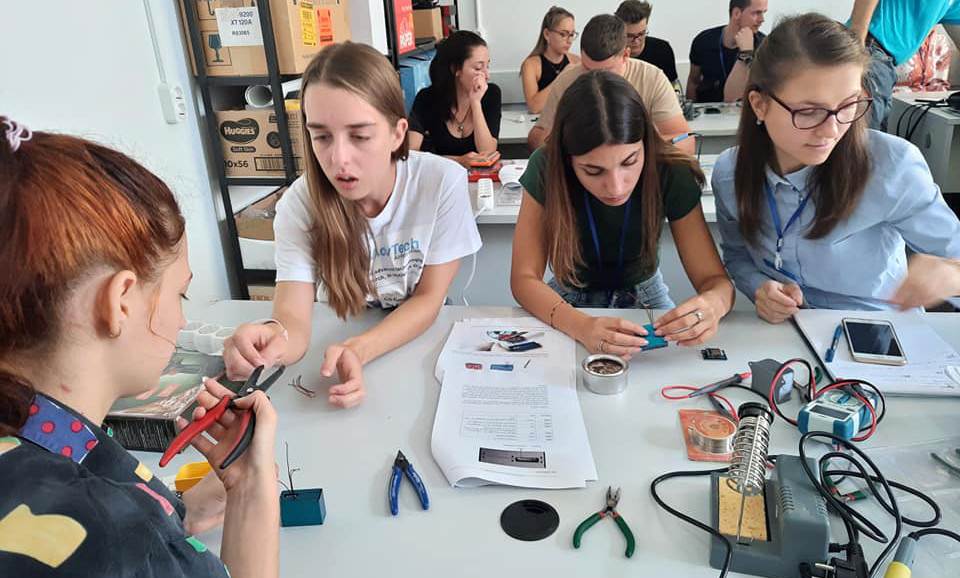
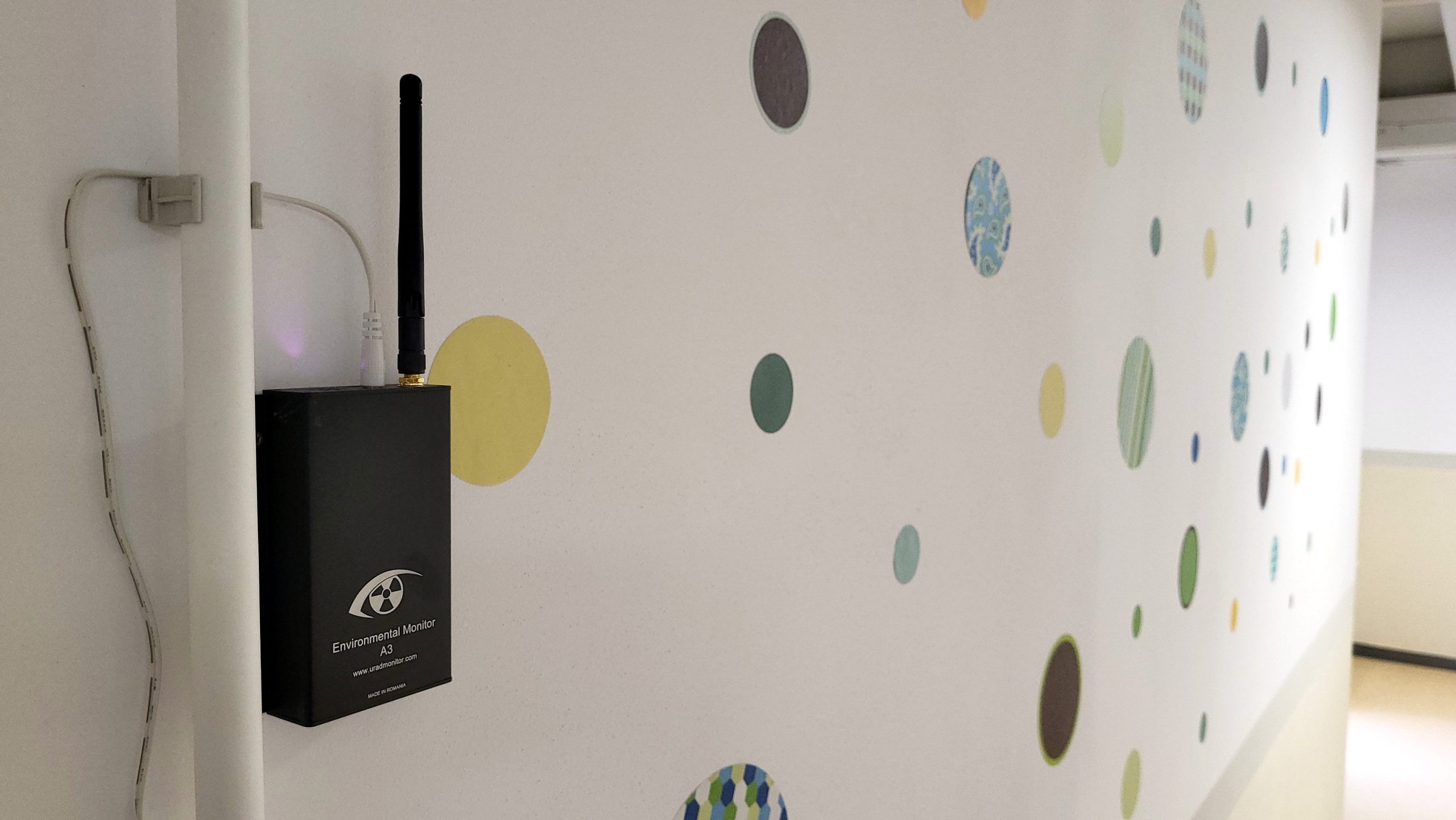
The Craiova summer school returned for a second edition in 2023, with 22 students from Turkey, Slovakia, Bulgaria, and Romania repeating the same hands-on formula: soldering, Arduino programming, and 3D printing and deploying their sensors across Europe and West Asia. More recently, the Erasmus+ EcoRoots project brought uRADMonitor SMOGGIE sensors into classrooms in Romania, Portugal, Turkey, and Latvia, with students measuring air quality in their own school yards and feeding that data into the global uRADMonitor network:
What if students could measure the air quality of their own school yard, compare it with data from a school in Portugal, and contribute that data to a global environmental monitoring network, all as part of their classroom curriculum?
The Vaslui project follows the same logic: put the technology in students’ hands, let them build something real, and connect it to the world.
More Than a Bench
The smart bench at Emil Racoviță High School is not just a place to sit. Anyone who uses it is also sitting next to a live air quality monitor, one that continuously measures the particulate matter concentration in the air around them. The data is publicly accessible, which means the bench contributes environmental information to the community, not just shade.
The full documentation for both the bench and its electronics is available free of charge to any school that wants to replicate it. Schools interested in the project can reach out at asplervs@gmail.com.
codemore code
~~~~