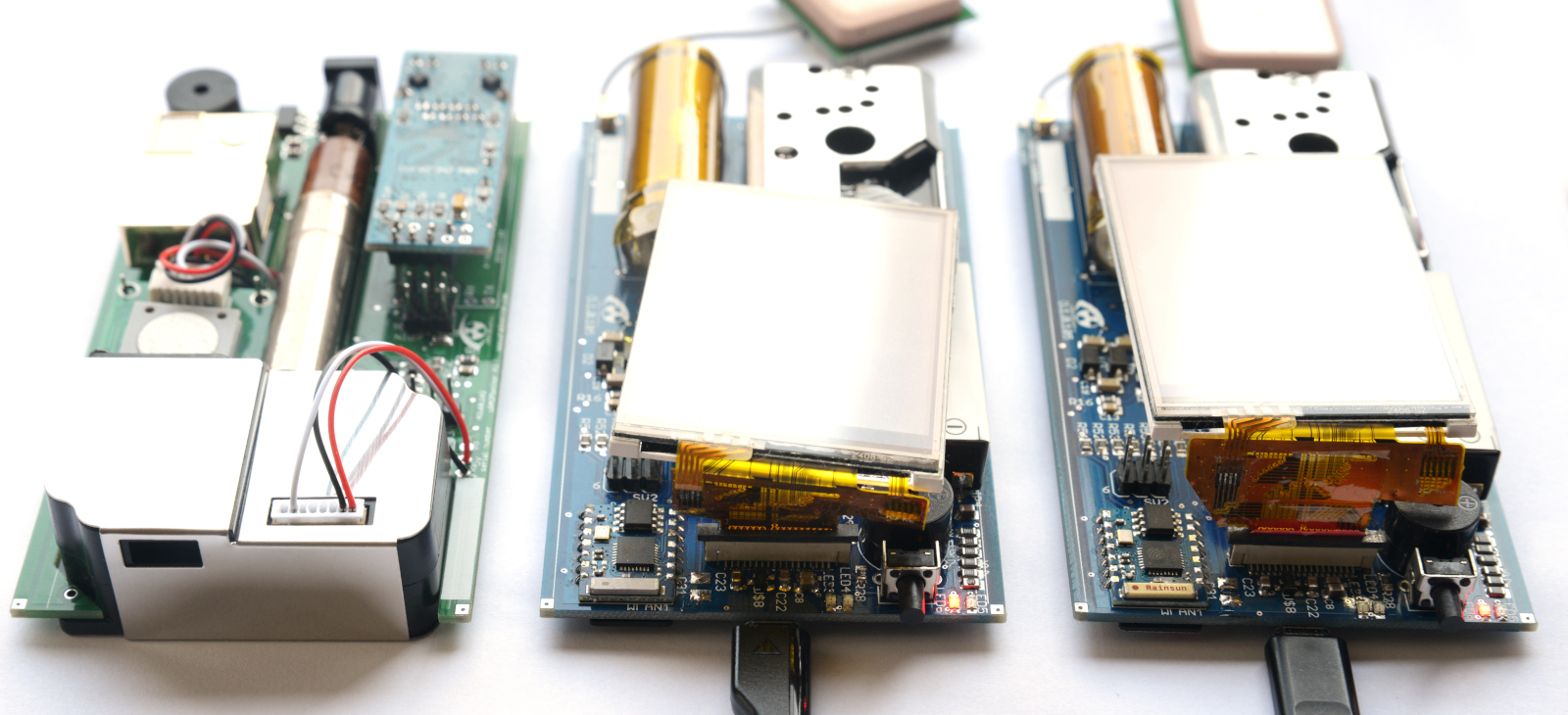
A radiation monitor is an instrument that measures ionising radiation continuously and reports the result as a number you can read or log. Unlike a one-off survey with a handheld meter, a radiation monitor is designed to run unattended, around the clock, and to raise an alert when levels rise above normal background. This is what makes radiation monitoring useful for homes, workplaces, research and public networks.
How a Radiation Monitor Works
Most radiation monitors are built around a Geiger-Müller tube. Each time an ionising particle (alpha, beta or gamma) passes through the tube, it produces an electrical pulse. The monitor counts these pulses over time, giving a raw rate in counts per minute (CPM). Using a tube-specific conversion factor, that count rate is turned into an estimated ambient dose rate in microsieverts per hour (µSv/h), the figure most people recognise.
Because the conversion depends on the tube and the type of radiation, two monitors with different tubes can report slightly different µSv/h values for the same field. That is normal, and it is why consistency and calibration matter more than a single absolute reading. For context on what the numbers mean, see what a normal radiation level is.

Types of Radiation Monitor
- Personal dosimeters: small wearable devices that track the cumulative dose a person receives, used by radiology, nuclear and industrial workers.
- Handheld survey meters: portable instruments for spot checks, finding a source or scanning a surface.
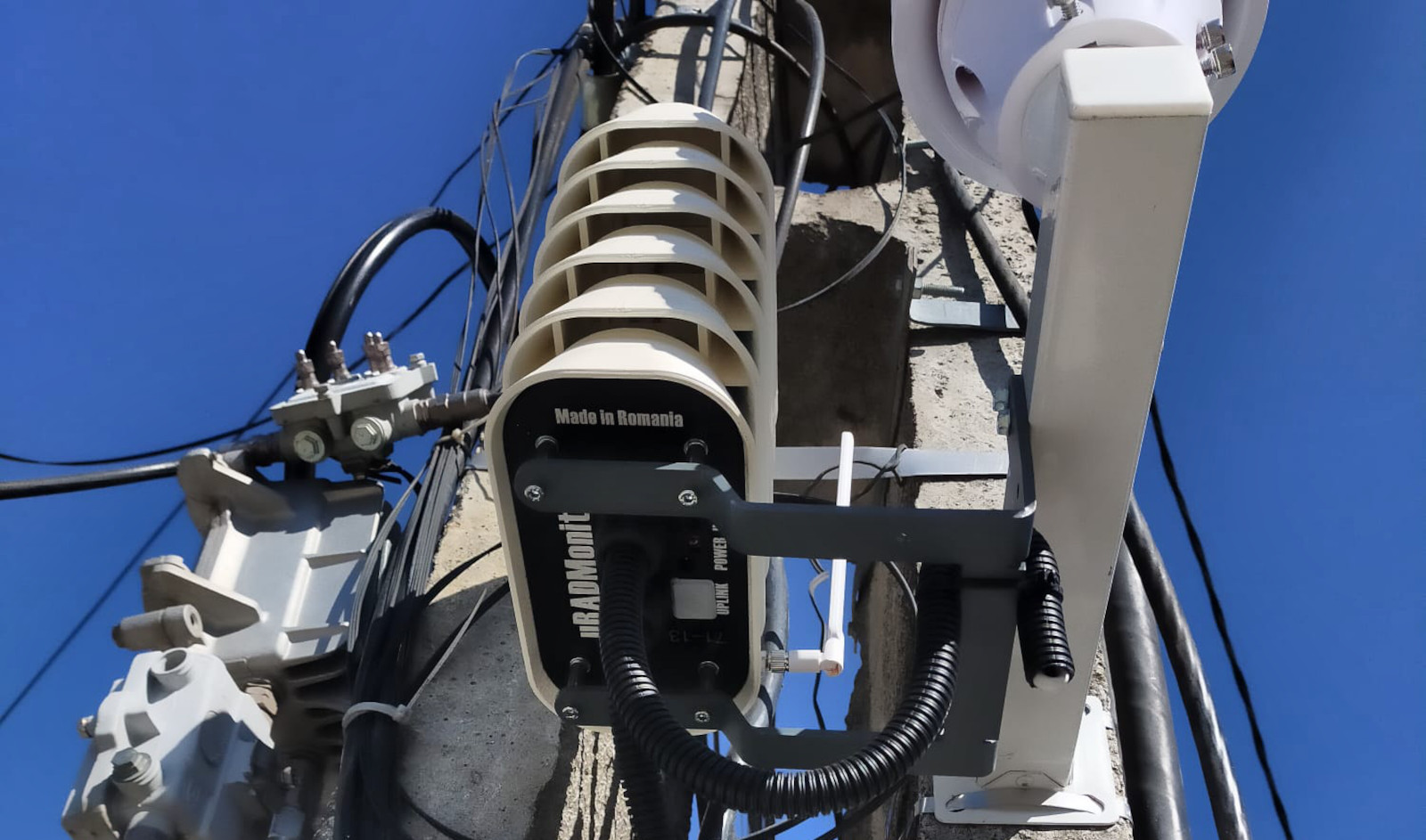
- Fixed monitoring stations: permanently installed units that measure continuously at one location and log or transmit the data. This is where “real-time radiation monitoring” happens.
- Networked monitors: fixed stations connected to the internet, so their readings feed a shared live map rather than staying on the device.
Real-Time and Networked Radiation Monitoring
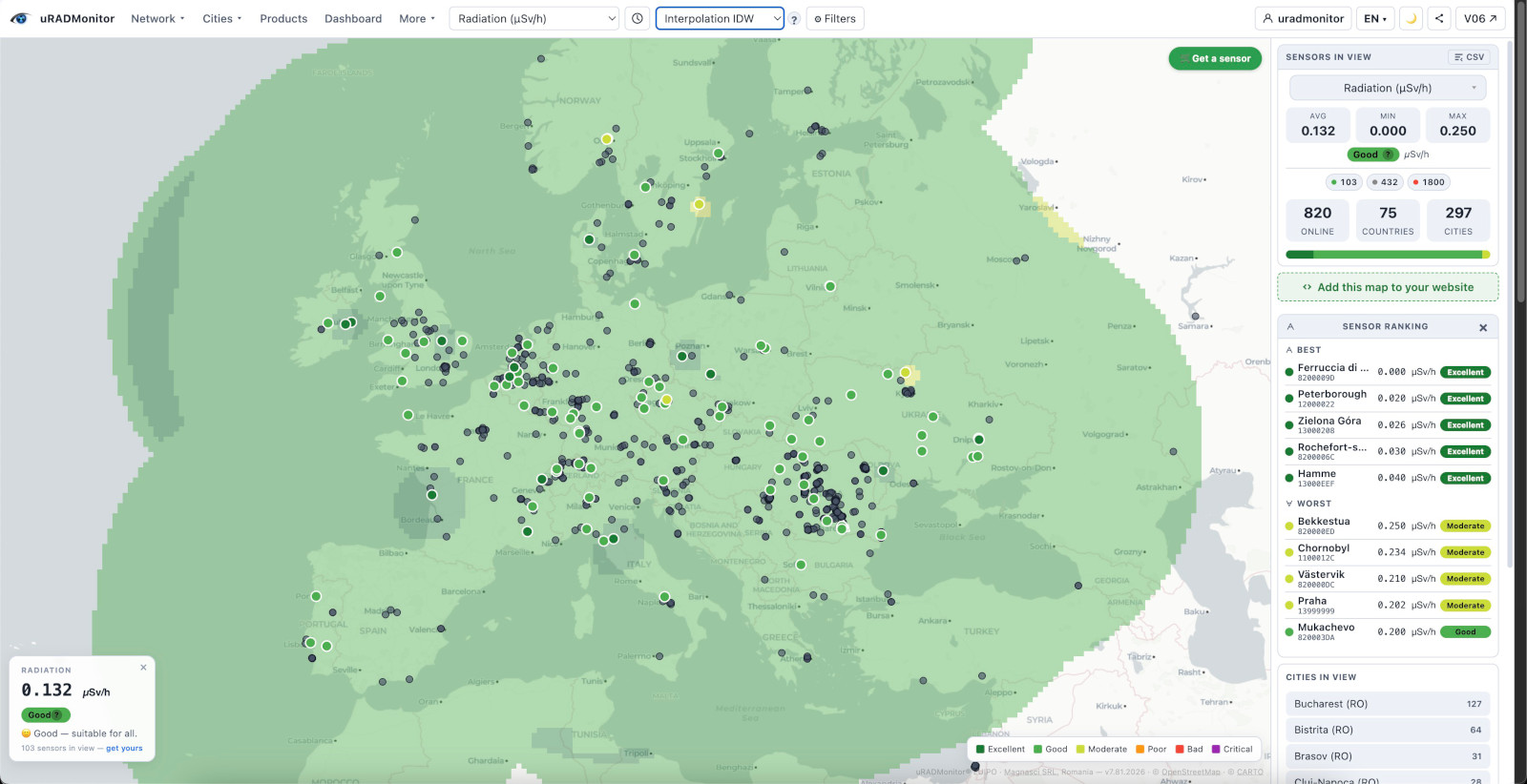
A single monitor tells you about one spot. A network of monitors tells you how radiation behaves across a city, a country or the planet, and makes it possible to see a change the moment it happens. The uRADMonitor network does exactly this: hundreds of fixed Geiger counter stations report continuously, and their dose rates appear together on a live radiation map by country.
Real-time monitoring matters because background radiation is not perfectly constant: it varies with altitude and geology, and rises briefly during rain as it washes natural radon decay products out of the air. Continuous data lets you separate these ordinary fluctuations from a genuine anomaly worth investigating.
What a Radiation Monitor Measures
The core output is the ambient dose rate in µSv/h. Typical outdoor background is roughly 0.05 to 0.20 µSv/h. A good monitor also logs history, so you can see trends over hours, days and months, and many will trigger a threshold alert if the reading climbs above a level you set. A Geiger-based monitor counts events but does not identify which isotope produced them; isotope identification needs a spectrometer, a different and more specialised instrument.
How to Choose a Radiation Monitor
For continuous, unattended use, look for: a sealed, weatherproof enclosure if it will sit outdoors; a quality Geiger tube with a documented conversion factor; data logging and an open way to access your data; threshold alerts; and, ideally, network connectivity so your station contributes to and benefits from a wider map. uRADMonitor builds exactly this kind of plug-and-play station; you can see the range on the products page, and the Geiger counter guide explains the detector side in more depth.
Radiation Monitoring: Frequently Asked Questions
What is the difference between a radiation monitor and a Geiger counter?
A Geiger counter is the instrument that detects radiation using a Geiger-Müller tube. A radiation monitor is a Geiger counter (or similar detector) built for continuous, unattended measurement, usually with logging, alerts and often network connectivity.
What units does a radiation monitor use?
Raw counts are given in CPM (counts per minute). The health-relevant figure is the ambient dose rate in µSv/h (microsieverts per hour), derived from CPM with a tube-specific factor.
What is a normal radiation monitor reading?
Outdoor background is typically between 0.05 and 0.20 µSv/h. It depends on altitude and local geology and rises briefly during rain. See our guide to normal radiation levels.
Can a radiation monitor detect a nuclear accident?
A networked monitor will show a sustained rise above local background, which is how distributed networks detect and map a release. A single consumer monitor confirms elevated levels at its own location but cannot, on its own, tell you the source or the isotope.
Liked this? Get monthly air quality findings.
One email a month from the uRADMonitor network. Unsubscribe anytime.

codemore code
~~~~