
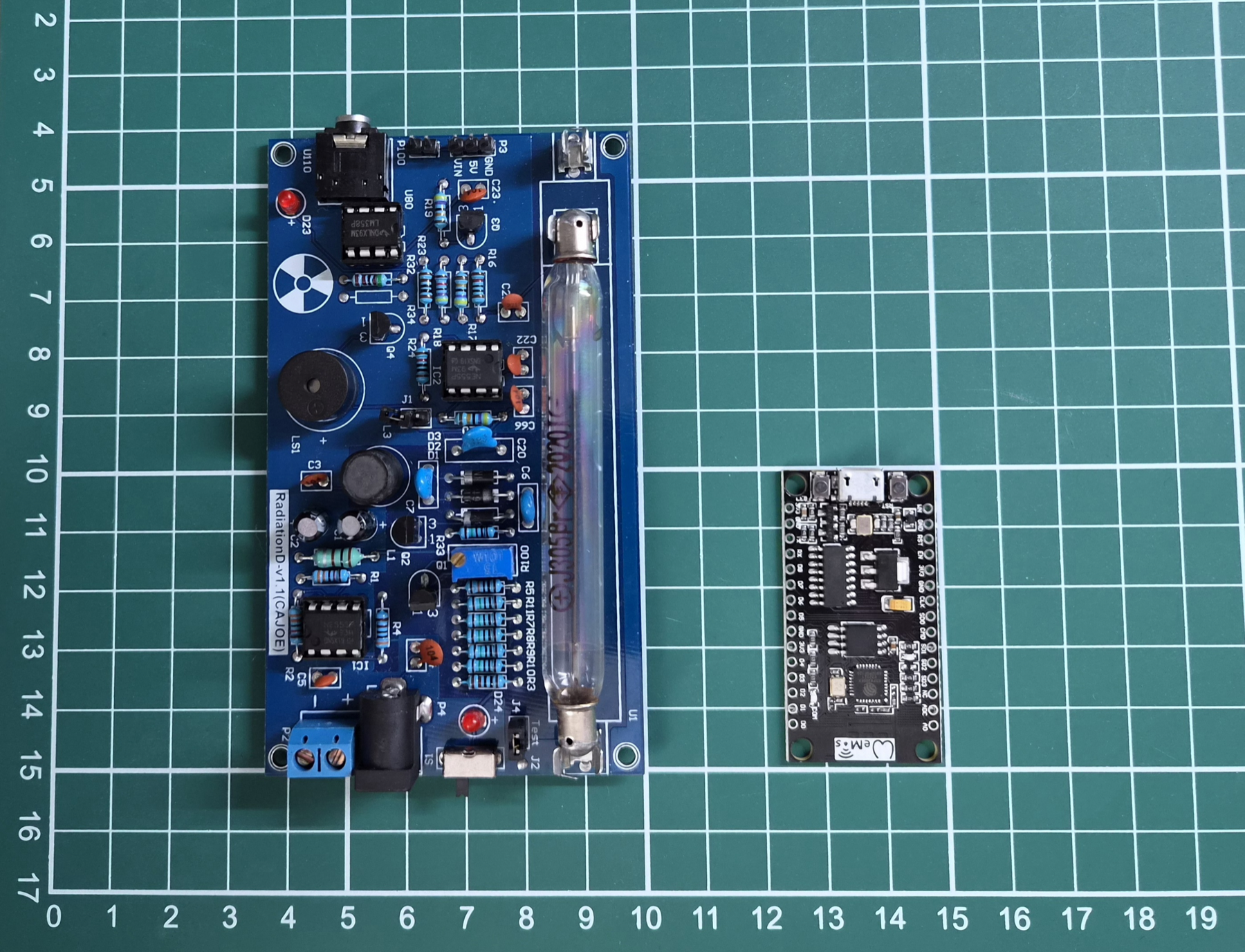
I have been testing an independent ESPHome-based bridge that connects a RadiationD-v1.1 (CAJOE) Geiger counter board to both Home Assistant and uRADMonitor.
One ESP8266, two integrations
The pulse output is connected to D1 / GPIO5 on the ESP8266. ESPHome counts the pulses locally, exposes the measurements and diagnostics to Home Assistant through its native API, and uploads the radiation value directly to uRADMonitor. Only field 01 (Unix time) and field 0B (CPM) are intentionally sent.
The configuration provides three upload modes: Off, Test and Production. Test traffic can be directed to a local mock server, while Production uses the live uRADMonitor endpoint. This made it possible to validate registration and upload behaviour before going online.
After several days of operation, the combined ESPHome and uRADMonitor setup is running reliably. The ESPHome side also exposes uptime, Wi-Fi strength, upload counters, heap information, fragmentation and restart reason for stability monitoring.
Printable enclosure
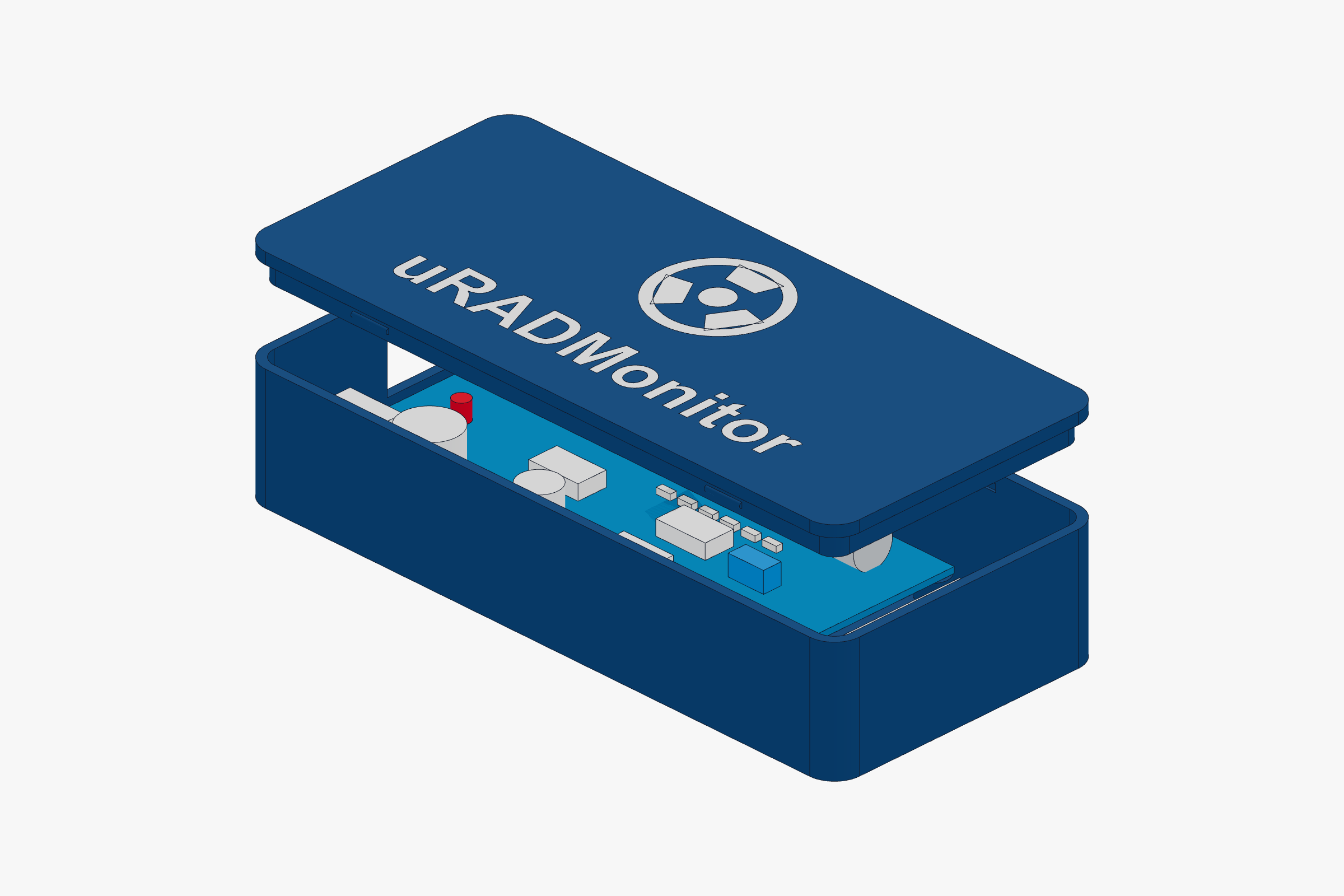
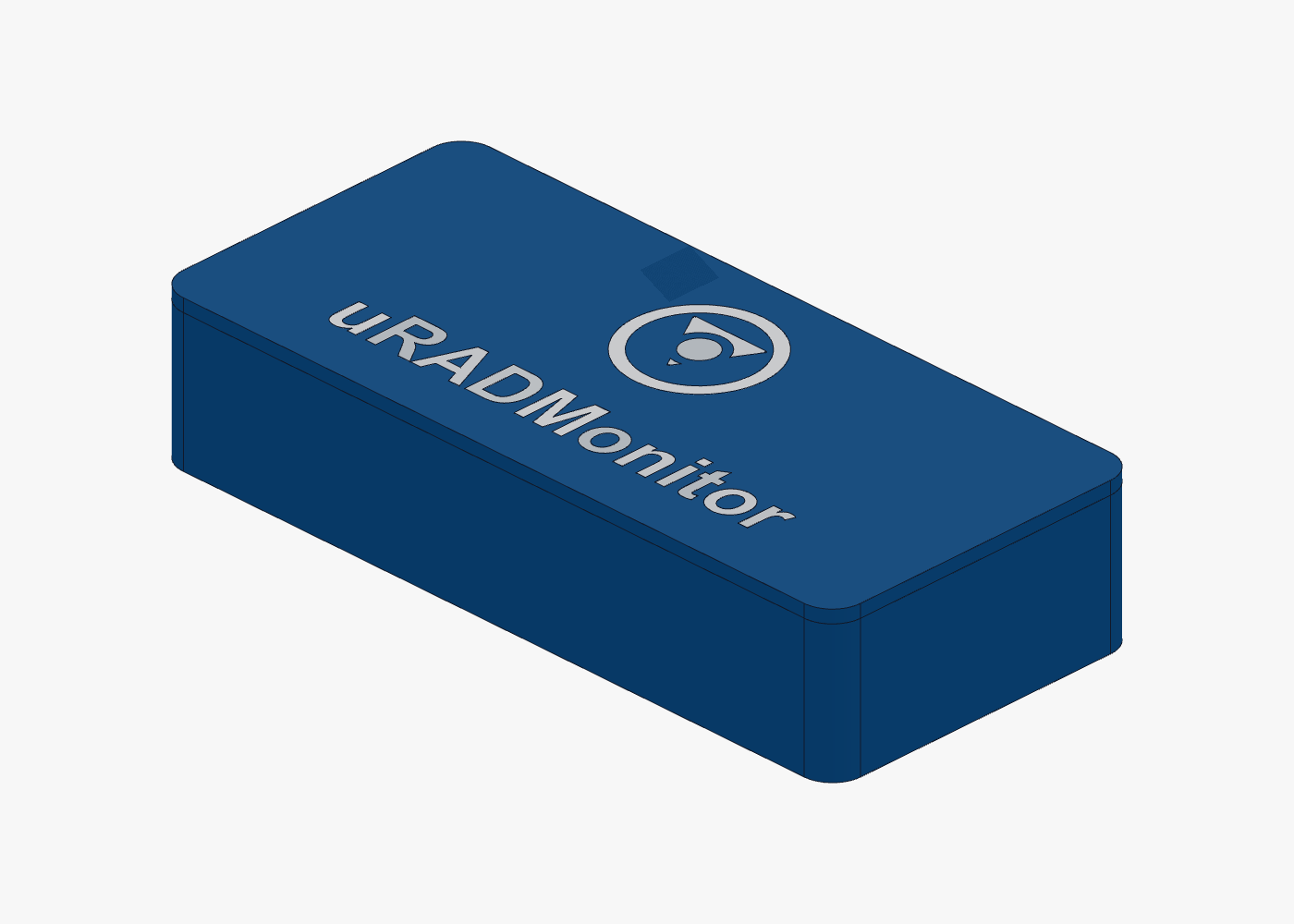
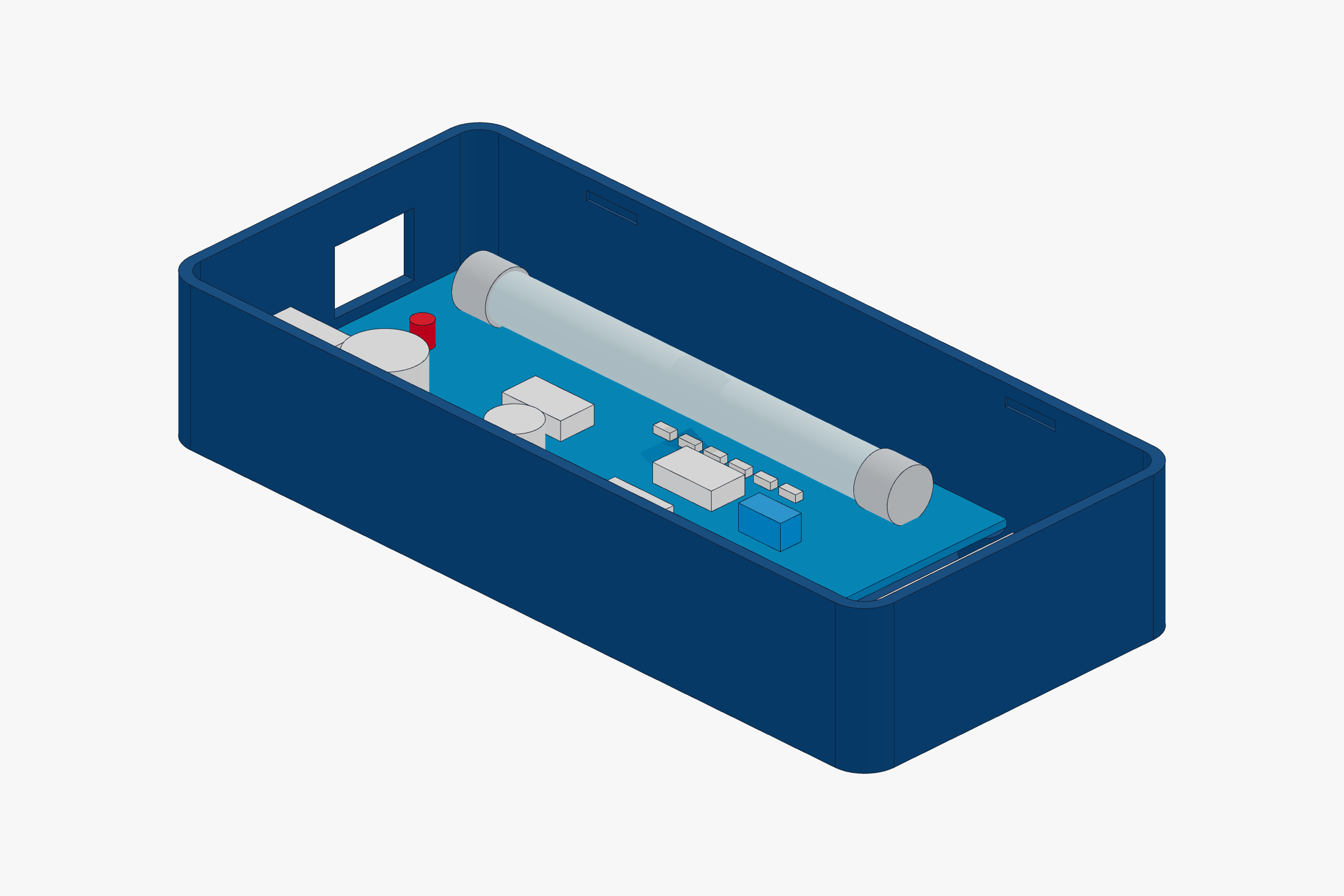
A compact snap-fit enclosure was designed around the measured mounting points of the Geiger board and ESP8266. The illustrations below use simplified dimensional PCB models to show the intended fit; the hardware photograph above shows the actual boards.
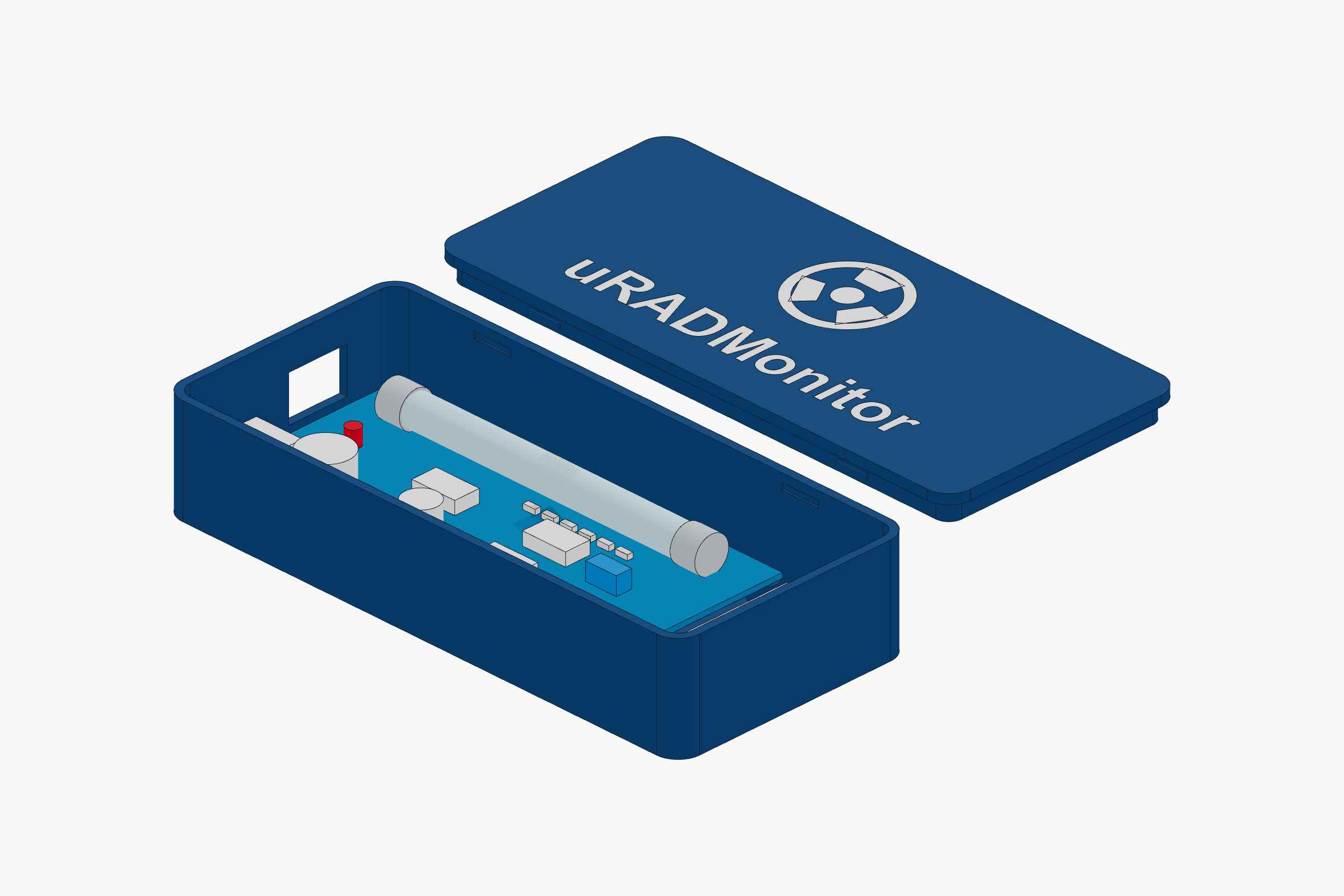
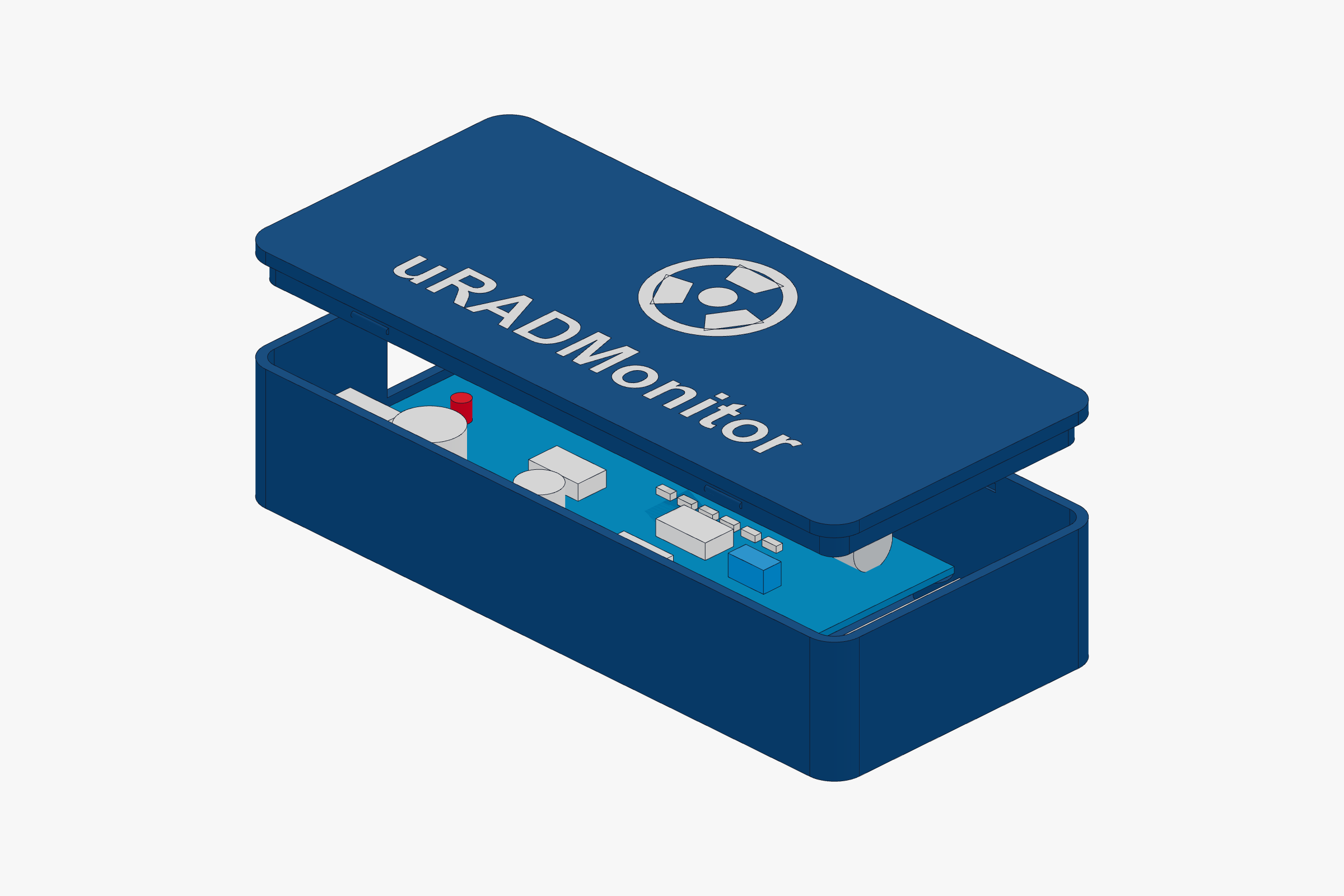
Project files
The complete community project is available on GitHub:
github.com/phoenix-blue/esphome-uradmonitor-geiger
The repository contains the ESPHome configuration and packages, a local mock uRADMonitor server, documentation, and two final printable STL files for the snap-fit enclosure: the base and lid. STEP and 3MF source files are intentionally not published.
Next steps
I still want to refine the ESPHome configuration. The uRADMonitor dashboard currently appears to expose some additional sensor channels even though the firmware intentionally uploads only Unix time and CPM. I will investigate that behaviour before enabling any additional fields. I also have several spare sensors that may later be integrated and tested, for example temperature or environmental sensing.
This is an independent community project and is not an official uRADMonitor release. Anyone reproducing it should take normal precautions around the Geiger board’s high-voltage section.

codemore code
~~~~