
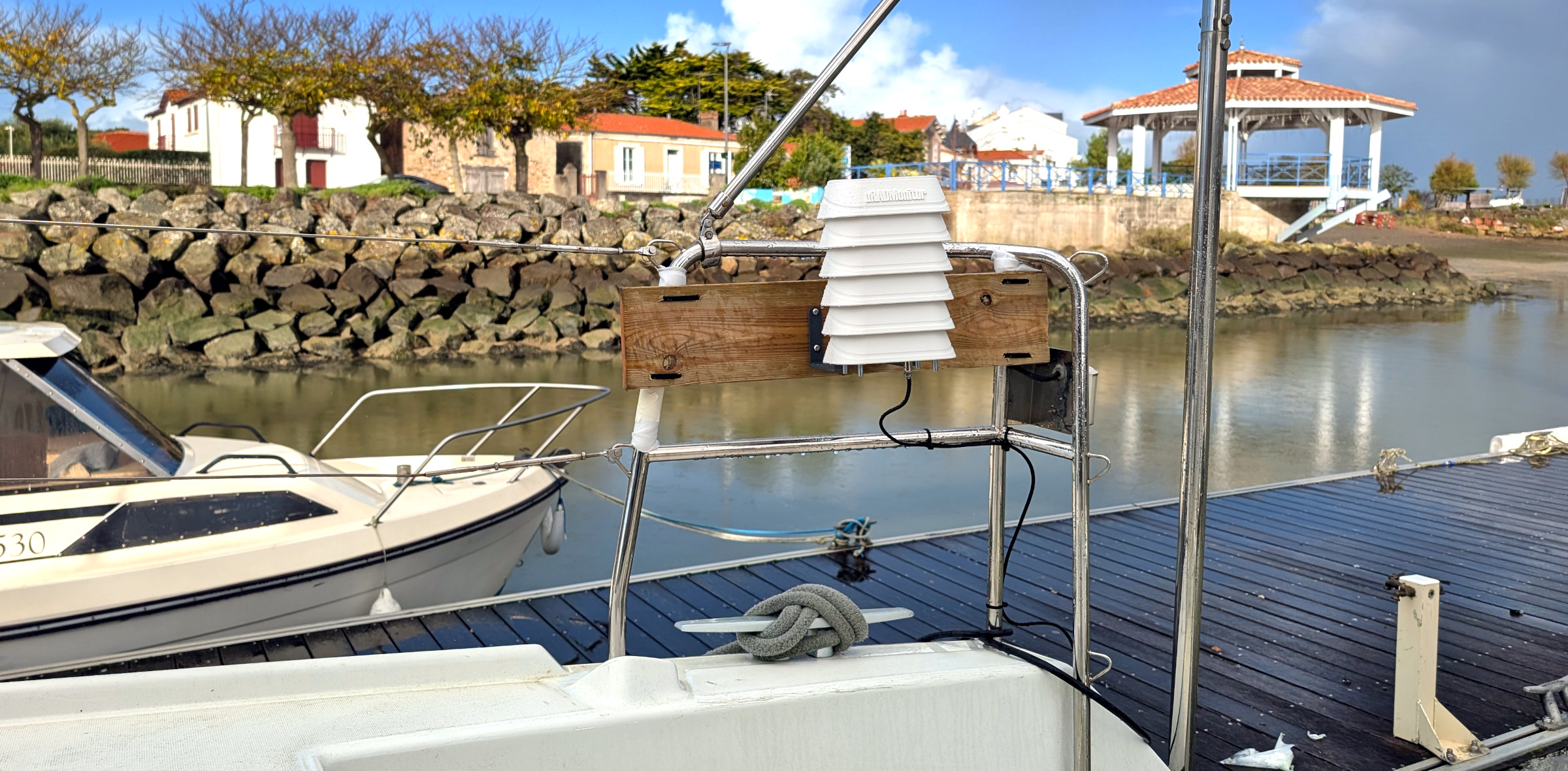
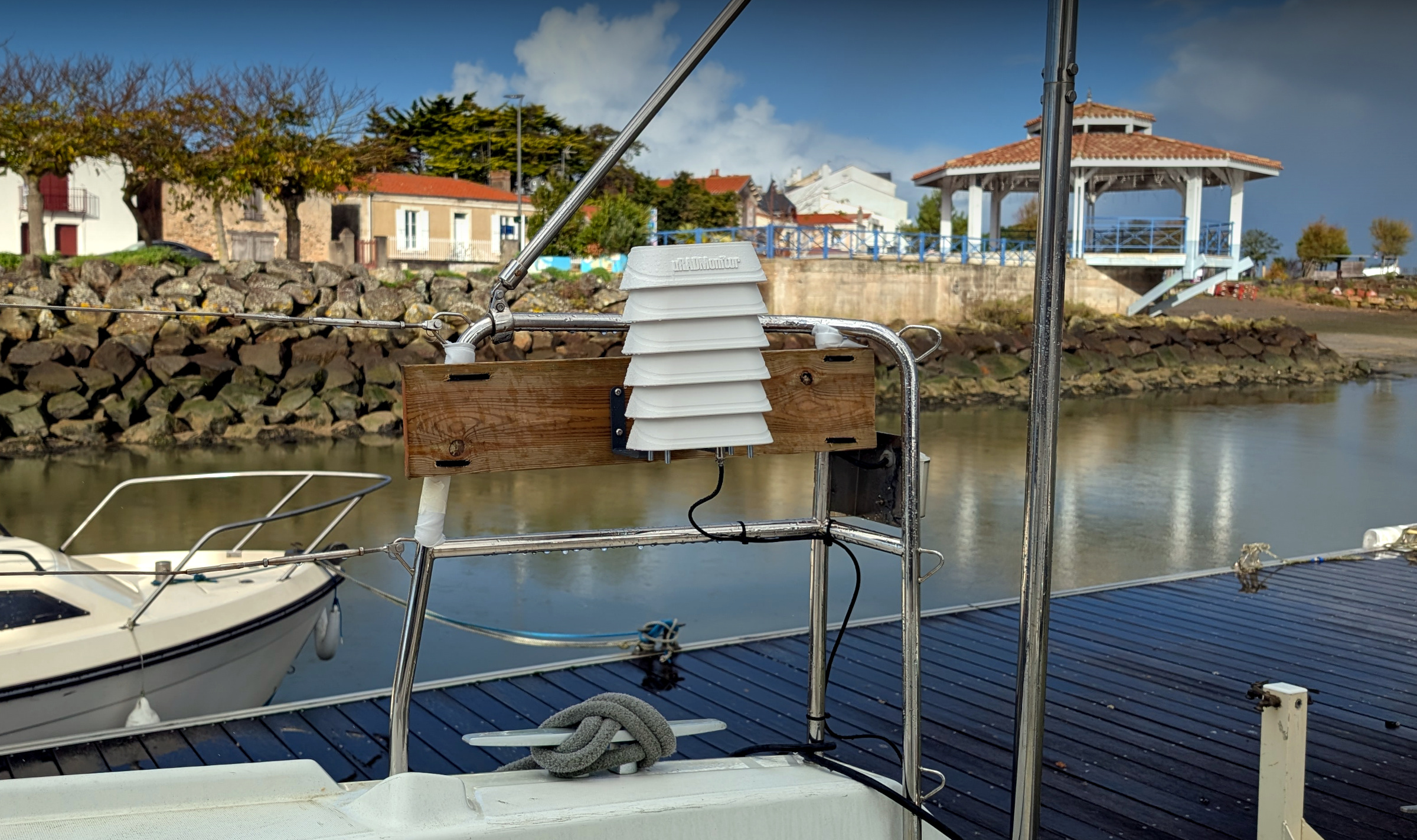
A uRADMonitor MODEL CITY leaves the rooftop behind, mounts on a sailboat’s pushpit, and starts feeding air quality data into the OceanoVox ocean-observation network. For over a decade, the uRADMonitor network has grown one fixed station at a time , mounted on rooftops and walls across 76 countries. Now this one moves.
Off the Atlantic coast of France, a MODEL CITY is now installed on the stern rail of a sailboat as an evaluation test for a new direction. It measures the same parameters as any CITY unit: ozone, nitrogen dioxide, sulphur dioxide, carbon monoxide, particulate matter, temperature, humidity and pressure but over water, where fixed monitoring is almost nonexistent. Instead of a single location, its readings now trace a track across the sea. If you know the uRADMonitor story, you know this is not the first mobile deployment , yet it is the first at sea.
Who is OceanoVox?
OceanoVox is a French company, based in Nantes, with a simple and ambitious idea: the ocean is the least-observed environment on the planet, and every vessel afloat could be a sensor. Their network already counts more than 250 equipped ships, and their work is recognised as part of the UNESCO Ocean Decade, backed by institutions including the ESA, CNES and Ifremer.
They run two complementary programmes. Vox Maritime equips commercial fleets with certified meteorological stations. Vox Initiative , the one relevant here , turns pleasure boats, sailing schools and charter fleets into a participatory science network under the banner “You sail, we care,” sharing data openly with the scientific community.
Their onboard hardware, the VOX gateway, collects data from a vessel’s instruments and pushes it onto the NMEA bus , the standard data backbone of a modern boat , then relays it ashore over GSM or satellite. Air quality was the piece they did not yet have. That is where the MODEL CITY came in.
Why put an air quality sensor on a boat?
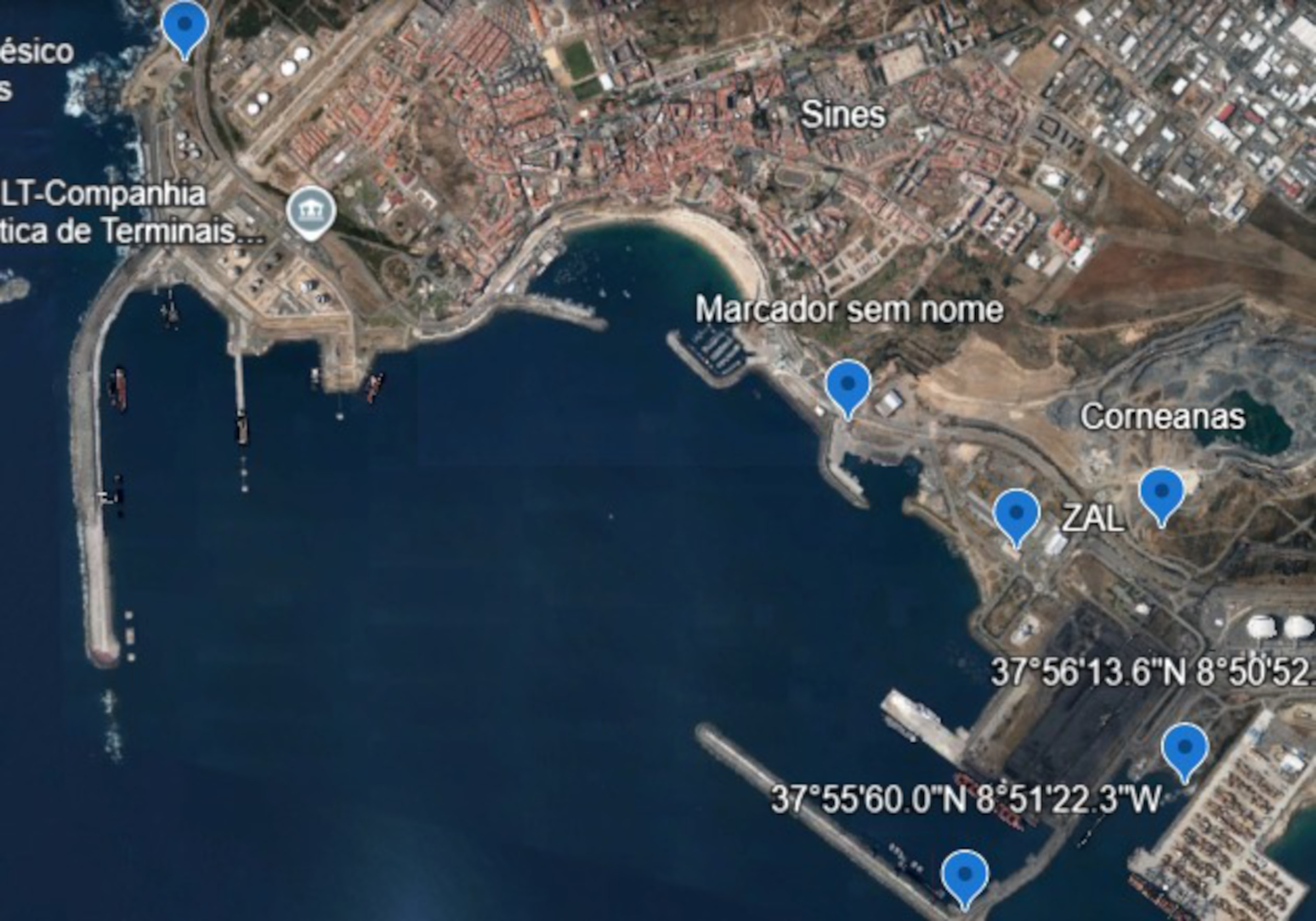
Air quality maps are built almost entirely on land. Coastlines, estuaries and open water are blank , yet these are exactly the places where shipping emissions, port activity and marine weather interact. This summer uRADMonitor started another project with University of Evora, to monitor the Port of Sines, but that is a story for another time.
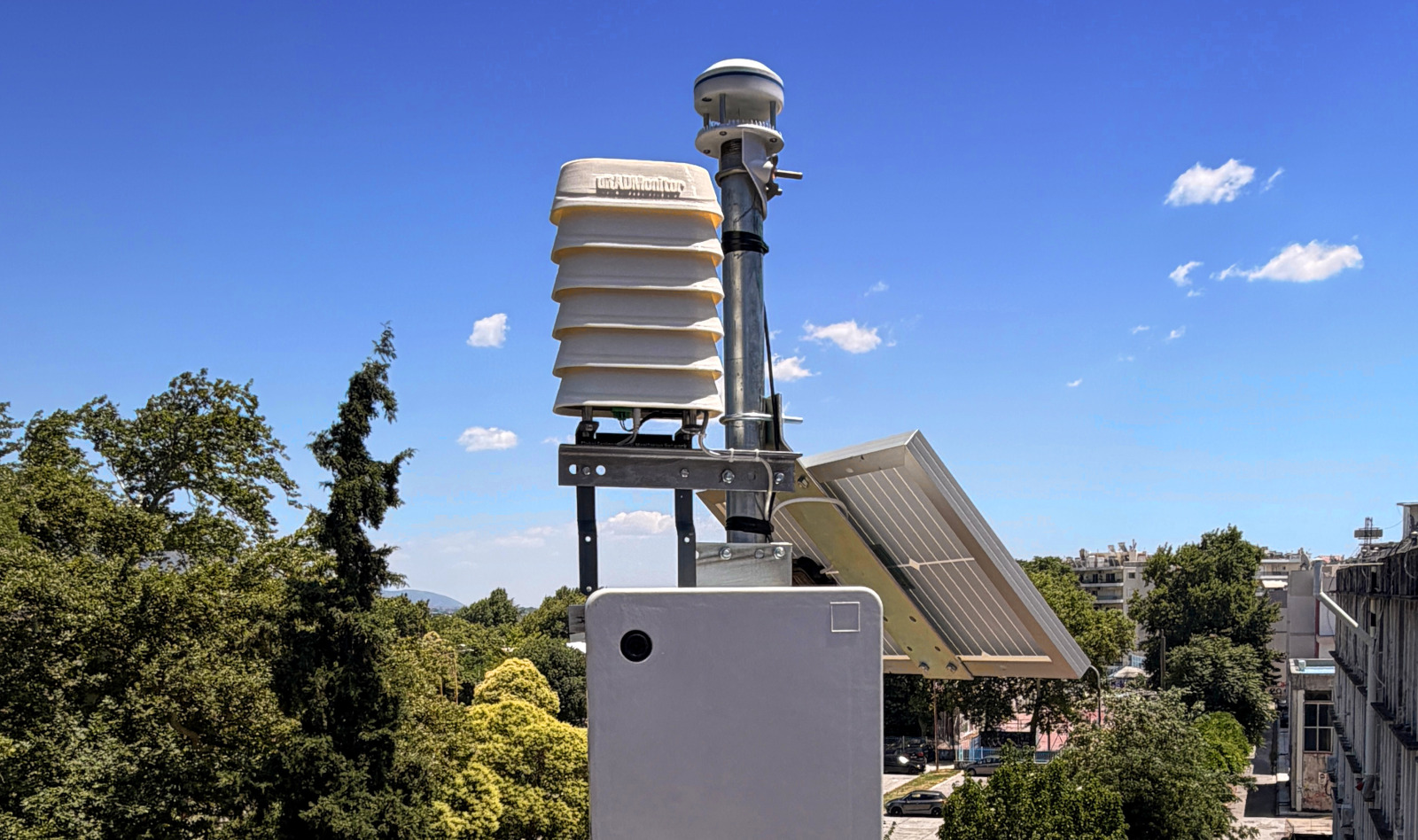
OceanoVox set out to monitor Ozone, SO₂, NO₂, particulates and CO at sea and close to shore, precisely the gases and particles a MODEL CITY is built to measure. The CITY was the right instrument for it. It carries four hypersensitive electrochemical cells for gases, an optical particulate counter for PM1, PM2.5 and PM10, and a full weather set temperature, humidity and barometric pressure all in a single weatherproof housing.
Fixed stations tell you what the air is like where they are. A sensor on a moving hull tells you what it is like everywhere it goes.
The installation: Mounting a land sensor on a sailboat
The MODEL CITY is designed to be robust, but the sea asks a specific question the rooftop never does: salt. The electronics are fully protected against rain but salt spray is more aggressive, and the practical advice for a marine install is to get the unit as high and as clear of the water as possible, ideally up the mast. On this test boat it sits on the stern rail, in vertical orientation as specified, with the louvred shield facing down to shed water. Power was the easy part. The CITY accepts anything from 6 V to 60 V DC, so a boat’s 12 V system drives it directly with no converter and for vessels with unusual electrical setups, a custom variant can take up to 100 V. Here it draws from the boat’s house bank, which is itself topped up by a wind-and-solar charge controller: a genuinely autonomous, off-grid sensor node bobbing in a harbour.
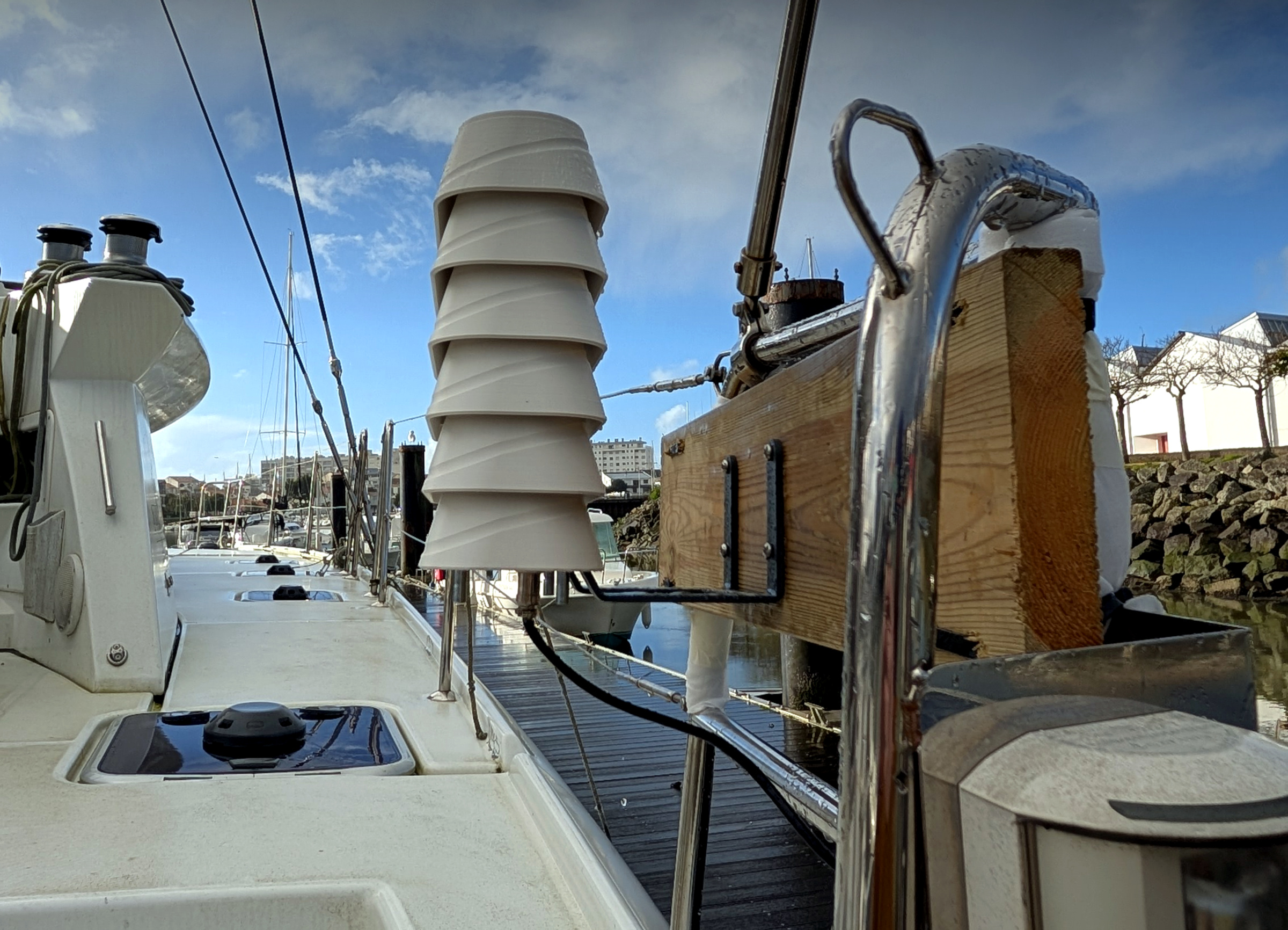
Marine install checklist for a MODEL CITY: mount as high and as far from spray as practical (mast preferred); keep it vertical with the shield venting downward; power from the 12 V house bank (6–60 V DC accepted); secure the cable run against wind and chafe.
The integration: Talking to the VOX box over a wire
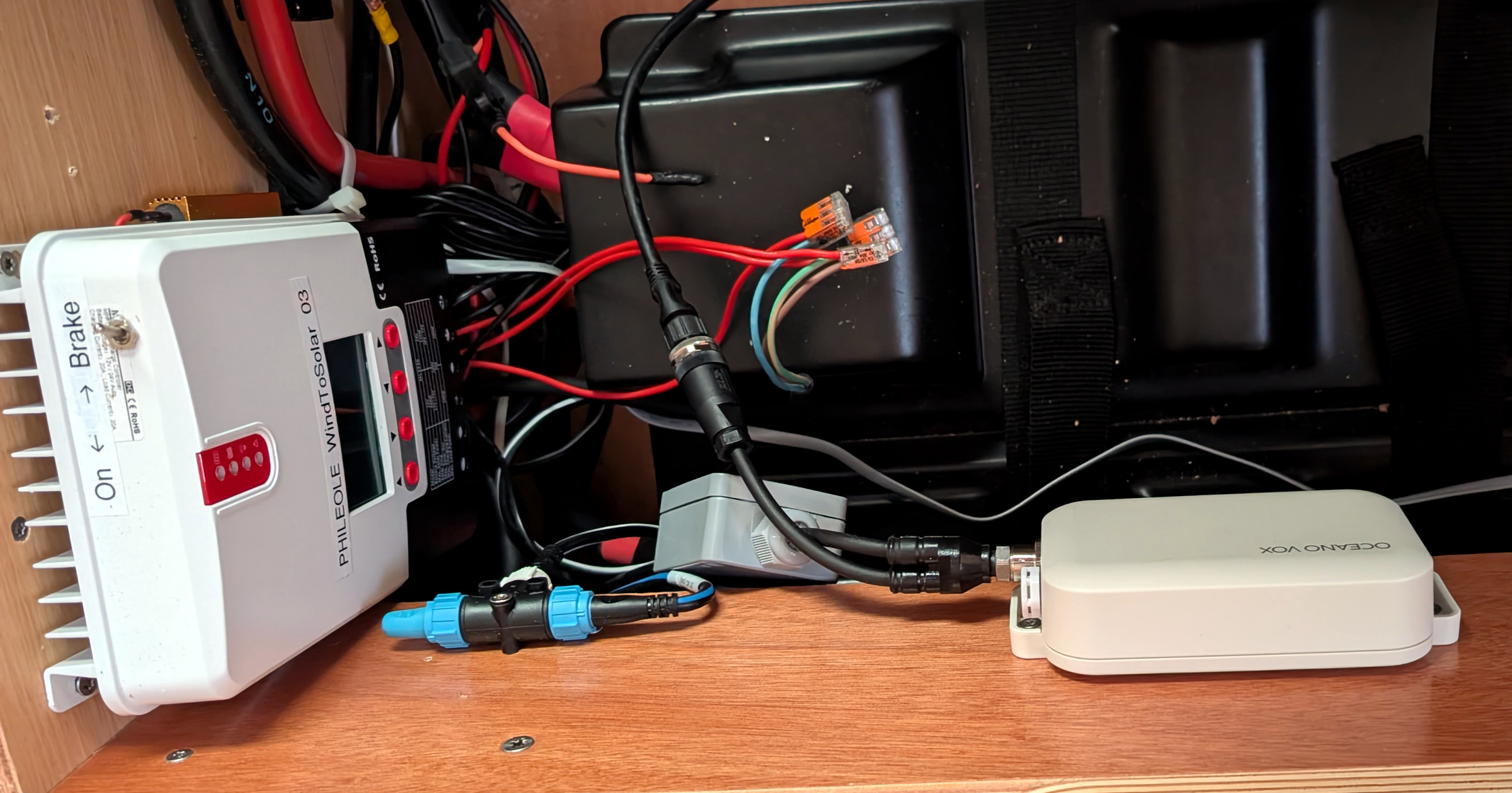
The interesting engineering is in how the two devices talk to each other. OceanoVox had a clear requirement: the system must work completely offline. No internet, no remote server, no dependence on anyone’s cloud to interpret the data. The VOX gateway needed to read the CITY’s measurements locally, on the boat, and place them on the NMEA bus itself.
The MODEL CITY supports exactly this. Alongside its normal network connectivity, the unit exposes its readings over a serial UART interface , a direct, wired data link. We used this with drones in the past. Now the CITY streams its measurement frames out on the serial line; the VOX box reads them on the boat, decodes the payload with its own firmware, and forwards the values onto the vessel’s NMEA 2000 network. From there they join the wind, pressure and position data already flowing to the OceanoVox network over GSM or satellite. No server sits in the loop. The decoding happens locally, on hardware, exactly as required , which for a vessel that may spend days out of mobile range is a necessity.
What the serial link carries
The parameters crossing that wire are the CITY’s full ambient set:
| Category | Parameters |
|---|---|
| Gases | Ozone (O₃), Nitrogen Dioxide (NO₂), Sulphur Dioxide (SO₂), Carbon Monoxide (CO) |
| Particulates | PM1, PM2.5, PM10 |
| Weather | Temperature, Relative Humidity, Barometric Pressure |
| Interface | Serial UART → OceanoVox VOX gateway → NMEA bus |
| Power | 6–60 V DC (boat 12 V house bank) |
This is an evaluation deployment; first data frames are now crossing the serial link, and coastal measurement tracks will follow. We will update the results here accordingly .
Why it matters: A network that moves
A fixed uRADMonitor station is a point on a map. A CITY on a hull is a moving pen. Read more about the uRADMonitor mobile sensors here. As the boat sails the coast, it draws a continuous track of air quality readings across water that no fixed network covers and it feeds them into an ocean-observation effort explicitly built to fill exactly those gaps.
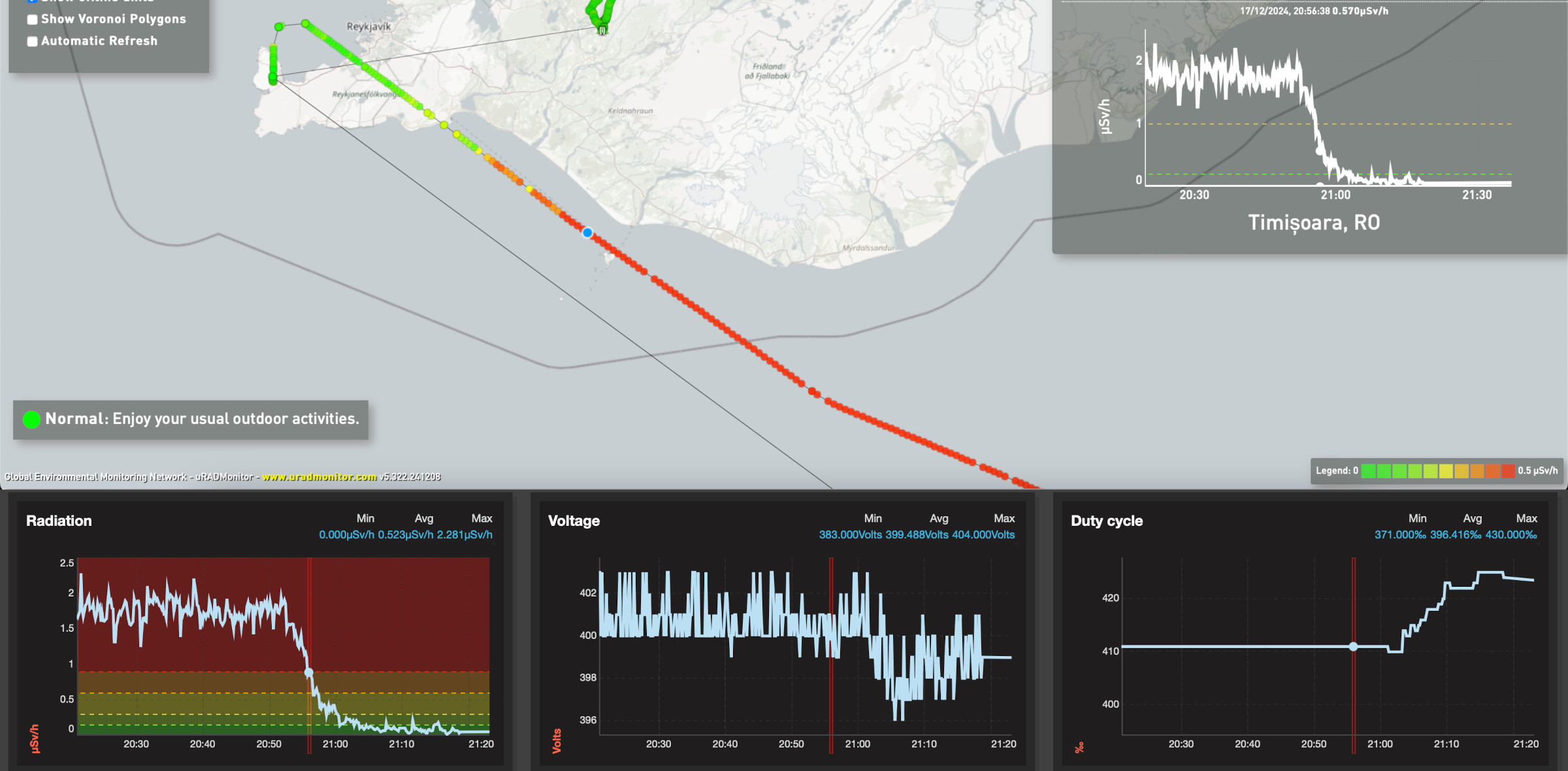
It is a neat demonstration of something we have believed for a long time: the uRADMonitor hardware is a building block. Give it power and a data path – even just a serial wire to someone else’s gateway and it will measure the world wherever you put it. This time, that happened to be at sea.
Our thanks to the OceanoVox team for the collaboration, and for showing that a sensor built for a city rooftop is just as at home on the stern rail of a sailboat.
uRADMonitor MODEL CITY
Multiparameter environmental monitoring: gases, particulates and weather in one weatherproof unit. Learn more at: uradmonitor.com.
OceanoVox
Ships as sensors: a global ocean-observation network: oceano-vox.com
codemore code
~~~~