
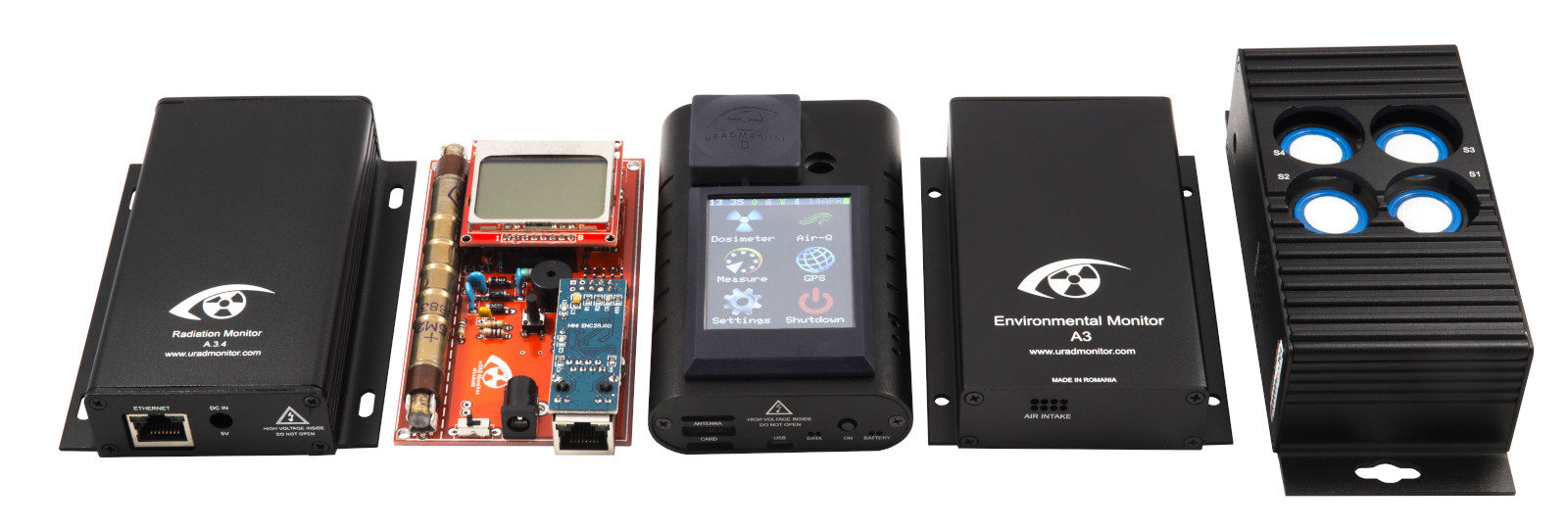
An air quality sensor is a device that measures pollutants in the air around it and reports them as numbers you can act on: particulate matter, gases, temperature and humidity. Where an official monitoring station covers a whole city with one expensive instrument, a network of small sensors shows how the air changes from one street to the next, which is where people actually live and breathe.
This guide explains what these devices measure, how they work, how accurate they really are, and what to look for when choosing one.
What an air quality sensor measures
Not all air quality sensors measure the same things. The pollutants that matter most for health are:
- Particulate matter (PM1, PM2.5, PM10): microscopic particles from combustion, traffic, wood burning and dust. PM2.5 is the most dangerous because it reaches deep into the lungs. This is the single most important parameter for an outdoor air quality sensor. The article PM2.5 Explained: WHO Limits and Live City Data explains it in detail and provides the current WHO limits.
- Gases: nitrogen dioxide (NO2), sulphur dioxide (SO2), ozone (O3), carbon monoxide (CO) and volatile organic compounds (VOCs). These come from traffic, industry and indoor sources. CO2 is also an important parameter to be measured at indoors. See how it can affect a classroom of students in a school CO2 in Classrooms: Limits and How to Measure Them .
- Temperature, humidity and barometric pressure: needed to interpret the pollution readings correctly, because particle behaviour changes with weather.
A good general-purpose air pollution detector combines particulate matter with at least temperature and humidity. More advanced units add the gas channels above.
How does an air quality sensor work?
Most low-cost air quality sensors use one of two methods:
- Optical particle counters for PM: a small fan draws air past a laser. Particles scatter the light, and the sensor counts the flashes and estimates particle size and concentration. This is how PM1, PM2.5 and PM10 are measured in compact devices.
- Electrochemical cells for gases: the target gas reacts at an electrode and produces a tiny current proportional to its concentration.
The raw signal is then converted to a concentration (micrograms per cubic metre for PM), timestamped, and sent to a dashboard over WiFi, cellular or a long-range radio link like LoRaWAN. A connected sensor that pushes readings to a live map is far more useful than one that only shows a number on a screen, because it lets you compare your location against the wider network and track trends over time.
How accurate is an air quality sensor?
This is the question that separates a useful instrument from a toy. Low-cost sensors will never match a reference-grade station that costs tens of thousands, but a well-built unit is accurate enough to show real differences between locations and over time, which is what matters for public awareness and early warning.
What drives real-world accuracy:
- Sensor quality: the PM module and gas cells inside determine the ceiling. Reputable modules outperform the cheapest generic ones.
- Calibration: readings should be corrected against known references, ideally with ongoing validation rather than a one-time factory setting.
- Placement: a sensor in a sheltered, poorly ventilated spot gives misleading data no matter how good it is.
Be sceptical of any sensor that advertises laboratory accuracy at a consumer price. Honest manufacturers describe their devices as indicative-grade, suitable for dense networks and trend detection, and document how they calibrate.
What to look for when choosing one
- The right parameters for your need. Indoors, prioritise PM, CO2 and VOCs. Outdoors, prioritise PM plus the gases relevant to your area (traffic means NO2; industry means SO2 and CO).
- Open, real-time data. A sensor that publishes to a public map and offers an API is more valuable than a closed app, because the data can be verified, shared and reused.
- Documented calibration. Ask how the device is calibrated and whether readings are validated against references.
- Connectivity that fits the site. WiFi indoors, cellular or LoRaWAN for remote outdoor locations.
- Build quality for the environment. Outdoor units need weather protection; the PM intake must stay dry.
uRADMonitor air quality sensors
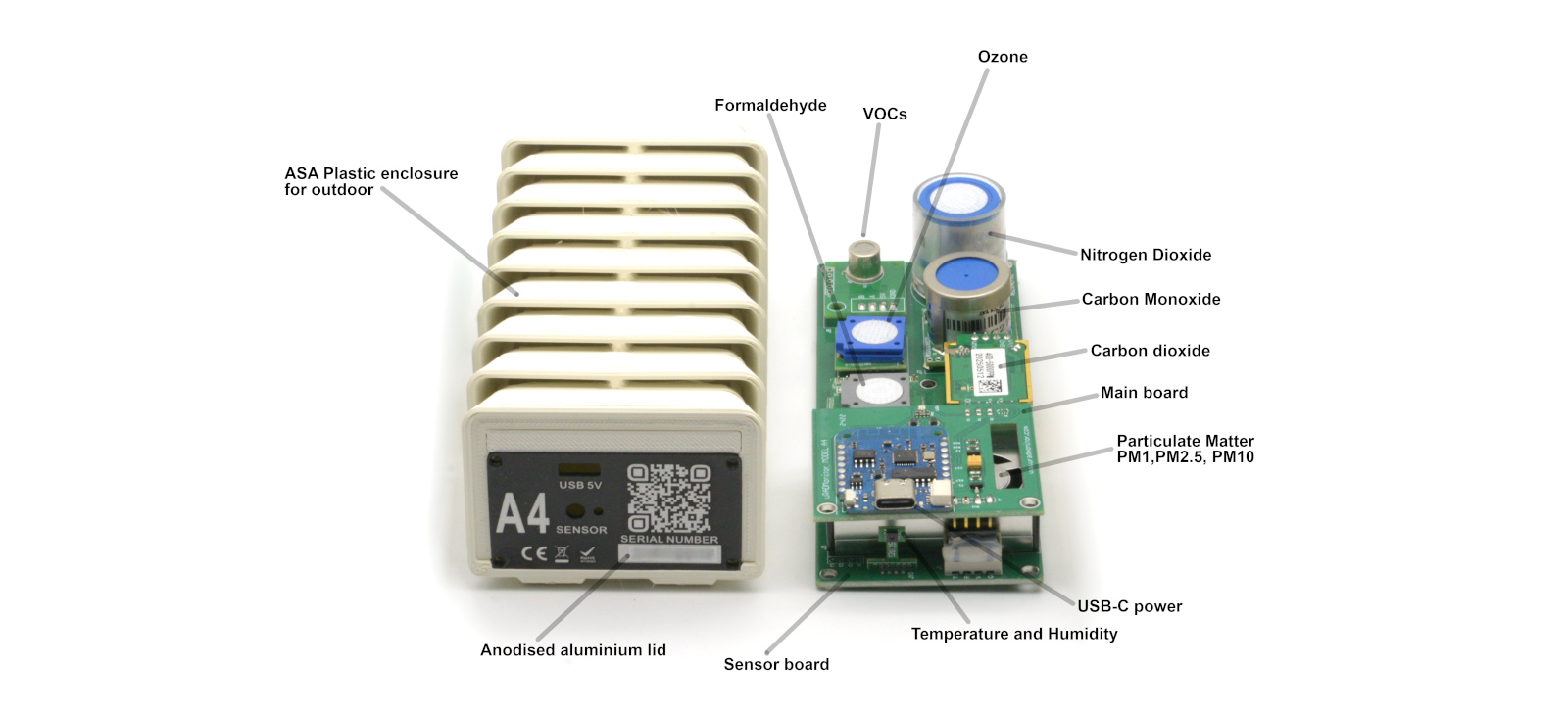
uRADMonitor builds a range of connected air quality sensors that feed a single global, real-time, open network. The compact SMOGGIE series is a low-cost entry point for measuring particulate matter and extending the network at home, in a school or a small business. The MODEL A3 is a fixed station that adds gases, VOCs and noise for municipal and professional monitoring, and the MODEL CITY is a full modular platform for smart-city deployments.
Every reading comes from a physical device, not a model, and every sensor appears on the public uRADMonitor map, so your data is verifiable and comparable against hundreds of others.
The uRADMonitor sensors are calibrated and lab tested for accuracy. Their reports are public and available on the product page. See how testing works in this article on the blog uRADMonitor is winner at Paris AIRLAB Challenge 2023 .
Browse the full range on the uRADMonitor products page, or read how the compact PM sensor module works.
Frequently asked questions
What is the difference between an air quality sensor and an air quality monitor? The terms are used interchangeably. “Sensor” often refers to the individual measuring element, while “monitor” refers to the complete connected device. In practice both describe a unit that measures and reports air pollution.
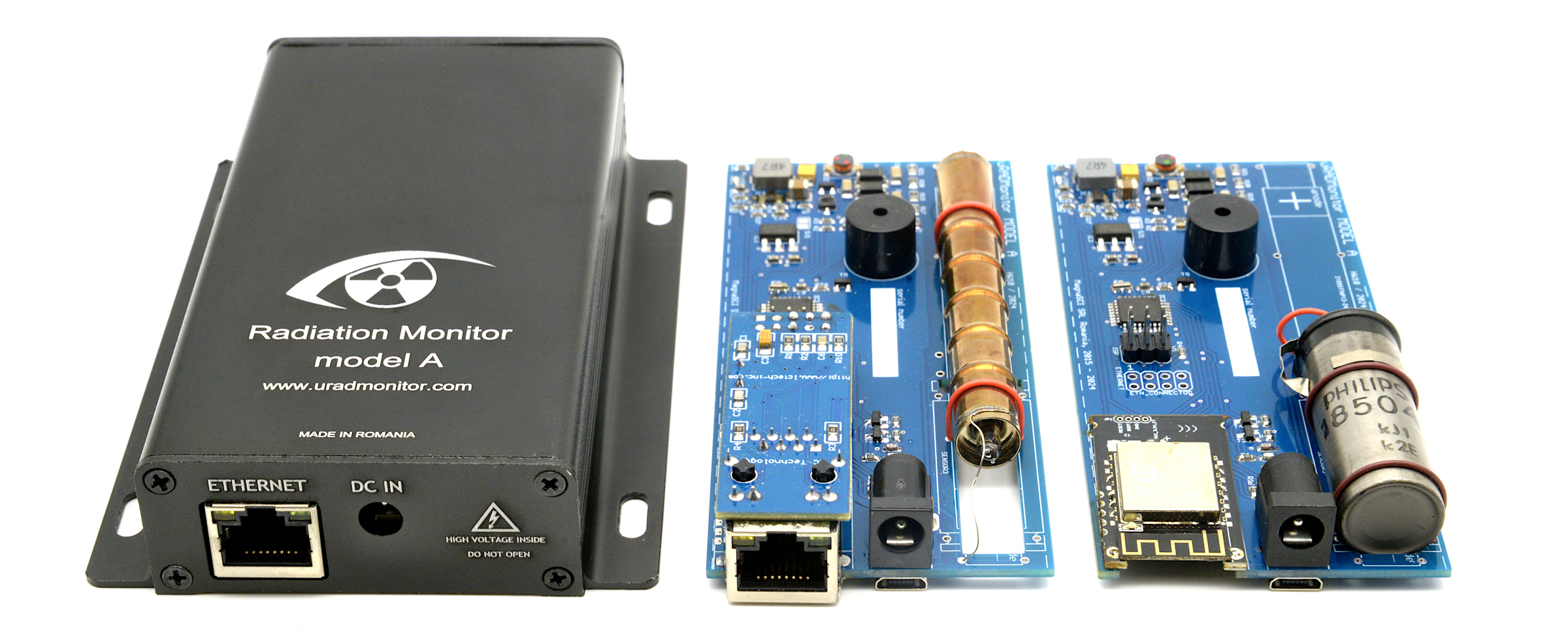
Can an air quality sensor measure radiation? Air quality sensors measure chemical and particulate pollution. Ionising radiation needs a different instrument, a radiation detector based on a Geiger-Müller tube. Some networks, including uRADMonitor, run both on the same platform.
Where should I place an outdoor air quality sensor? In an open, ventilated location away from direct sources like a chimney or exhaust, protected from rain, at roughly breathing height for representative readings.
How much does an air quality sensor cost? Compact indicative-grade sensors start low enough to deploy many of them; professional fixed stations with gas channels cost more. The right choice depends on which pollutants you need and whether the unit is for a single room or a city network.
Liked this? Get monthly air quality findings.
One email a month from the uRADMonitor network. Unsubscribe anytime.

codemore code
~~~~