
Radon is a radioactive gas. It has no colour, no smell and no taste. It forms in the ground from the natural decay of uranium and enters buildings through cracks, joints and pipes. Outdoors it dilutes quickly. Indoors it can build up to levels that matter for health.
According to the World Health Organization, radon is the second most important cause of lung cancer after smoking. The risk grows with the concentration and with the time spent in the building. That makes radon a question about your home, your office and your children’s school.
The unit: Bq/m³
Radon concentration is measured in becquerels per cubic metre (Bq/m³). One becquerel is one radioactive decay per second. A value of 100 Bq/m³ means 100 radon atoms decay every second in each cubic metre of air.
What level is considered safe
There is no level with zero risk. The reference levels below are the points above which action is recommended.
| Source | Reference level (annual average) |
|---|---|
| World Health Organization | 100 Bq/m³ recommended. Where this is not possible, no higher than 300 Bq/m³. |
| European Union (Directive 2013/59/Euratom) | National reference levels must not exceed 300 Bq/m³. |
These are annual averages. A single high hour does not mean the home is above the reference level, and a single low day does not mean it is below.
Why radon changes so much
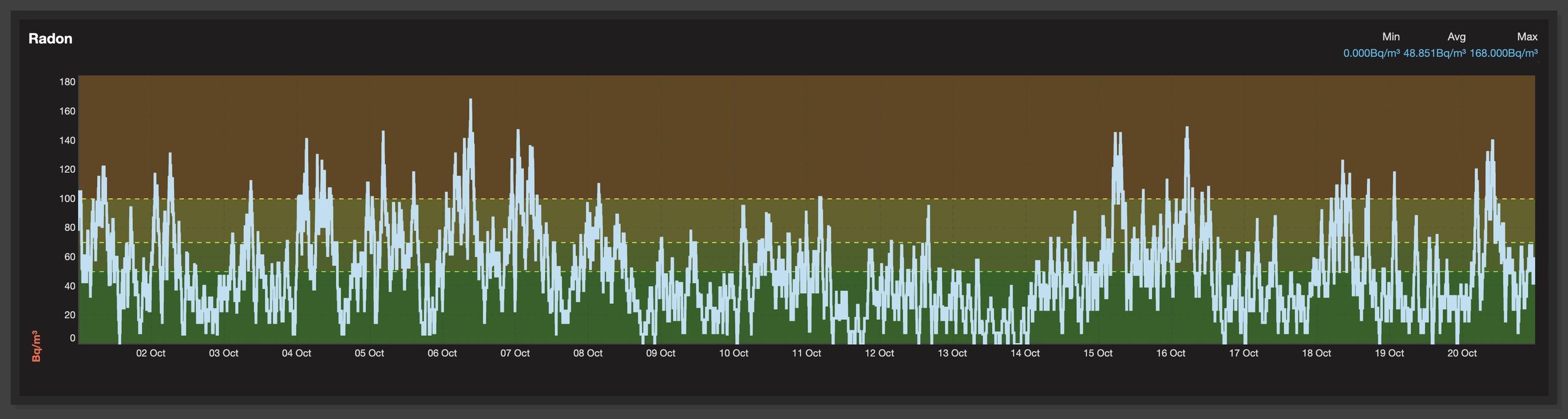
- Day and night: radon is often higher at night and early in the morning, when windows are closed and the house is warmer than the ground outside.
- Seasons: levels are usually higher in winter, when heating draws air from the soil into the building.
- Floor: basements and ground floors have the highest values. Upper floors are usually lower.
- Weather: wind, pressure changes and rain affect how much gas comes out of the soil.
How to measure it correctly
Because radon varies so much, the measurement period matters more than the instrument.
- Measure for at least three months, ideally a full year, before deciding on expensive works. Short tests can only show whether a longer test is needed.
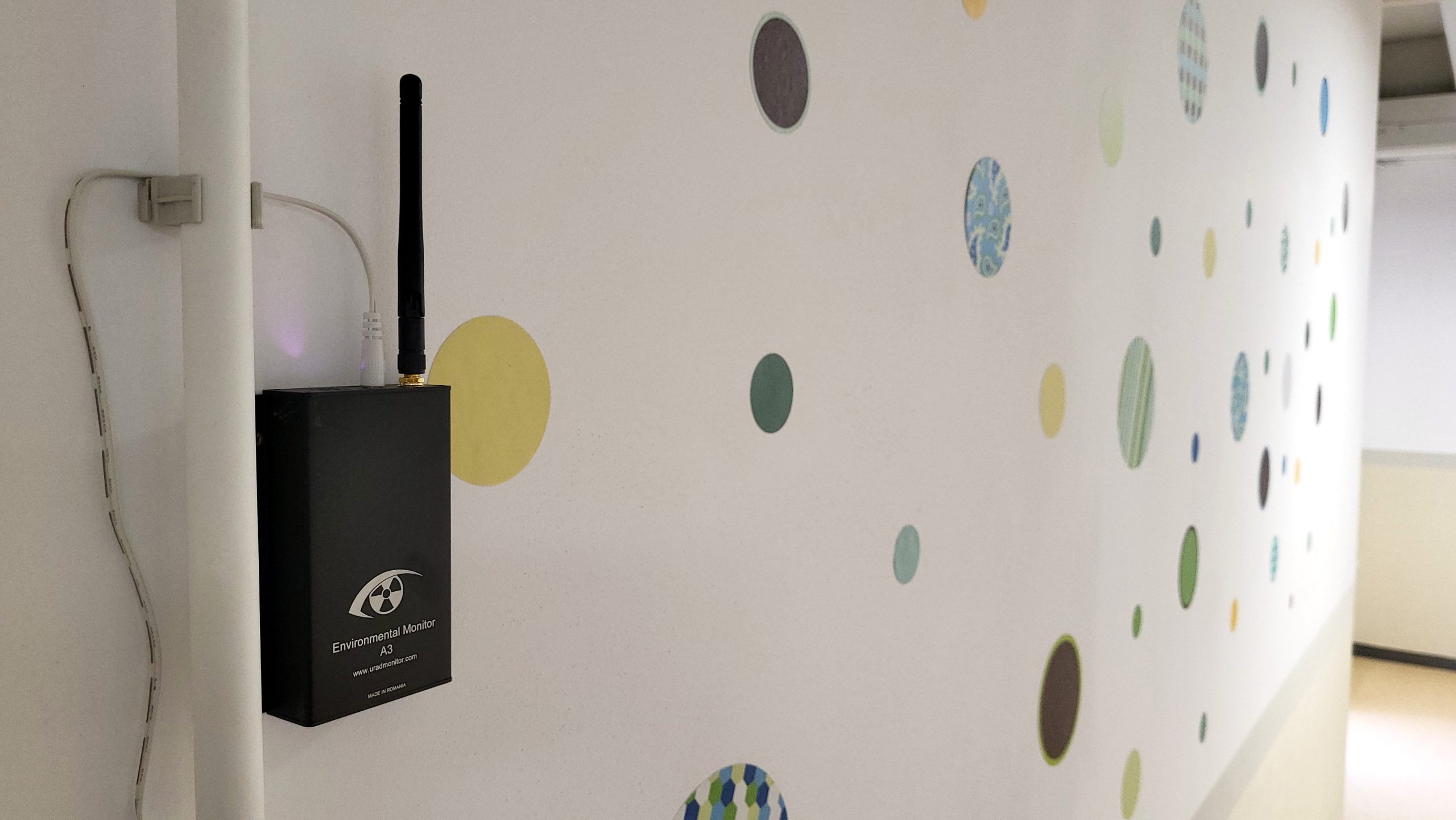
- Place the monitor in a room where people spend time, on the lowest occupied floor, away from windows, doors and heaters, about one metre above the floor.
- Use a continuous monitor if you want to understand the pattern. It shows when radon peaks and whether ventilation helps.
How to lower radon at home
- Ventilation: regular airing and mechanical ventilation dilute radon. A continuous monitor shows how much each change helps.
- Sealing: closing cracks in the floor, gaps around pipes and openings to the basement reduces how much gas comes in.
- Sub-slab depressurisation: a small fan draws air from under the floor and vents it outside. This is the most effective method for high levels and is installed by specialists.
- Check after every change: measure again to confirm the result.
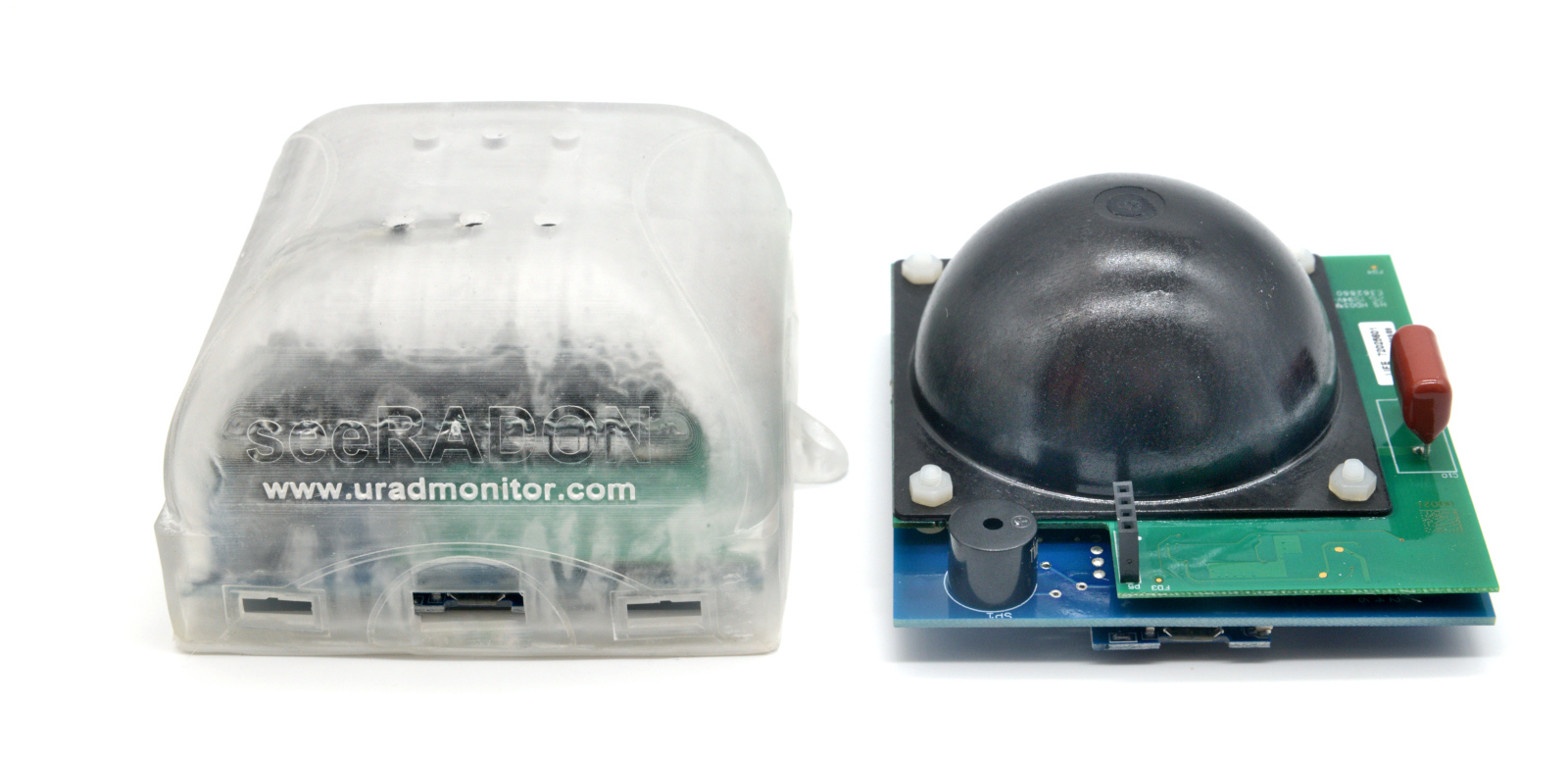
Continuous radon monitoring with seeRADON
seeRADON measures radon continuously with a solid-state sensor and sends the data online, together with temperature, humidity and pressure. You see the daily cycle, the effect of airing and the long-term average in the uRADMonitor dashboard, and you can set an alert above a threshold of your choice.
For schools and public buildings, continuous data also documents the result of mitigation works over time.
This article is general information and does not replace a professional radon survey. Follow the guidance of your national radiation protection authority.
Liked this? Get monthly air quality findings.
One email a month from the uRADMonitor network. Unsubscribe anytime.

codemore code
~~~~