Fireworks are launched by a small rocket that explodes in the sky, creating brilliant colors from burning metallic salts (e.g., strontium for red, barium for green, copper for blue) along with loud bangs and clouds of smoke. The explosion releases soot, chemical residues, heavy metals, burned paper, and large amounts of fine particulate matter (PM2.5 and PM10). These pollutants settle quickly but disperse into the air we breathe, often containing toxic compounds that can irritate lungs, worsen asthma, and pose longer-term health risks. While our eyes are thrilled by the dazzling display, our lungs inhale these pollutants, which include sulfur dioxide, nitrogen dioxide, and carbon monoxide, potentially exacerbating asthma or other breathing problems.
Beyond air pollution, fireworks generate severe noise pollution, pets panic and flee, risking injury or loss; wildlife abandons nests, disrupts migration, and suffers hearing damage. Ecosystems face lasting disturbance from both sound and chemical fallout. Even short bursts can have lasting ecological repercussions, from disoriented migration to increased mortality rates.
Air quality sensors reveal stark differences during major celebrations: cities relying on traditional fireworks experience sharp PM2.5 spikes, while those adopting laser or drone shows see little to no increase.
For New Year’s Eve 2025–2026 in Romania, we examined data from the dense network of sensors across major cities. Some (including Brașov, Cluj-Napoca, and others) replaced official fireworks with laser, light, or drone shows to reduce pollution and protect wildlife, while cities that retained fireworks (or allowed widespread private use) showed typical particulate surges.
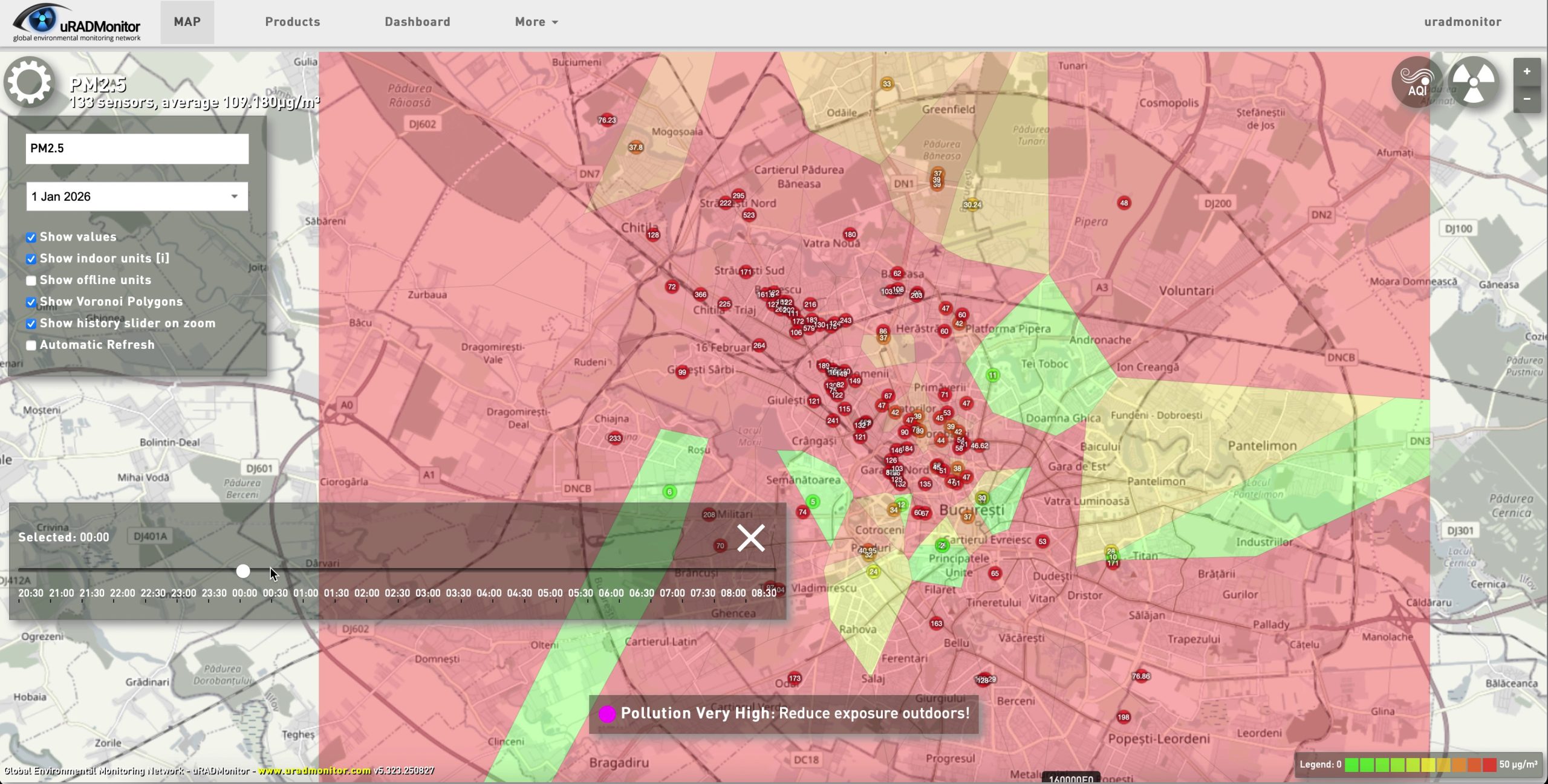
We collected data from Bistrita, Brasov, Bucharest, Cluj Napoca, Craiova , Iasi , Ploiesti and Sibiu. Below is their policy on fireworks use, half of them used them, the other half replaced them with alternatives. The datasets show the midnight (00:00), and the next two subsequent readings at 30 minutes apart:
| City | Fireworks | What they used PM2.5 concentration: | 00:00 | 00:30 | 01:00 |
| Bistrița | No | Gave up official fireworks; replaced with an impressive laser show (10-15 minutes long), synchronized with music, in the city center (Pietonalul Liviu Rebreanu). Main reasons: protecting pets and reducing noise/air pollution. The event included a concert by Lidia Buble and DJ Adrian Stan. | 8.1 | 8.1 | 8.2 |
| Brașov | No | Gave up fireworks out of concern for animals, replaced with a laser show. | 7.2 | 5.8 | 4.8 |
| București | Yes | Fireworks display in Piața Alba Iulia. | 109.1 | 91.7 | 59.6 |
| Cluj-Napoca | No | Replaced with a drone and laser show to protect animals. | 50.8 | 47.7 | 44.6 |
| Craiova | Yes | Spectacular fireworks show in the city center. | 61.8 | 39.7 | 28.4 |
| Iași | Yes | Fireworks display at midnight, complemented by lasers and a drone show. | 32.6 | 25.6 | 24.1 |
| Ploiești | Yes | Fireworks in the city center, lasting 10 minutes. | 57.4 | 34.9 | 36.5 |
| Sibiu | No | No official fireworks in Piața Mare, but residents had their own private fireworks. | 55.3 | 45.2 | 32.4 |
Here is the data, exported from the uRADMonitor platform:
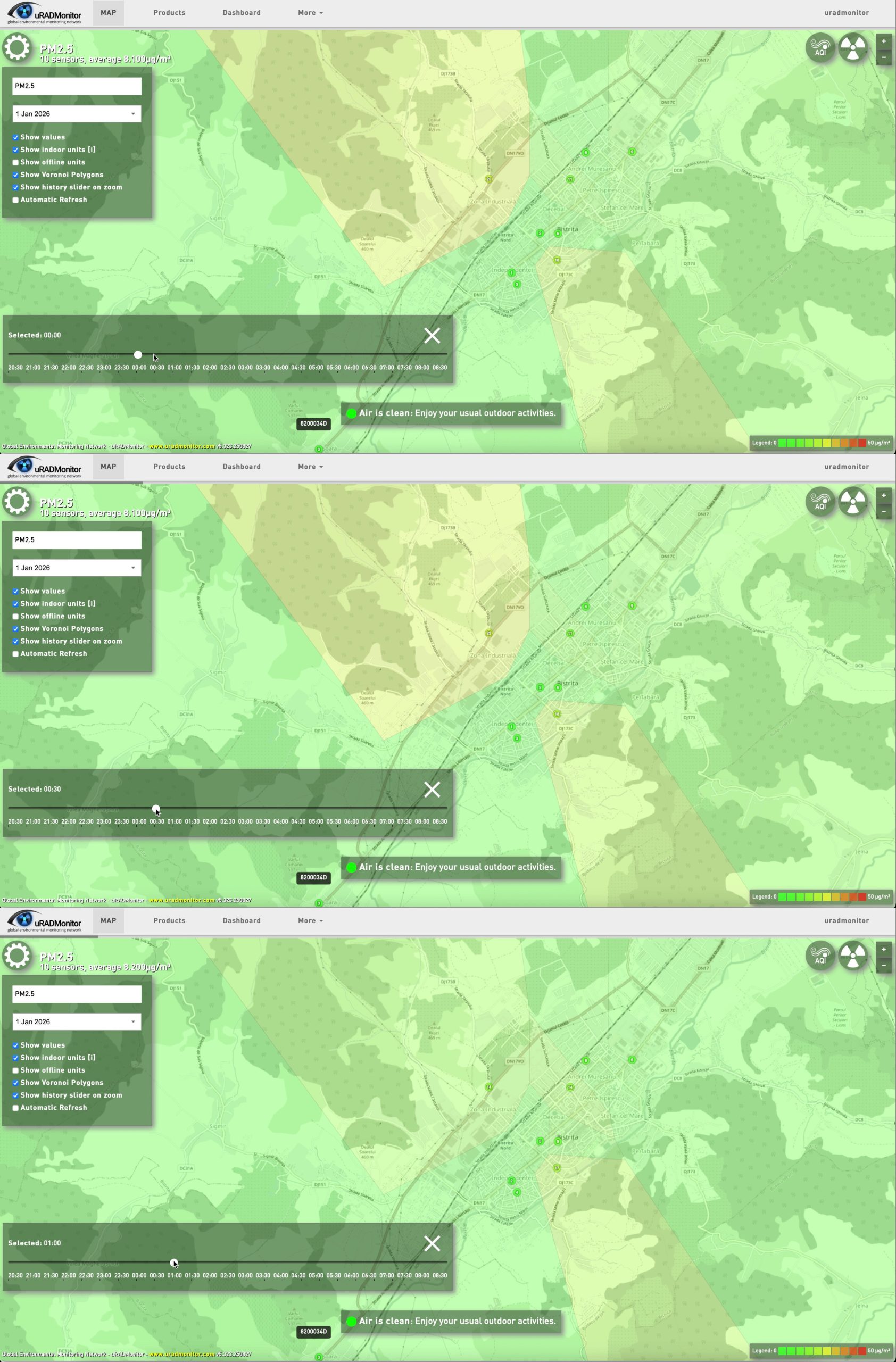
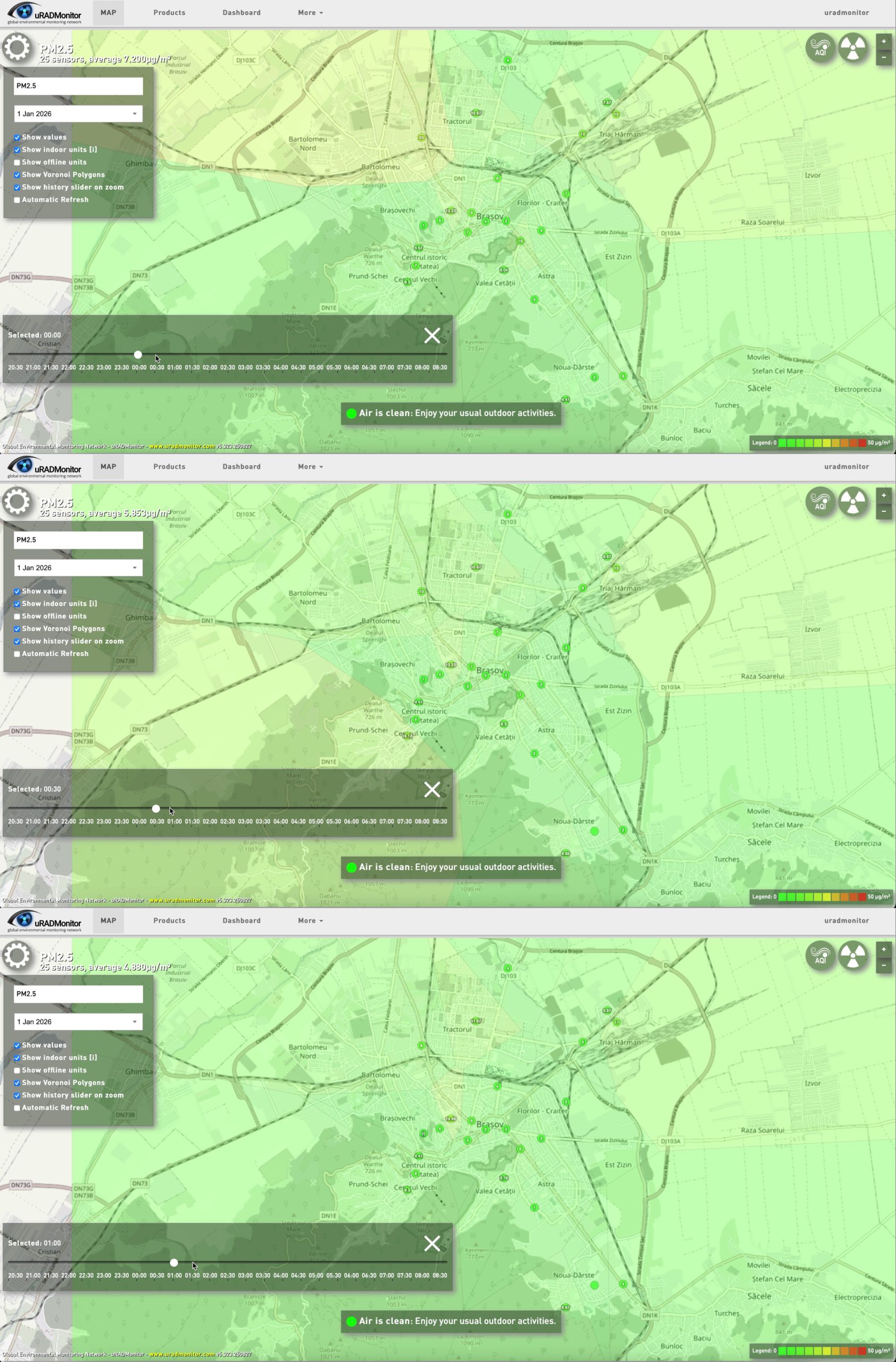
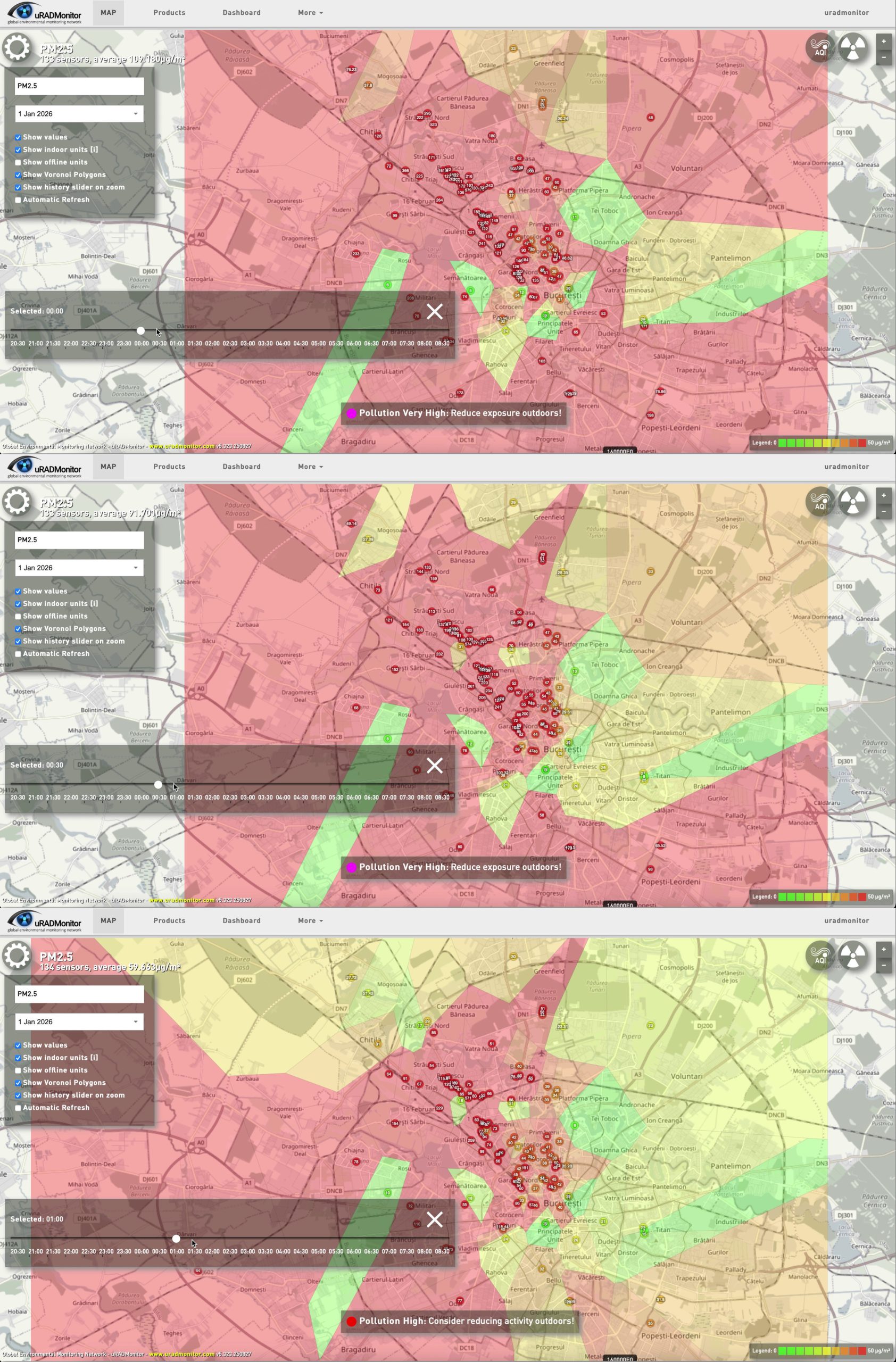
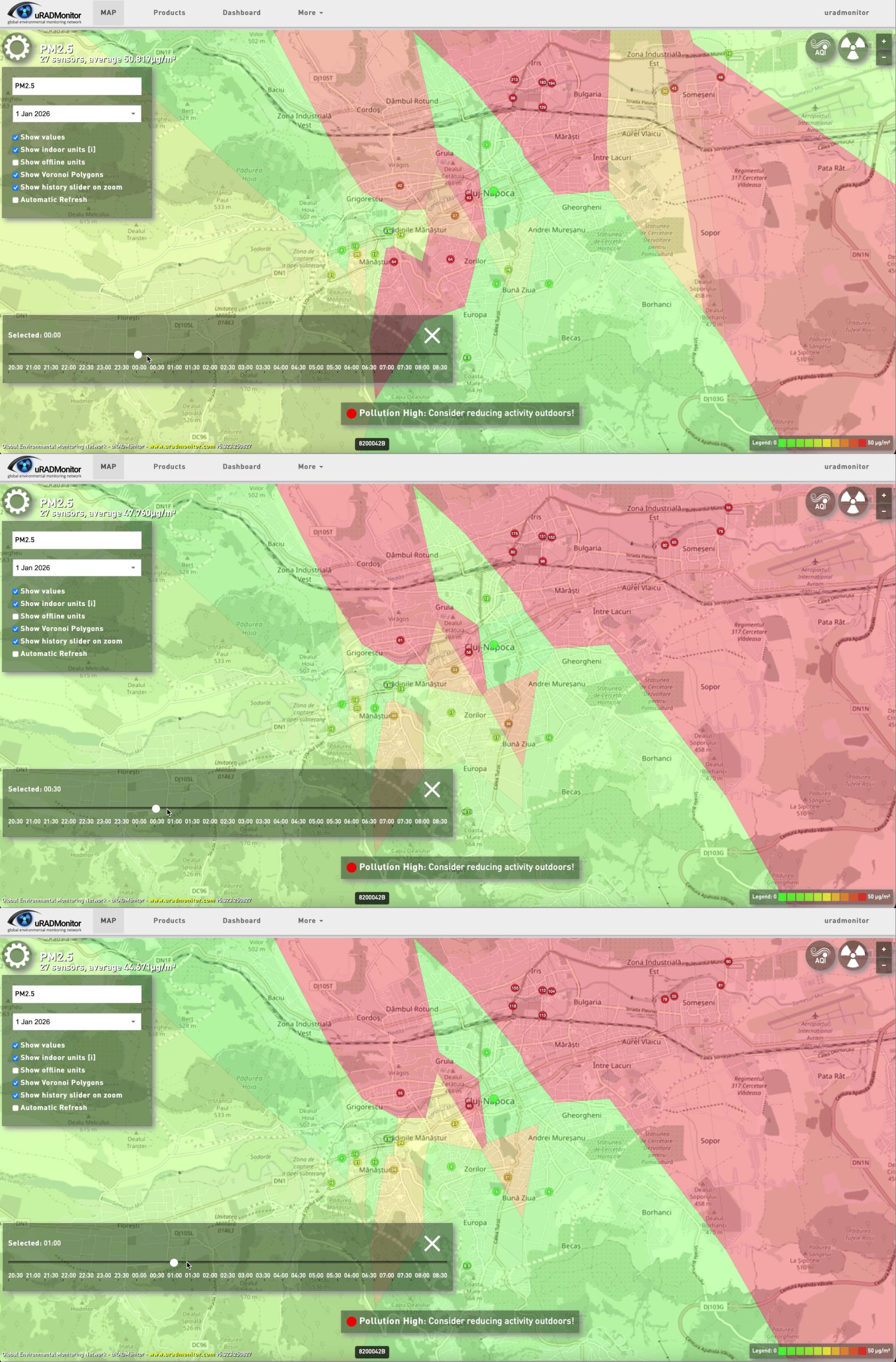
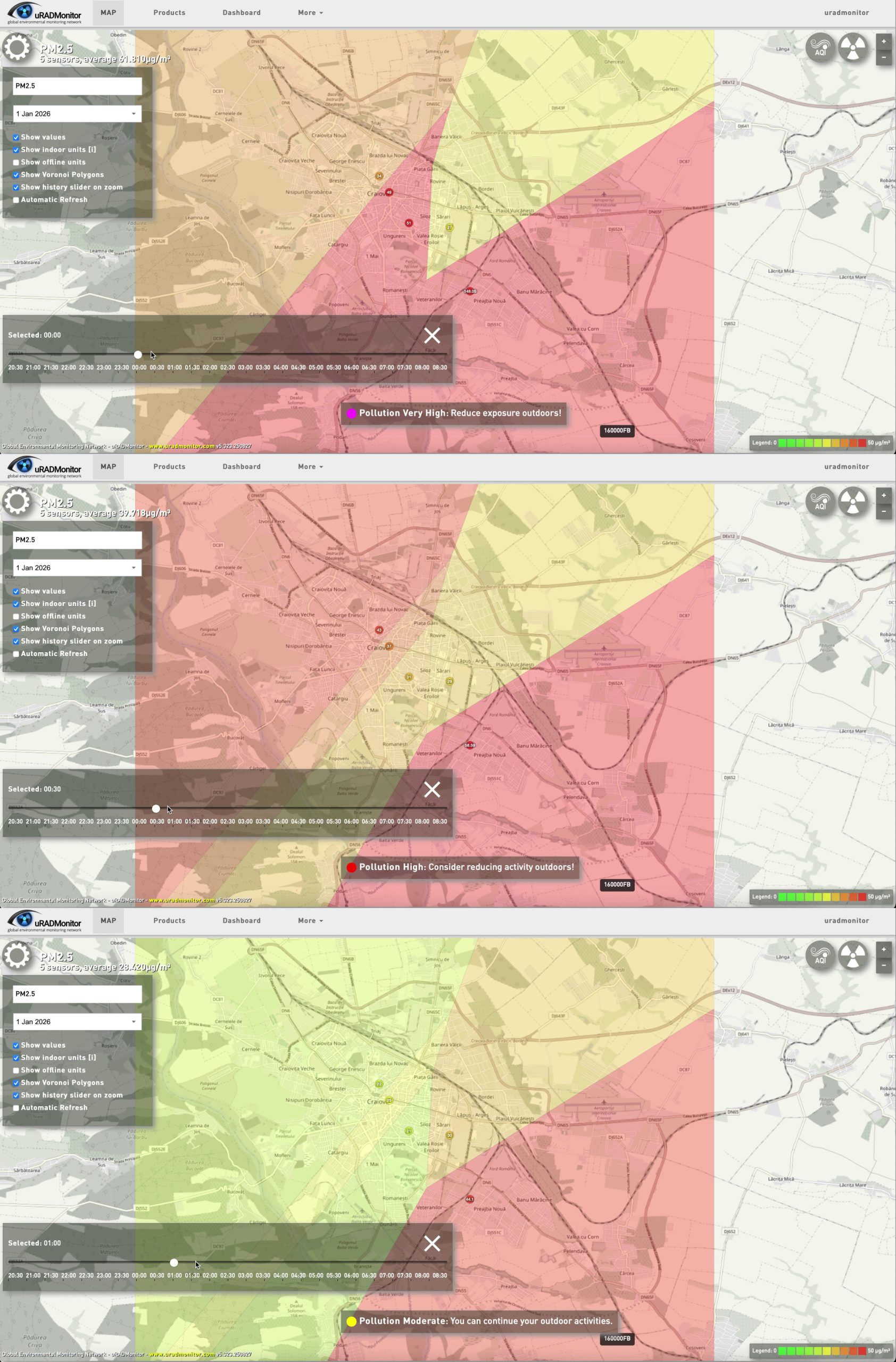
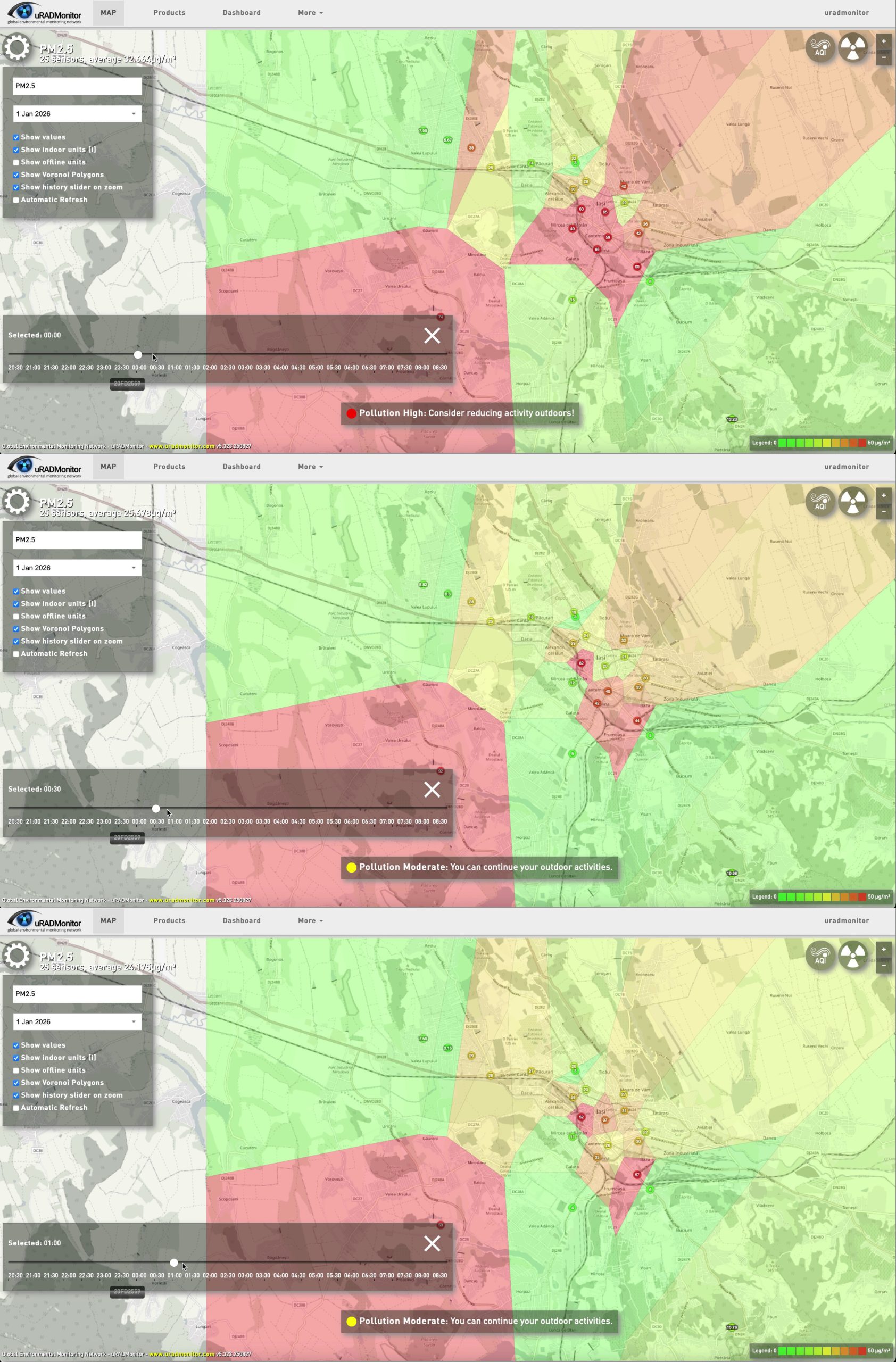
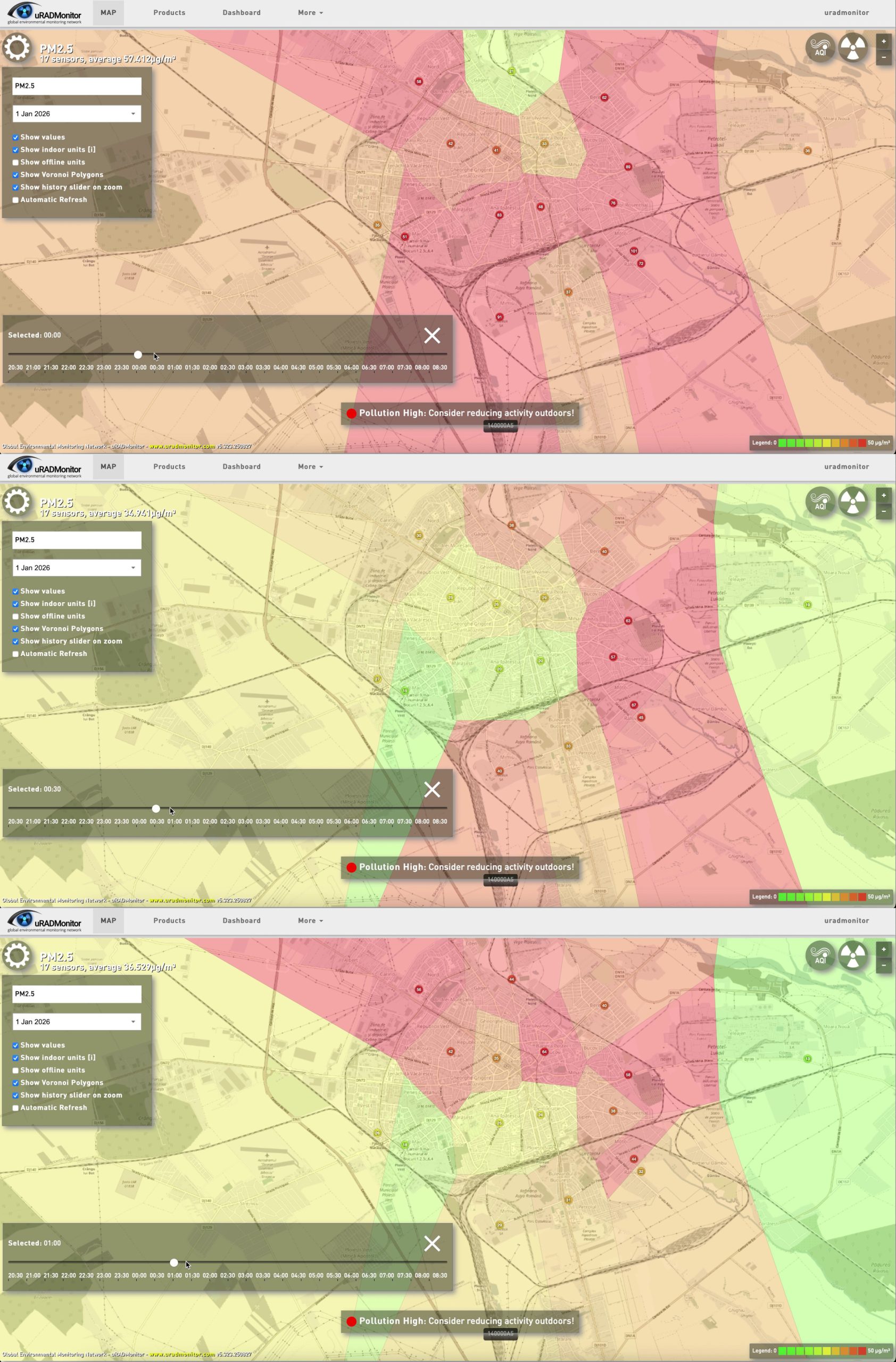
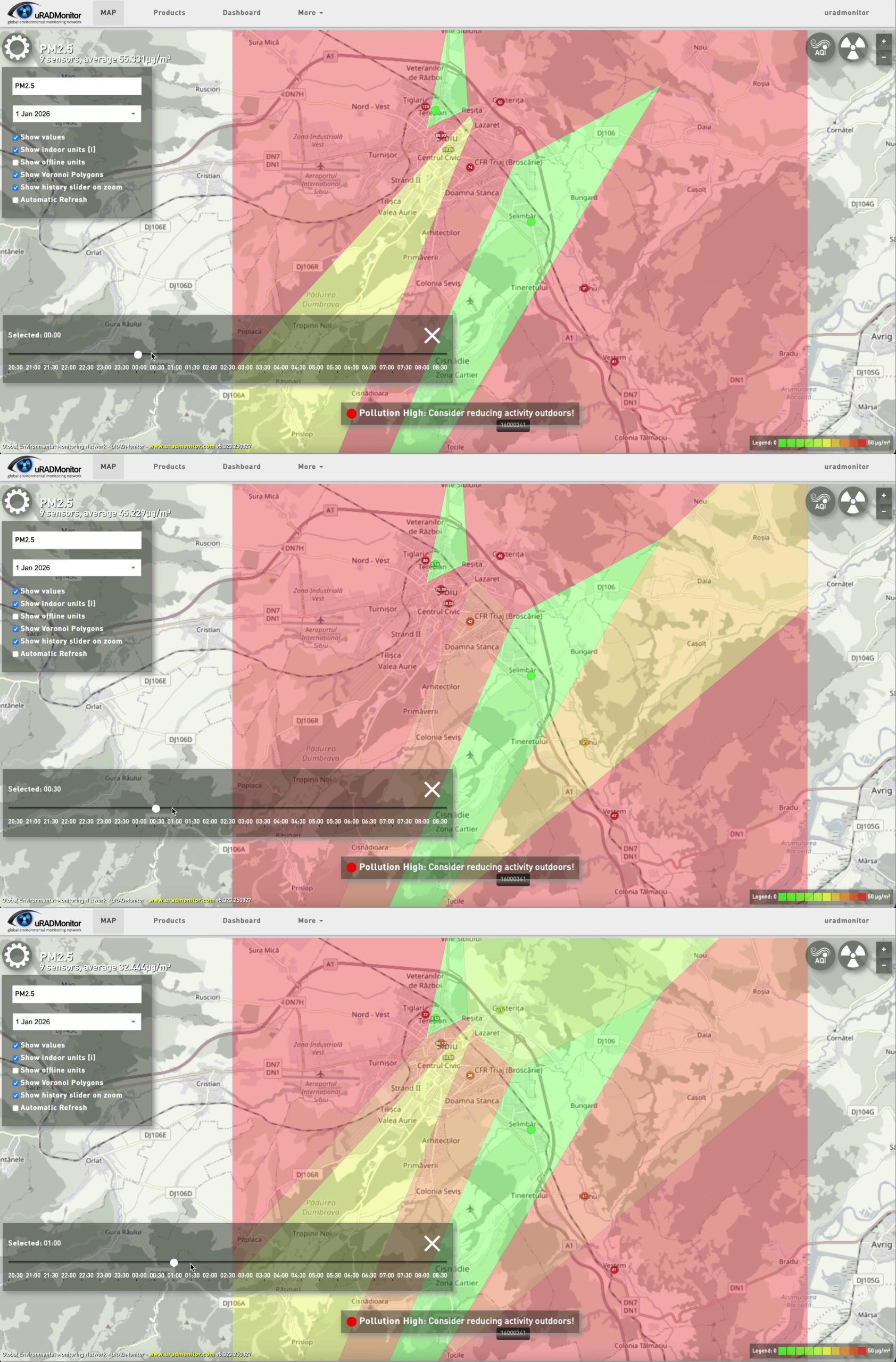
The data speaks for itself: fireworks create breathtaking moments in the sky, but they come at the cost of a sharp, immediate spike in air pollution that affects everyone breathing that air, especially the vulnerable.
Cities like Cluj-Napoca, Brașov, and Bistrița proved that spectacular New Year celebrations are still possible without the toxic fallout, thanks to modern alternatives like laser and drone shows.
As we welcome 2026, let’s choose celebrations that light up the night without darkening our lungs. Cleaner air and happy pets are worth the switch. Happy New Year!
codemore code
~~~~